This transition toward internal diversification in the…
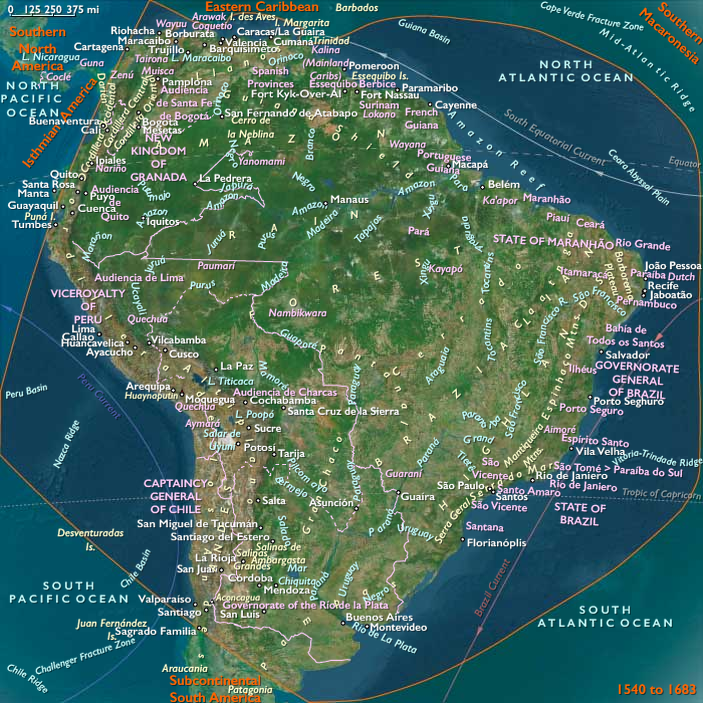
1540 CE to 1683 CE
This transition toward internal diversification in the colony also includes early manufacturing, although not to the extent of agrarian production.
Textile manufacturing flourishes in Cusco, Cajamarca, and Quito to meet popular demand for rough-hewn cotton and woolen garments.
A growing intercolonial trade along the Pacific Coast involves the exchange of Peruvian and Mexican silver for oriental silks and porcelain.
In addition, Arequipa and then Nazca and lca become known for the production of fine wines and brandies, and throughout the viceroyalty, small-scale artisan industries supply a range of lower-cost goods only sporadically available from Spain and Europe, which are now mired in the seventeenth- century depression.
If economic regionalization and diversification work to stabilize the colonial economy during the seventeenth century, the benefits of such a trend do not, as it turns out, accrue to Madrid.
The crown had derived enormous revenues from silver production and the transatlantic trade, which it is able to tax and collect relatively easily.
The decline in silver production causes a precipitous fall in crown revenue, particularly in the second half of the seventeenth century.
For example, revenue remittances to Spain drop from an annual average of almost one and a half million pesos in the 1630s to less than one hundred and twenty-eight thousand pesos by the 1680s.
The crown tries to restructure the tax system to conform to the new economic realities of seventeenth-century colonial production but is rebuffed by the recalcitrance of emerging local elites.
They tenaciously resist any new local levies on their production, while building alliances of mutual convenience and gain with local crown officials to defend their vested interests.
The situation further deteriorates, from the perspective of Spain, when Madrid begins in 1633 to sell royal offices to the highest bidder, enabling self-interested Creoles to penetrate and weaken the royal bureaucracy.
The upshot is not only a sharp decline in vital crown revenues from Peru during the century, which further contributes to the decline of Spain itself, but an increasing loss of royal control over local Creole oligarchies throughout the viceroyalty.
Lamentably, the sale of public offices also has longer-term implications.
The practice weakens any notion of disinterested public service and infuses into the political culture the corrosive idea that office-holding is an opportunity for selfish, private gain rather than for the general public good.
Locations
Groups
Topics
Commodities
Subjects
Regions
South America
View →Subregions