
The size and diversity of Singapore's population …
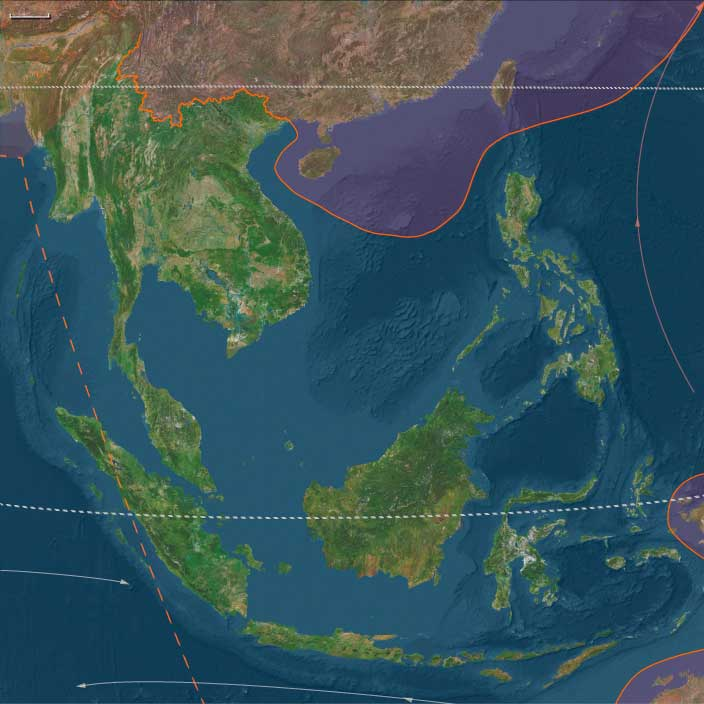
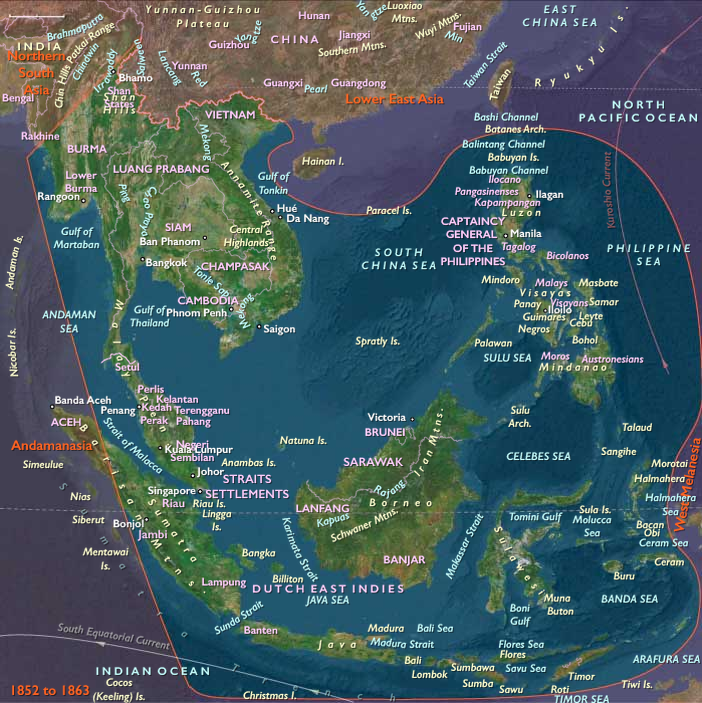
Years: 1852 - 1863
The size and diversity of Singapore's population keeps pace as it prospers and grows.
By 1827, the Chinese had become the most numerous of Singapore's various ethnic groups.
Many of the Chinese had come from Malacca, Penang, Riau, and other parts of the Malay Archipelago to which their forebears had migrated decades or even generations before.
More recent Chinese immigrants are mainly from the southeastern provinces of Guangdong and Fujian and speak either the Hokkien, Teochiu, Cantonese, or Hakka dialects.
In an extension of the common Chinese practice of sojourning, in which men temporarily leave their home communities to seek work in nearby or distant cities, most migrants to Singapore see themselves as temporary residents intending to return to home and family after making a fortune or at least amassing enough capital to buy land in their home district.
Many do return; more do not.
Even those who never return usually send remittances to families back home.
Locations
People
Groups
- Bugis
- Chinese (Han) people
- Johor, Sultanate of
- Philippines, Spanish colony of the
- Chinese Empire, Qing (Manchu) Dynasty
- East India Company, British (United Company of Merchants of England Trading to the East Indies)
- British Malaya
- Siam, (Rattanakosin) Kingdom of
- Straits Settlements, (British)
- Dutch East Indies
- Britain (United Kingdom of Great Britain and Ireland)
- Spain, Bourbon Kingdom (first restoration) of
- Netherlands, Kingdom of The
- French Cochinchina
Commodoties
- Fish and game
- Weapons
- Colorants
- Grains and produce
- Textiles
- Ceramics
- Strategic metals
- Salt
- Narcotics
- Spices
Subjects
Regions
Subregions
Years: 1852 - 1863
Locations
People
Groups
- Bugis
- Chinese (Han) people
- Johor, Sultanate of
- Philippines, Spanish colony of the
- Chinese Empire, Qing (Manchu) Dynasty
- East India Company, British (United Company of Merchants of England Trading to the East Indies)
- British Malaya
- Siam, (Rattanakosin) Kingdom of
- Straits Settlements, (British)
- Dutch East Indies
- Britain (United Kingdom of Great Britain and Ireland)
- Spain, Bourbon Kingdom (first restoration) of
- Netherlands, Kingdom of The
- French Cochinchina
Commodoties
- Fish and game
- Weapons
- Colorants
- Grains and produce
- Textiles
- Ceramics
- Strategic metals
- Salt
- Narcotics
- Spices
Subjects
Regions
Subregions