Slave uprisings have occurred independently in Georgia…
1741 CE
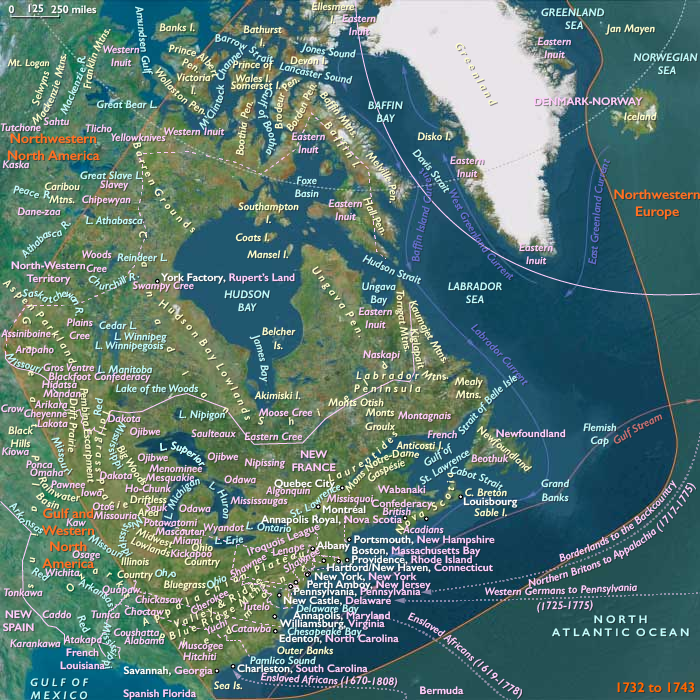
Slave uprisings have occurred independently in Georgia and South Carolina over the past two years, perhaps inspired, as colonial officials believe, by the Stono Rebellion.
Conditions of slavery are sufficient cause.
Planters decide they have to develop an enslaved population who are native-born, believing they are more content if they grow up enslaved.
Attributing the rebellion to the presence of Africans, planters decide to cut off the supply and enact a ten-year moratorium on slave importation through Charleston.
After they open it up to international trade again, they will import slaves from areas other than the Congo-Angolan region.
In addition, the South Carolina legislature has passed the Negro Act of 1740 to tighten controls: it requires a ratio of one white to ten blacks on any plantation.
It prohibits slaves from growing their own food, assembling in groups, earning money, or learning to read.
In the uncertain world of the colony, several of the law's provisions are based on the assumption that whites can effectively judge black character; for instance, whites are empowered to examine blacks who are out without travel passes, and to take action.
The legislature also works to improve conditions in slavery; it establishes penalties for masters who demanded excessive work or who brutally punish slaves (these provisions are difficult to enforce, as the law does not allow slave testimony against whites.)
They also start a school to teach slaves Christian doctrine.
At the same time, the legislature tries to prevent slaves from being freed, as the representatives thinks that the very presence of free blacks in the colony makes slaves restless.
It requires slaveholders to apply to the legislature for permission for manumissions, formerly arranged privately.
These restrictions will remain in effect in South Carolina until after the American Civil War.
The legislature's action related to manumissions likely reduces the chances that planters will free the mixed-race children born of their (or their sons') liaisons with enslaved women, as they do not want to subject their sexual lives to public scrutiny.
Such relationships continue, as documented in numerous sources.
Groups
Commodities
Subjects
Regions
Northern North America
View →Subregions