
South America (820 – 963 CE): Tiwanaku…
820 CE to 963 CE
South America (820 – 963 CE): Tiwanaku Prestige, Wari Decline, and Southern Frontiers
Geographic and Environmental Context
South America from the Caribbean to the Strait of Magellan encompassed vast ecological tiers:
-
Andean highlands and Altiplano (Tiwanaku, Lake Titicaca, Collao valleys)
-
Pacific littoral (Lambayeque – Sicán, Moche remnants, Ecuador coast)
-
Amazon and Orinoco lowlands (Marajó, Xingu, Tapajós, Guianas)
-
Southern cone steppes and channels (Araucanía, Patagonia, Tierra del Fuego)
Rising and declining polities, forest earthworks, and mobile foragers together framed a continental network of trade and ritual extending from the Andes to the Atlantic.
Climate and Environmental Shifts
The onset of the Medieval Warm Period (after 850) brought mild stability:
-
Altiplano: warmer, wetter summers favored waru waru raised-field agriculture around Lake Titicaca.
-
Amazonia: enhanced flood cycles nurtured terra preta soils and fish-rich várzea fields.
-
Pacific coast: periodic ENSO events alternated between drought and flood, unsettling fisheries and irrigation.
-
Southern cone: temperate westerlies and Humboldt currents kept fjords productive; Patagonian rainfall fluctuated but remained habitable.
Societies and Political Developments
Andean Core and Adjacent Highlands
-
Tiwanaku (Lake Titicaca) remained a ceremonial magnet and agronomic model even as its political reach waned; its iconography—the Staff Deity, solar gates, and camelid imagery—retained regional prestige.
-
Wari collapse (~850) fragmented highland Peru into local lordships (Cusco, Ayacucho, Chachapoyas).
-
Sicán/Lambayeque culture arose in north-coast Peru, innovating gold-silver-copper alloys and pyramidal centers at Batán Grande.
-
In Ecuador, hillfort chiefdoms (Caranqui–Cayambe) consolidated defensive alliances that prefigured later confederacies.
Northern Tropics and Lowlands
-
Tairona ancestors terraced the Sierra Nevada de Santa Marta, blending Andean terrace design with Caribbean craft exchange.
-
Orinoco–Llanos groups organized fishing and fiber crafts along seasonal floodplains.
-
Guianas: shell-mound and riverine horticultural communities thrived on manioc, palm, and shellfish economies.
-
Amazon Basin: populous societies engineered earthen mounds, roads, causeways, and fish weirs; Xingu–Tapajós and Marajó centers sustained ceremonial life through reciprocal festivals.
Southern Forest–Steppe Frontiers
-
Araucanía–Central Valley (Mapuche ancestors): horticultural hamlets grew maize, beans, quinoa, and potatoes in alluvial pockets; ritual specialists (machi) mediated between ancestral and earth spirits.
-
Patagonian steppe (Tehuelche ancestors): mobile guanaco hunters followed seasonal rounds using bows and bolas.
-
Tierra del Fuego:
-
Selk’nam (Ona) hunted northern grasslands;
-
Yaghan (Yámana) and Kawésqar navigated southern fjords by bark canoes, harvesting shellfish and seals.
-
-
Chiloé hosted mixed foragers; Falklands and Juan Fernández remained uninhabited refugia.
Economy and Trade
-
Staples: potatoes, quinoa, maize, and manioc; camelid herding on the Altiplano; tropical arboriculture in Amazonia.
-
Prestige goods: metals, Spondylus shells, feathers, turquoise, and obsidian moved across ecological tiers.
-
Networks: llama caravans carried Andean goods eastward; riverine fleets moved fish, salt, and ceramics westward; Atlantic-Amazon coastlines linked Guianas to the Caribbean.
-
Southern circuits: hides, sinew, and obsidian passed between Andean forests and Patagonian plains.
Subsistence and Technology
-
Agriculture: raised fields, terraces, and irrigation canals in the Andes; conuco-like mound gardens in Amazonia and Guianas; small clearings and ridged plots in southern forests.
-
Metallurgy: Sicán smiths perfected lost-wax casting; Andean bronzes replaced pure copper tools.
-
Pastoralism & hunting: llamas and alpacas for transport and wool; guanaco and deer for meat and ritual.
-
Watercraft: dugout canoes in Amazonia and Chiloé; reed rafts on Titicaca; bark canoes in Fuegian channels.
-
Architecture: adobe pyramids, stone terraces, communal longhouses, and earthen platforms expressed both hierarchy and community.
Belief and Symbolism
-
Tiwanaku cosmology: the Staff Deity and mountain-water dualism underpinned pilgrimage cults.
-
Amazonian ceremonial roads symbolized spirit journeys between mound villages; festivals enacted cosmic renewal.
-
Guaraní and Orinoco traditions revered ancestor spirits and canoe-borne creation myths.
-
Mapuche machi invoked spirits of earth and rain; Selk’nam male initiation (Hain prototype) dramatized celestial myths; Yaghan/Kawésqar sacralized winds, whales, and sea passages.
Adaptation and Resilience
-
Portfolio strategies: combining raised-field farming, floodplain fishing, hunting, and arboriculture to absorb climatic variability.
-
Regional mobility: caravans, river routes, and sea-lanes redistributed goods and ritual alliances.
-
Cultural continuity: despite Wari collapse, Andean agricultural knowledge persisted; Amazonian terra preta and southern nomadism represented parallel ecological mastery.
-
Social flexibility: kin networks and ritual exchange maintained cohesion through droughts and ENSO shocks.
Long-Term Significance
By 963 CE, South America north and south of the Río Negro formed a continent-spanning mosaic of successor polities and enduring forager domains:
-
Tiwanaku remained the ritual and agrarian model of the high Andes even as its power waned.
-
Sicán gold-working and Tairona terraces signaled new regional florescences.
-
Amazonian earthworks and terra preta agriculture anchored populous forest chiefdoms.
-
Guaraní migrations advanced into the southern river basins.
-
Across the Patagonian and Fuegian south, forest, steppe, and sea peoples maintained resilient lifeways of exceptional antiquity.
The age closed with a continent already networked by trade, pilgrimage, and environmental engineering—a foundation on which the monumental states and far-reaching exchanges of the later medieval centuries would rise.
Images
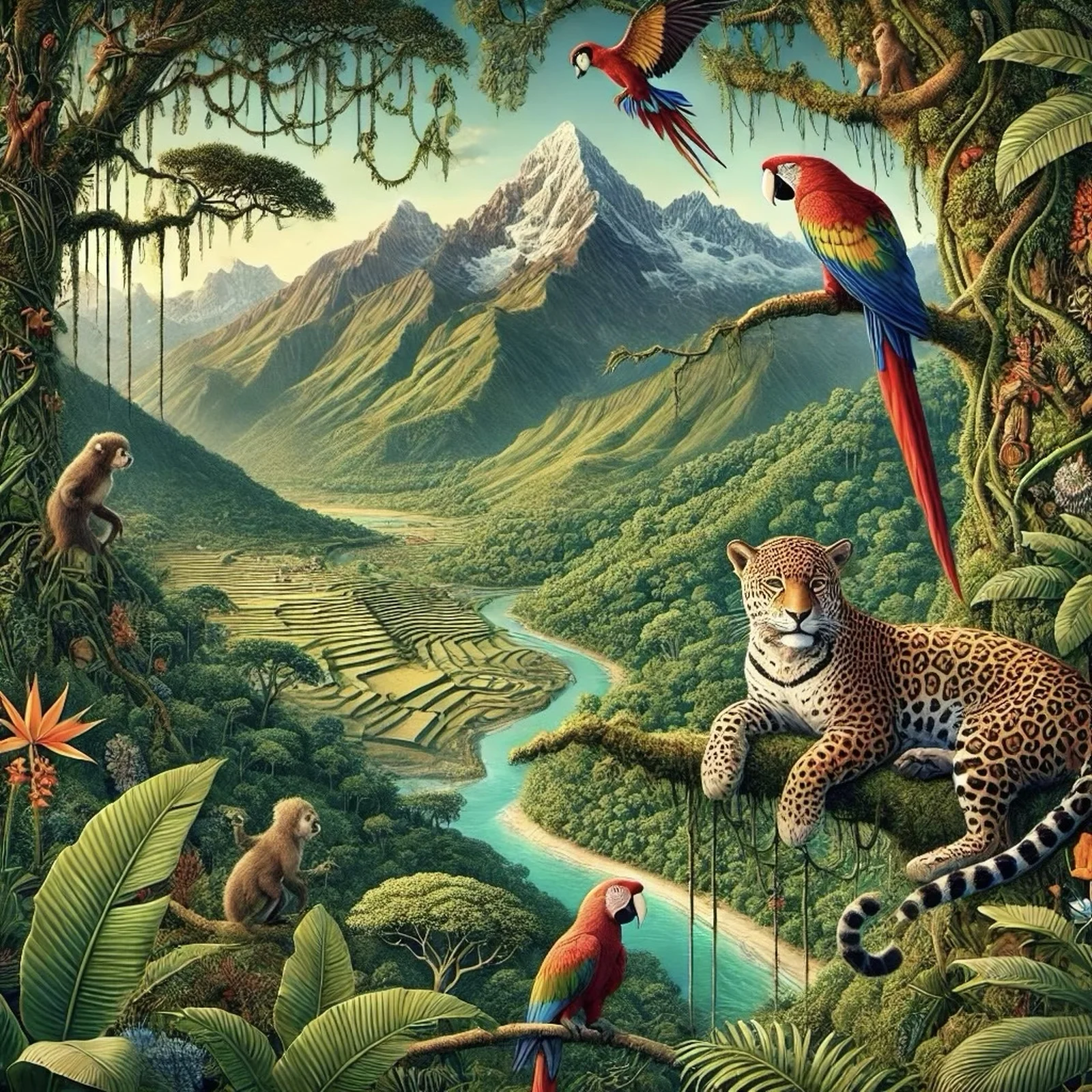
South America (with civilization) ©2024-25 Electric Prism, Inc. All rights reserved.
Groups
Commodities
Subjects
Regions


