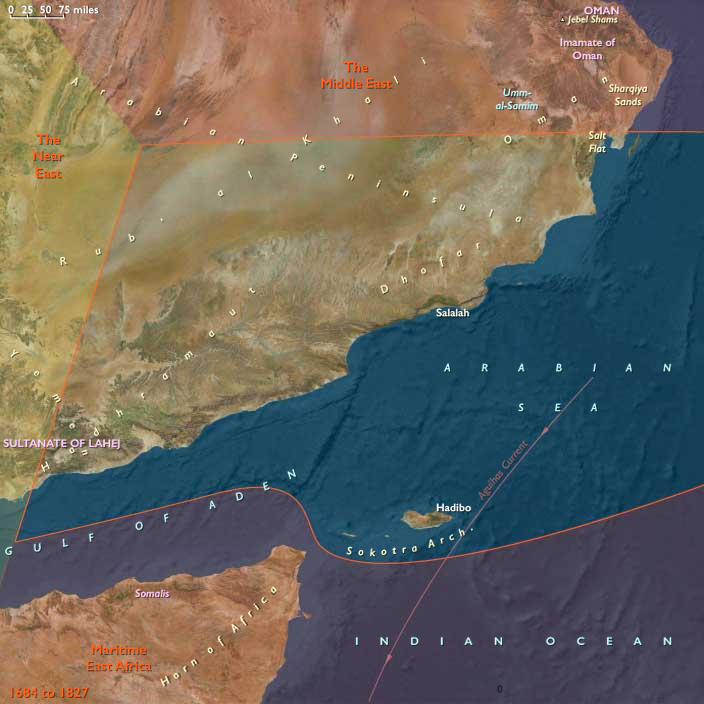
Southeast Arabia (1684–1827 CE): Omani Oceanic Power,…
1684 CE to 1827 CE
Southeast Arabia (1684–1827 CE): Omani Oceanic Power, Hadhrami Diasporas, and Socotran Gateways
Geographic & Environmental Context
The subregion of Southeast Arabia includes southern Oman (Dhofar and adjoining coasts), eastern Yemen (Hadhramawt and Mahra), and the island of Socotra. Anchors include the Dhofar frankincense belt, the Hadhramawt wadis and ports (Shihr, Mukalla), the Mahra littoral facing the Gulf of Aden, and Socotra astride the monsoon sea-lanes between the Arabian Sea and the Indian Ocean. Oasis valleys, incense groves, rocky promontories, and fishing coves tied caravan trails to a widening Arabian maritime sphere.
Climate & Environmental Shifts
The waning Little Ice Age brought erratic khareef rains over Dhofar and irregular winter showers in Hadhramawt. Drought pulses pressed terrace fields and date groves; good monsoons yielded resin and grain surpluses. Cyclones periodically struck Socotra and Mahra’s coast, scouring beaches and palms; in recovery years, fisheries and dates underwrote resilience.
Subsistence & Settlement
-
Dhofar (southern Oman): Frankincense tapping, date cultivation, sorghum plots, and goat/camel herding sustained oasis towns; coastal villages combined line-fishing with trade.
-
Hadhramawt (eastern Yemen): Qanat-fed valley agriculture (dates, wheat, sorghum) supported towns like Shihr and Mukalla; upland terracing and beekeeping supplemented diets.
-
Mahra coast: Pastoralism, fishing, and caravan services linked interior tribes to ports.
-
Socotra: Mixed herding, date gardens, resin collection (dragon’s blood, aloes), and reef fishing; settlements clustered near fresh water and lee anchorages.
Technology & Material Culture
Irrigation channels, terrace walls, and cisterns regulated scarce water. Dhows with lateen sails moved frankincense, dates, horses, and cloth on monsoon schedules. Coral-stone mosques and minarets marked Hadhramawt coastal towns; stone tower-houses rose in valley settlements. Endowed zawiyas copied Arabic manuscripts; merchants financed schools and lodges. Socotrans tapped resins, wove mats, and built rock-and-palm shelters; oared craft and small sailboats worked nearshore grounds.
Movement & Interaction Corridors
-
Omani revival and Indian Ocean reach: The Yaruba dynasty (to 1749) expelled Portugal from much of the western Indian Ocean and projected Omani power; after civil wars (c. 1718–1749), the Al Bu Sa‘id dynasty (from 1749) consolidated Muscat-based rule and revived sea power.
-
Hadhrami diaspora: Merchants and sayyid scholars spread from Hadhramawt to Gujarat, the Deccan, the Swahili coast (Lamu, Mombasa), and Southeast Asia (Aceh, Java), remitting capital and learning to home valleys.
-
Socotra and Mahra: Served as provisioning and pilotage nodes for ships rounding Arabia; Mahri pilots and camel caravans linked the Gulf of Aden to interior wadis.
-
British treaties and patrols (late 18th–early 19th c.): As Britain’s Indian Ocean presence grew, treaties with Oman (e.g., 1798) and early anti-piracy accords along nearby coasts reshaped convoy and insurance practices, indirectly affecting Hadhramawt and Mahra routes.
Cultural & Symbolic Expressions
Hadhramawt’s scholarly lineages (sayyid houses) anchored tariqa networks; Sufi poetry, mawlid observances, and shrine visitations structured social time. Dhofar harvest rites honored incense groves; oaths and hospitality codes governed caravan passage. On Socotra, oral lore mapped winds, reefs, and spirits to safe travel and planting; mosque festivals and seasonal feasts reinforced island cohesion. Genealogies and travelogues of Hadhrami scholars celebrated far-flung kin and pious foundations abroad.
Environmental Adaptation & Resilience
Frankincense cultivators rotated tapping sites and enforced rest seasons; terrace repair and cistern maintenance followed drought. Fishing, goat herding, and date stores buffered lean years on coasts and Socotra. Merchant kin remittances purchased grain in famine; oasis communities diversified with sorghum, sesame, and garden plots. After cyclones, palm belts were replanted and landing sites cleared cooperatively.
Technology & Power Shifts (Conflict Dynamics)
-
Omani sea power: Yaruba and later Al Bu Sa‘id rulers rebuilt fleets, escorted convoys, and contested Portuguese remnants; Omani authority increasingly mediated Gulf of Aden traffic.
-
Hadhramawt politics: Valley sultanates balanced scholarly prestige with merchant wealth; fortified towns managed rivalries through diplomacy and trade.
-
Mahra and Socotra: The Mahra Sultanate controlled Socotra, levying anchorage dues and balancing outside suitors; European visits increased but no permanent garrison took hold.
-
British naval reach: Convoys and anti-piracy policing in the approaches to the Gulf signaled a new order; insurance rates and routing practices shifted, favoring ports that cooperated with British escorts.
Transition
By 1827 CE, Southeast Arabia had re-centered on an Arabian maritime economy: Omani fleets guarded routes; Hadhrami merchants and scholars stitched Dhofar and Hadhramawt into a far-flung diaspora; and Socotra remained a coveted but locally governed waypoint. Frankincense, dates, horses, and pilgrims moved with the monsoon, even as British treaties and escorts foreshadowed a nineteenth-century transition to imperial steam and stricter maritime regimes.
Images

Southeast Arabia (with civilization) ©2024-24 Electric prism, Inc. All rights reserved
Groups
Commodities
Subjects
Regions
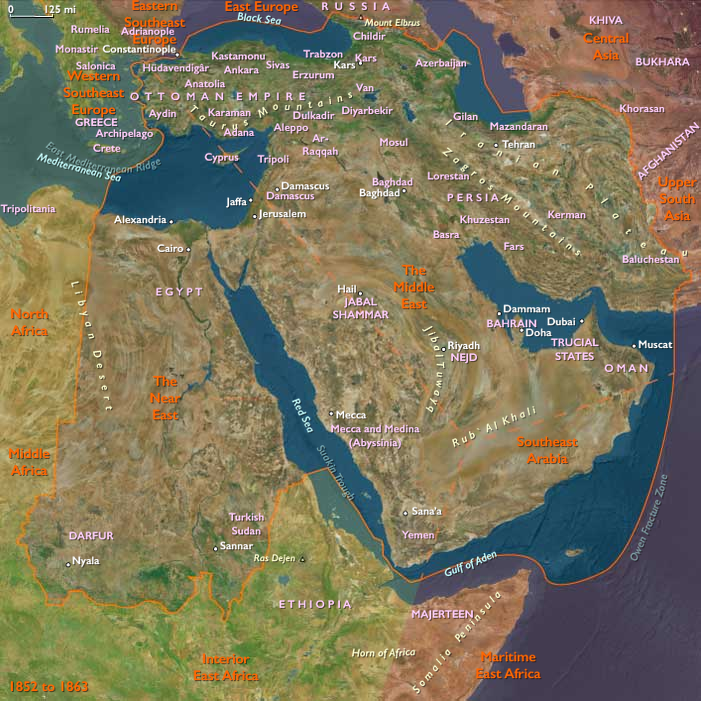
The Near and Middle East
View →Subregions