Atlantic Southwest Europe (6,093–4,366 BCE) Middle Holocene…
6093 BCE to 4366 BCE
Atlantic Southwest Europe (6,093–4,366 BCE)
Middle Holocene — Atlantic Foragers, Early Farmers, and the First Megalithic Landscapes
Geographic & Environmental Context
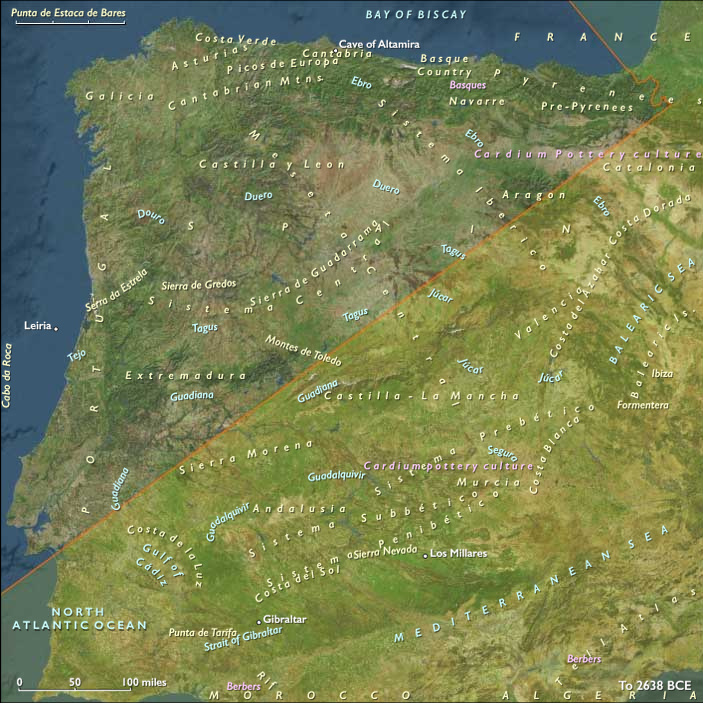
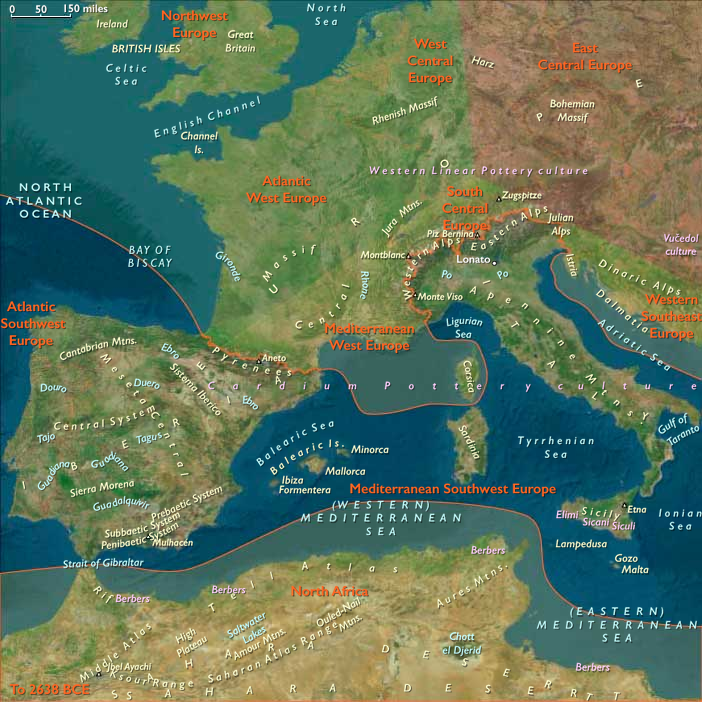
Atlantic Southwest Europe includes western and northwestern Iberia:
- Galicia
- Asturias
- Cantabria
- Basque Atlantic coast
- northern Portugal (including Minho and Douro basins)
- central and western Portugal
- lower Tagus basin
- Algarve Atlantic coast
- adjacent Atlantic islands if present in the regional definition
Anchors:
- Minho, Douro, Mondego, Tagus, and Sado estuaries
- Galician rías
- Cantabrian coastal shelves
- Portuguese Atlantic lagoons and marshes
- granitic uplands of Galicia and northern Portugal
- Atlantic oak and hazel forests
Unlike the Mediterranean-facing regions to the east and south, Atlantic Southwest Europe remained oriented toward river estuaries, sheltered embayments, coastal wetlands, and ocean-facing forest landscapes.
Climate & Environmental Shifts
The Holocene Climatic Optimum continued.
- Warm temperatures and reliable rainfall supported extensive Atlantic forests.
- Oak, hazel, elm, pine, and mixed woodland covered much of the region.
- Sea levels approached modern positions, flooding former valleys and creating the characteristic Galician rías.
- Estuaries expanded along the Minho, Douro, Tagus, and Sado systems.
- Wetlands, shellfish beds, and tidal flats became major ecological resources.
The resulting landscape was greener, wetter, and more heavily forested than much of Mediterranean Iberia.
Subsistence & Settlement
The region occupied a transitional position between enduring Atlantic foraging traditions and the expanding Neolithic world.
Communities relied upon:
- shellfish gathering
- estuarine fisheries
- riverine fishing
- red deer and wild boar hunting
- hazelnuts and forest foods
During the later centuries of the period, early farming practices spread westward:
- wheat
- barley
- pulses
- sheep
- goats
- cattle
However, agriculture rarely replaced foraging outright.
Instead, mixed economies emerged in which coastal resources, forest foods, fishing, herding, and cultivation coexisted.
Small hamlets clustered near:
- estuaries
- river terraces
- coastal wetlands
- forest clearings
Technology & Material Culture
Material culture combined Mesolithic and Neolithic traditions.
Communities employed:
- polished stone axes
- adzes
- fishing gear
- dugout canoes
- storage pits
Cardial and related pottery traditions gradually appeared through contact with Mediterranean farming networks.
Long-distance exchange moved:
- high-quality stone
- shells
- polished axes
- prestige goods
between Atlantic and interior regions.
Movement & Interaction Corridors
River systems served as the principal arteries of movement.
Major corridors included:
- Minho valley
- Douro basin
- Tagus corridor
- Sado estuary
- Galician rías
Coastal navigation linked communities along the Atlantic façade.
Interior routes connected Atlantic societies to:
- West Central Europe
- Western Southeast Europe
- Mediterranean Southwest Europe
through emerging Neolithic exchange networks.
Cultural & Symbolic Expressions
The earliest foundations of Atlantic Europe's later megalithic world appeared during this epoch.
Communities increasingly emphasized:
- ancestral landscapes
- ritual deposits
- communal burial practices
- sacred wetlands
- prominent hills and ridges
The first precursors of the great Atlantic megalithic tradition emerged in western Iberia during the later part of the period.
Water, estuaries, rivers, and ancestral places carried major symbolic significance.
Environmental Adaptation & Resilience
Communities maintained resilience through diversification.
Strategies included:
- combining fishing and shellfish collection with farming
- seasonal use of upland and lowland resources
- exploitation of forests, rivers, and coasts simultaneously
- mobility between estuaries and interior valleys
This flexibility buffered populations against local shortages and environmental variability.
Transition
By 4,366 BCE, Atlantic Southwest Europe stood at the threshold of the Atlantic Neolithic.
Dense forests still dominated much of the landscape, yet agriculture had become increasingly established along major river valleys and estuaries. Coastal foragers, river communities, and early farmers were becoming integrated into expanding exchange systems that linked Atlantic Iberia to both the Mediterranean and continental Europe.
The great megalithic traditions that would later define Atlantic Europe had not yet fully emerged, but their foundations were already visible in the ritual landscapes, ancestral practi
Images

Atlantic Southwest Europe in the Middle Holocene
Commodities
Subjects
Regions
Southwest Europe
View →Subregions