
The Portuguese Inquisition: A Tool of Religious…
1536 CE
The Portuguese Inquisition: A Tool of Religious Persecution and Social Control (1536–1821)
After Spain expelled its Sephardic Jewish population in 1492, many Spanish Jews fled to Portugal, hoping for refuge. However, they were later targeted there as well, first through forced conversions and then through the establishment of the Portuguese Inquisition, which primarily persecuted Jewish New Christians (conversos or marranos) suspected of secretly practicing Judaism.
Origins and Expansion of the Portuguese Inquisition
- Established in 1536 under King John III, the Portuguese Inquisition was modeled after the Spanish Inquisition, but with a stronger focus on Jewish converts.
- Unlike Spain, where the Inquisition targeted various religious groups, the Portuguese Inquisition was overwhelmingly directed at Sephardic Jews and their descendants.
- The Inquisition expanded beyond Portugal into its colonial possessions, including:
- Brazil
- Cape Verde
- Goa (India)
- It remained active until 1821, making it one of the longest-running inquisitions in Europe.
John III’s Expansion of the Inquisition’s Powers
- King John III (r. 1521–1557) significantly expanded the role of the Inquisition, making it a major political, cultural, and social force.
- The courts’ jurisdiction grew to cover a wide range of offenses beyond Judaism, including:
- Censorship – Suppressing books and ideas considered heretical or dangerous.
- Divination and Witchcraft – Punishing folk healers, astrologers, and suspected witches.
- Bigamy – Investigating cases of multiple marriages, which were sometimes linked to crypto-Judaism.
Impact of the Portuguese Inquisition
-
Religious and Ethnic Persecution
- Thousands of New Christians were accused of secretly practicing Judaism and subjected to trials, torture, and execution by burning.
- Many conversos fled Portugal, establishing Sephardic Jewish communities in Amsterdam, London, the Ottoman Empire, and the New World.
-
Censorship and Intellectual Suppression
- The Inquisition imposed strict censorship, banning books and scientific ideas that were deemed heretical.
- It limited Portuguese engagement with Renaissance humanism and scientific advancements.
-
Political and Social Control
- The Inquisition exerted control over Portuguese society, targeting not just Jews, but also political dissidents, intellectuals, and nonconformists.
- It reinforced the power of the monarchy and the Catholic Church, suppressing any challenges to their authority.
Conclusion: Centuries of Oppression and Decline
- The Portuguese Inquisition persisted for nearly three centuries, only officially ending in 1821.
- While it was initially intended as a religious institution, it became a tool for political and social control, shaping Portugal’s history of religious intolerance and intellectual repression.
- Its long-term consequences included the loss of Portugal’s Jewish and intellectual communities, weakening the country’s cultural and economic development.
The legacy of the Portuguese Inquisition remains a dark chapter in Portugal’s history, illustrating the dangers of religious and political persecution.
Locations
People
Groups
Regions
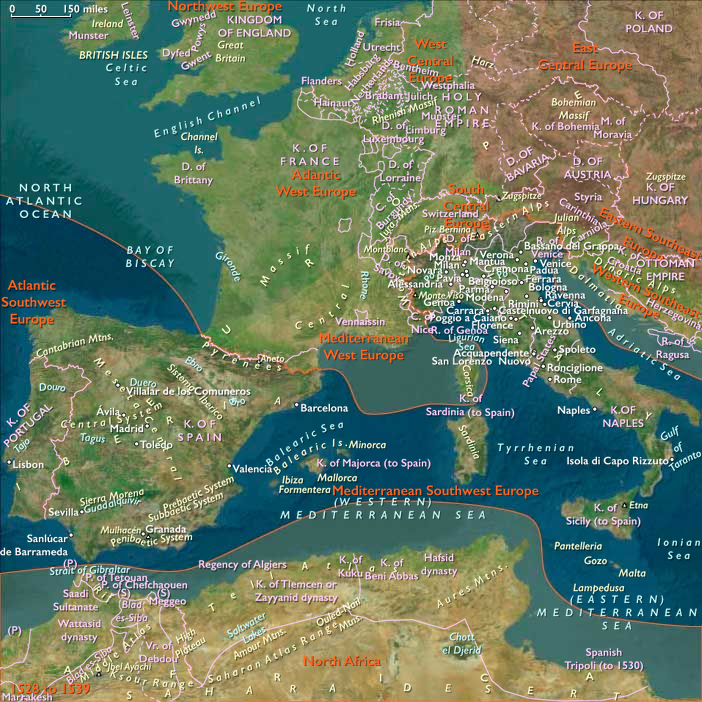
Southwest Europe
View →Subregions
