
Standard Oil has gradually gained almost complete…
1880 CE
Standard Oil has gradually gained almost complete control of oil refining and marketing in the United States through horizontal integration.
In the kerosene industry, Standard Oil has replaced the old distribution system with its own vertical system.
It supplies kerosene by tank cars that bring the fuel to local markets and tank wagons then deliver to retail customers, thus bypassing the existing network of wholesale jobbers.
Its vast American empire includes twenty thousand domestic wells, four thousand miles of pipeline, five thousand tank cars, and over one hundred thousand employees.
Despite improving the quality and availability of kerosene products while greatly reducing their cost to the public (the price of kerosene will drop by nearly eighty percent over the life of the company), Standard Oil's business practices create intense controversy.
Standard’s most potent weapons against competitors are underselling, differential pricing, and secret transportation rebates.
The firm will be attacked by journalists and politicians throughout its existence, in part for these monopolistic methods, giving momentum to the anti-trust movement.
Standard has ninety percent of American refining capacity in 1880, by which time, according to the New York World, Standard Oil is "the most cruel, impudent, pitiless, and grasping monopoly that ever fastened upon a country."
To the critics Rockefeller replies, "In a business so large as ours … some things are likely to be done which we cannot approve. We correct them as soon as they come to our knowledge.” (Segall, Grant (2001). John D. Rockefeller: Anointed With Oil. Oxford University Press. p. 60.)
People
Groups
Commodities
Regions
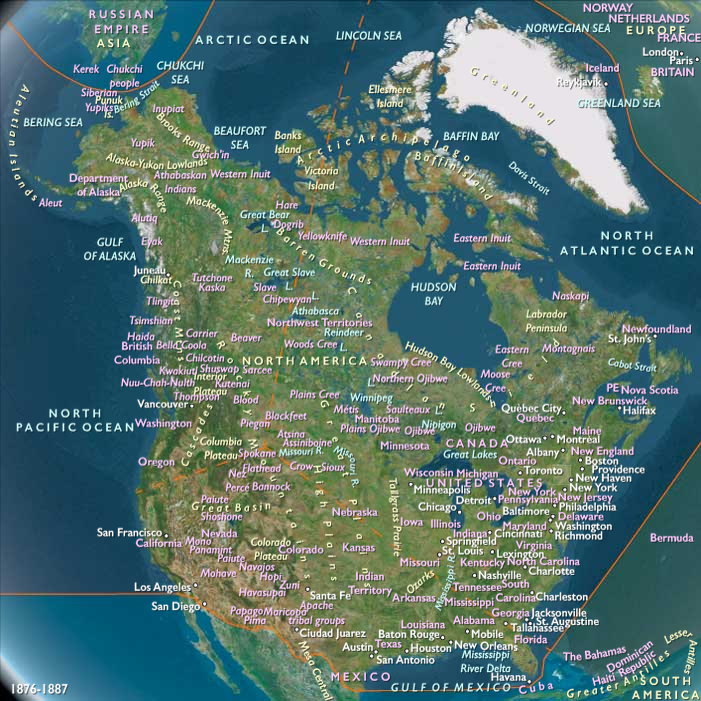
Northern North America
View →Subregions
