
This apparent Celtic migration coincides …
Years: 621BCE - 478BCE
This apparent Celtic migration coincides with the widespread mass production of iron tools and weapons, a technological shift that spurs large-scale folk migrations across Asia and Europe.
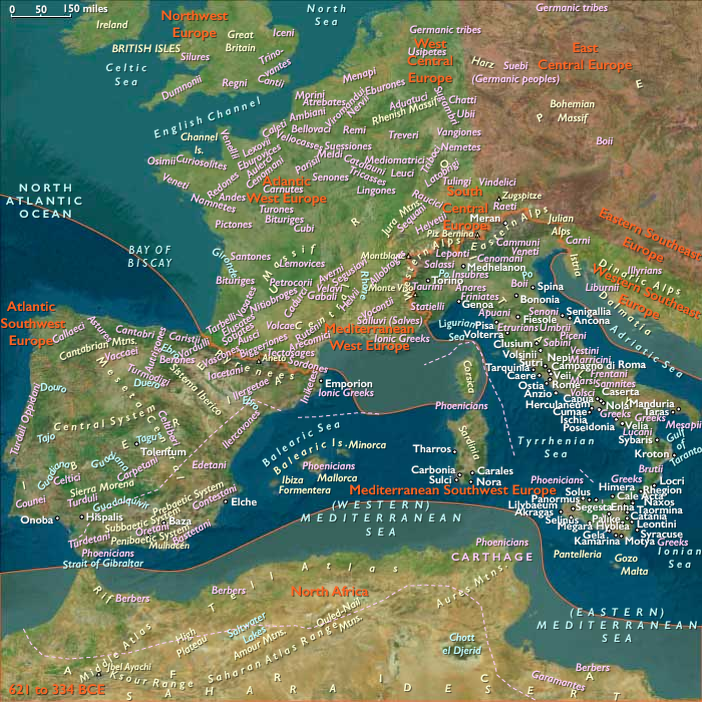
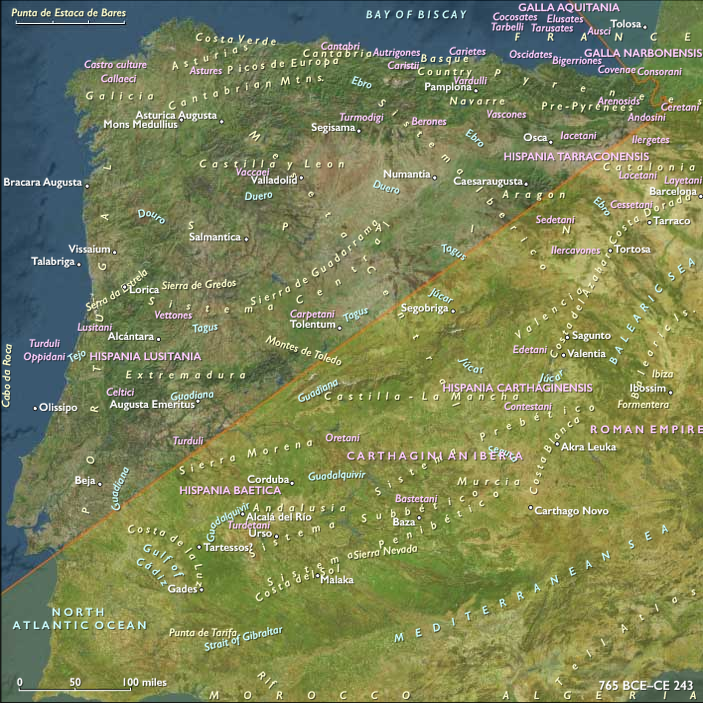
Among the most prominent tribes in the Iberian Peninsula are the Lusitanians, Calaicians (Gallaeci), and Cynetes (Conii). Additionally, numerous smaller tribal groups contribute to the region’s ethnic and cultural diversity, including the Bracari, Celtici, Coelerni, Equaesi, Grovii, Interamici, Leuni, Luanqui, Limici, Narbasi, Nemetati, Paesuri, Quaquerni, Seurbi, Tamagani, Tapoli, Turduli, Turduli Veteres, Turdulorum Oppida, Turodi, and Zoelae.
These migrations and cultural interactions play a pivotal role in shaping the social, linguistic, and economic landscape of the region, influencing both indigenous Iberian societies and the emerging Celtic influence.
Groups
Commodoties
Subjects
Regions
Subregions
Years: 621BCE - 478BCE
Groups
Commodoties
Subjects
Regions
Subregions