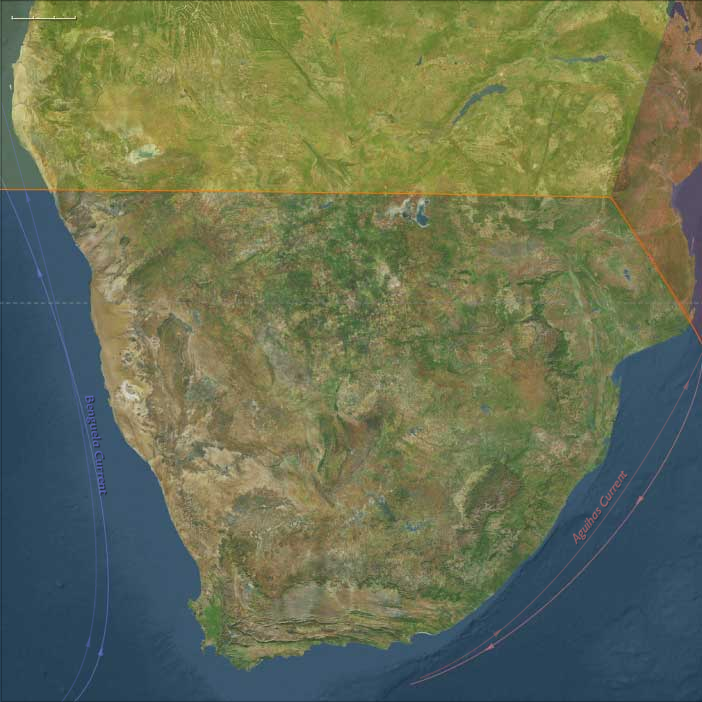
Temperate Southern Africa (6,093 – 4,366 BCE)…
6093 BCE to 4366 BCE
Temperate Southern Africa (6,093 – 4,366 BCE) Middle Holocene — Climatic Stability and Intensified Ritual Landscapes
Geographic and Environmental Context
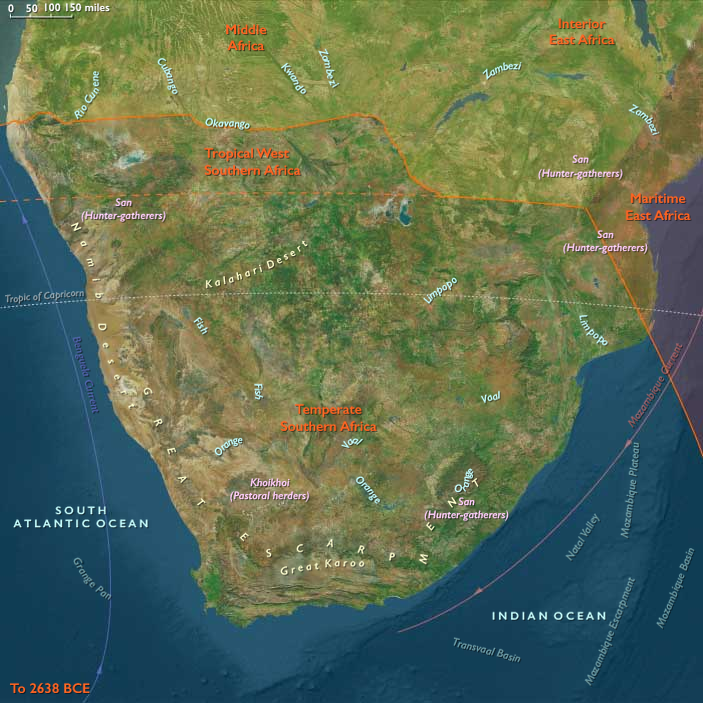
Temperate Southern Africa includes:-
South Africa (Cape littoral, Highveld, Drakensberg, Karoo, Namaqualand).
-
Lesotho and Eswatini.
-
Most of Namibia and Botswana, except the far northern sectors (Caprivi, Etosha, Okavango, Skeleton Coast — those are in Tropical Southern Africa).
-
Southern Zimbabwe and southwestern Mozambique (Maputo–Limpopo region).
Anchors: Cape littoral & fynbos, Drakensberg–Lesotho massif, Highveld grasslands (Witwatersrand, Free State), Namaqualand semi-desert, Kalahari southern margins, Great Karoo, Maputo–Limpopo basins, southern Zimbabwe plateau (Great Zimbabwe heartland).
-
Cape coasts fertile; Highveld and Karoo supported large herds.
-
Drakensberg highlands green.
Climate & Environmental Shifts
-
Continued Holocene moisture.
Subsistence & Settlement
-
Intensification of strandloper shellfish harvesting.
-
Inland grassland hunting persisted.
-
Long-lived base camps near rivers, caves.
Technology & Material Culture
-
Pottery absent; stone–bone–wood traditions continued.
-
Nets, traps, poison arrows.
Movement & Interaction Corridors
-
Coastal strandlopers exchanged with inland bead-makers.
-
Drakensberg ceremonial circuits spread.
Cultural & Symbolic Expressions
-
Rock art complexity increased: herding motifs appear before livestock actually present, reflecting spiritual foreknowledge.
-
Caves became sanctuaries for rainmaking rituals.
Environmental Adaptation & Resilience
-
Ritual and knowledge-sharing reinforced resilience during variable years.
Transition
By 4,366 BCE, foragers had ritualized landscapes of coast and highland.
Images

Temperate Southern Africa in the Middle Holocene
Commodities
Subjects
Regions
Southern Africa
View →Subregions