
Event
The Founding of the Abbey of Marmoutier…
The Founding of the Abbey of Marmoutier by St. Martin of Tours (c. 372 CE)
In 372 CE, St. Martin of Tours founded the Abbey of Marmoutier, located just outside modern-day Tours in Indre-et-Loire, France. This monastery became one of the most influential centers of early Western monasticism, shaping the spiritual landscape of medieval Gaul.
1. St. Martin’s Motivation for Founding Marmoutier
- After being made Bishop of Tours in 371 CE, Martin sought to retreat from public attention and live a life of monasticism.
- Despite his episcopal responsibilities, Martin remained dedicated to ascetic living, and Marmoutier became his spiritual refuge.
- The monastery provided a haven for his disciples, allowing them to pursue religious study and contemplationin a strict monastic environment.
2. Institutional Structure and Autonomy
- Martin established Marmoutier as an independent monastic institution, separate from direct episcopal control.
- He ensured this by appointing Walbert as its first abbot, thus giving the abbey its own spiritual authoritywhile Martin remained Bishop of Tours.
- This model allowed Marmoutier to maintain its autonomy, ensuring that it functioned as a self-governing monastic community.
3. The Lasting Influence of Marmoutier
- Marmoutier became a major center for religious training, producing many future bishops and leaders of the Gallic Church.
- It established one of the earliest forms of Western monasticism, influencing later monastic traditions in medieval Europe.
- The legacy of Martin and Marmoutier ensured that Tours remained a pilgrimage site and a focal point of Christian devotion for centuries.
4. Conclusion: A Model for Future Monasteries
The foundation of Marmoutier Abbey was not just a personal retreat for St. Martin, but also a blueprint for monastic independence in Western Christianity.
- By giving Marmoutier its own abbot, Martin ensured its institutional inviolability and set a precedent for future monasteries.
- His vision of monasticism would inspire later monastic movements, including those of St. Benedict and the early medieval Church.
St. Martin’s influence on Marmoutier and monastic life in Gaul would prove enduring, making his monastery one of the most historically significant religious institutions in medieval France.
-
{# Image navigates to the detail page; the magnifying-glass chip is the only Fancybox lightbox trigger (kept a separate sibling — anchors can't nest). #}
 The North Atlantic Lands
World
-
{# Image navigates to the detail page; the magnifying-glass chip is the only Fancybox lightbox trigger (kept a separate sibling — anchors can't nest). #}
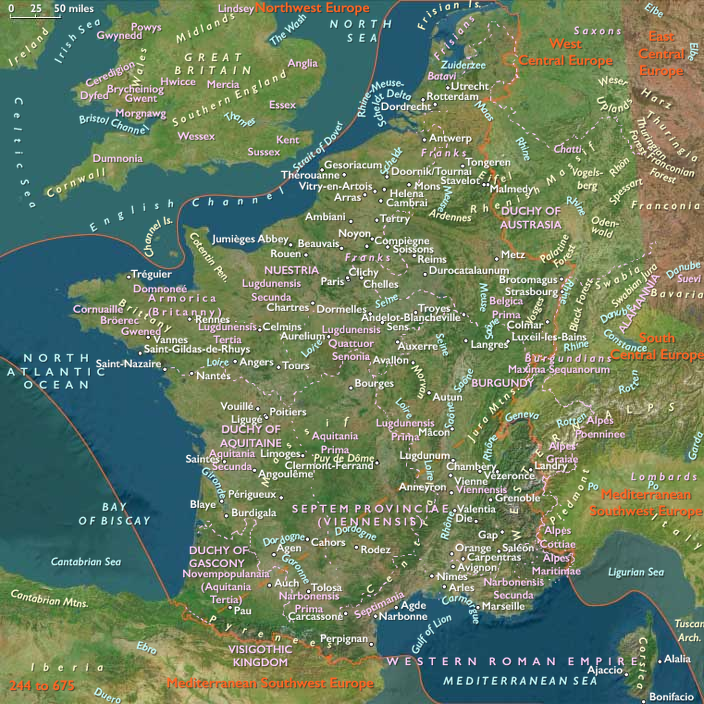 West Europe
Region
-
{# Image navigates to the detail page; the magnifying-glass chip is the only Fancybox lightbox trigger (kept a separate sibling — anchors can't nest). #}
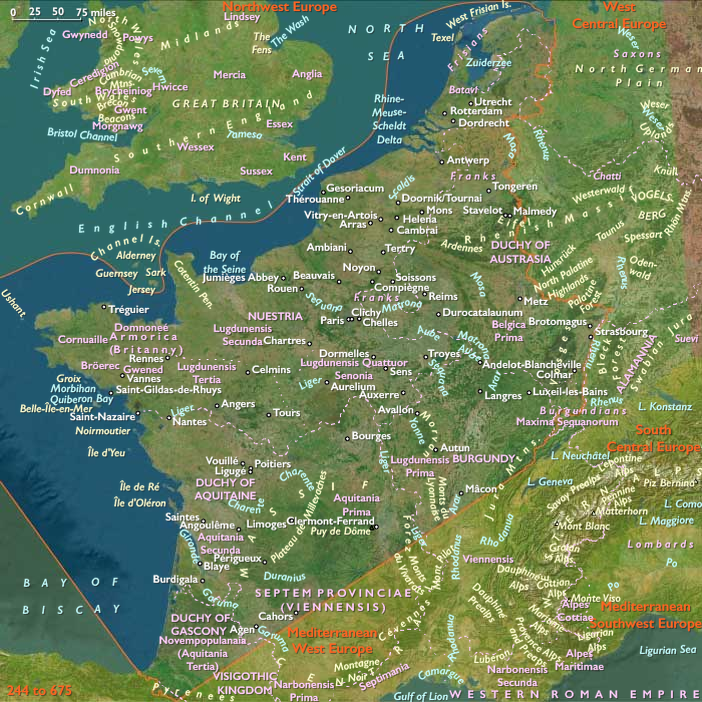 Atlantic West Europe
Subregion
