European Fashion Trends in the First Half…
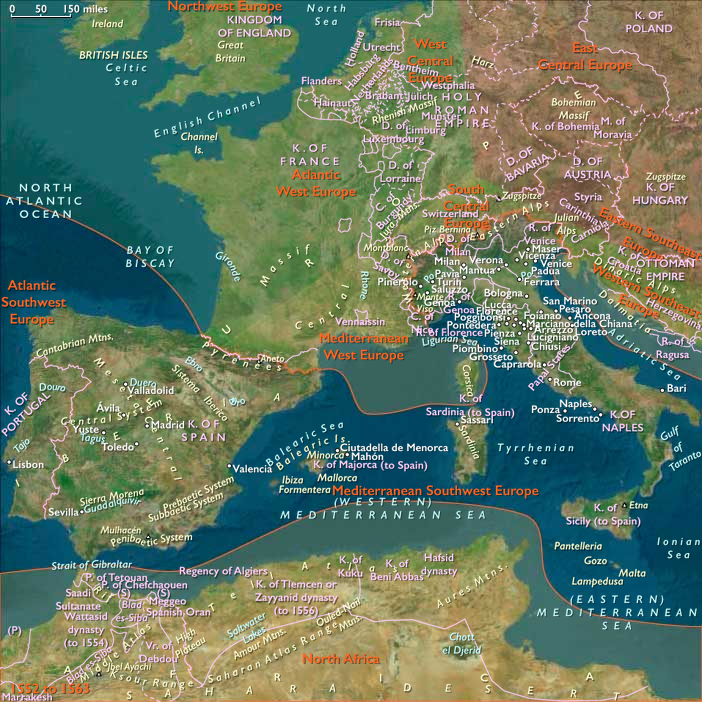
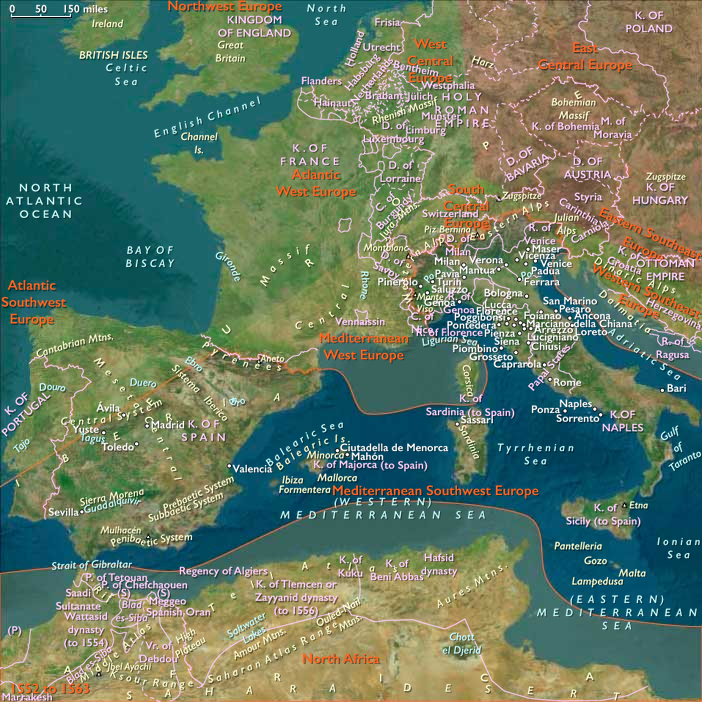
1552 CE to 1563 CE
European Fashion Trends in the First Half of the 16th Century (1500–1550)
The early 16th century saw significant changes in European fashion, influenced by Late Gothic styles, Tudor aesthetics, and Renaissance opulence. Clothing became more structured and elaborate, with an increasing emphasis on geometric shapes, rich materials, and accessories.
Women’s Fashion: Hoods, Headdresses, and Expanding Skirts
-
The Transformation of the Hood (1500–1550)
- The simple hood worn by European women around 1500 evolved into a peaked shape, resembling the pointed arch of Gothic architecture or the Tudor arch.
- This style became characteristic of playing card queens, as seen in Tudor and Valois court portraits.
-
The Growth of Skirts and the Introduction of Hoops (1550s)
- By 1550, women’s robes expanded dramatically below the waistline, requiring support structures.
- Hoops made of wire or wicker, held together with ribbons and tapes, were introduced to create the wide, structured skirts that would evolve into the farthingale.
-
Alternative Headwear: Hats as a Fashion Choice (1540s)
- By the 1540s, hats became a fashionable alternative to hoods in England, reflecting a shift toward Renaissance styles.
Men’s Fashion: Broad Hats, Fur Caps, and Accessories
-
Broad Hats and Jewel-Trimmed Brims
- Men’s hats became wide-brimmed and richly decorated, sometimes trimmed with gems to reflect wealth and status.
-
Fur Caps for Cold Climates
- In colder regions, men wore close-fitting fur caps, providing both warmth and style.
-
Linen Coifs: A Common Undergarment
- Coifs (close-fitting linen caps) were worn under fur caps, hoods, or hats, functioning as a layer of protection and insulation.
Conclusion: The Transition to Renaissance Elegance
Fashion in the first half of the 16th century saw a shift from Late Gothic simplicity to Renaissance grandeur. Women’s growing skirts and peaked hoods mirrored architectural influences, while hats and decorative trims signaled a move toward elaborate court fashion. These trends set the stage for the extravagant styles of the later Renaissance and Elizabethan era.

Commodities
Subjects
Regions
Subregions
East Europe
View →Northeast Europe
View →Eastern Southeast Europe
View →Western Southeast Europe
View →South Central Europe
View →Mediterranean West Europe
View →Mediterranean Southwest Europe
View →Atlantic Southwest Europe
View →Atlantic West Europe
View →West Central Europe
View →Northwest Europe
View →Related Events
Showing 10 events out of 37 total
East Central Europe (1552–1563 CE): Peace of Augsburg, Religious Consolidation, and Ongoing Ottoman Threat
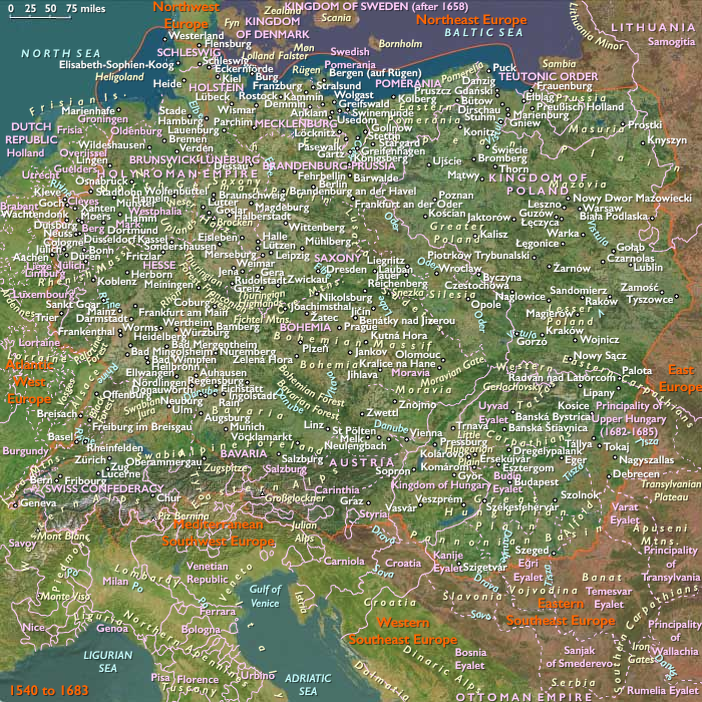
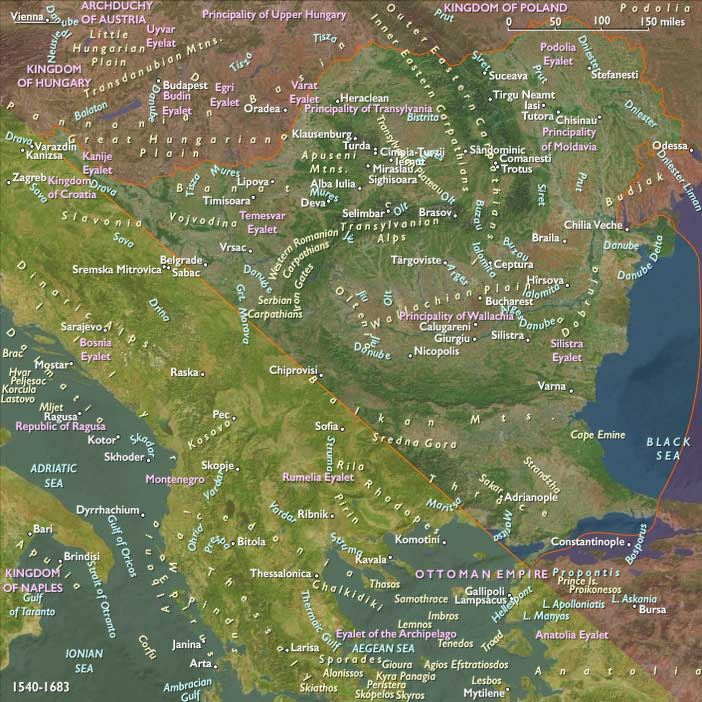
Between 1552 and 1563 CE, East Central Europe—encompassing Poland, Czechia, Slovakia, Hungary, and eastern Germany and Austria—experienced a significant stabilization of religious divisions, marked by the pivotal Peace of Augsburg (1555). This treaty formally recognized Lutheranism within the Holy Roman Empire, cementing confessional divides. Meanwhile, the continuing Ottoman threat shaped Habsburg defenses, especially along Hungary’s fragmented borders, prompting intensified fortification efforts. Poland-Lithuania remained relatively stable, enhancing its regional influence, while Bohemia and Saxony solidified their roles as major Protestant centers.
Political and Military Developments
Peace of Augsburg (1555): Cuius Regio, Eius Religio
-
The Peace of Augsburg, brokered by Emperor Ferdinand I, brought temporary resolution to religious conflict within the Empire, legally recognizing Lutheranism alongside Catholicism.
-
The principle of "cuius regio, eius religio" (whose realm, his religion) established the sovereign’s right to determine their territory's official religion. This further entrenched confessional divisions between Protestant and Catholic territories, notably between Lutheran Saxony, Mecklenburg, and Brandenburg, and Catholic Bavaria and Austria.
Habsburg Hungary and Ottoman Hostilities
-
Ottoman incursions continued into Hungary, prompting defensive campaigns led by Ferdinand I and his successor Maximilian II (1564–1576). Border fortresses such as Eger, Győr, and Komárom became pivotal in resisting Ottoman sieges.
-
Transylvania, under Ottoman suzerainty, consolidated its political autonomy under Prince John Sigismund Zápolya, serving as a balancing power between Habsburg and Ottoman interests.
Consolidation and Influence of Electoral Saxony
-
Under Elector Augustus of Saxony (r. 1553–1586), Electoral Saxony stabilized and prospered, becoming a focal point of Lutheran orthodoxy and education, thereby influencing religious and political dynamics throughout Protestant Europe.
Stability and Prosperity in Poland-Lithuania
-
Sigismund II Augustus (r. 1548–1572) governed Poland-Lithuania with relative stability and economic prosperity, strengthening royal administration and diplomatic influence.
Economic and Technological Developments
Economic Stabilization and Growth
-
Relative peace enabled economic stabilization and growth, particularly in Imperial Free Cities like Nuremberg, Augsburg, Regensburg, and Wrocław.
-
Trade networks linking Baltic, Central European, and Mediterranean markets flourished, boosting regional economies, especially those oriented toward agriculture, mining, and textiles.
Enhanced Military Fortifications
-
Persistent Ottoman threats necessitated technological improvements in fortress engineering, seen notably in Austria, Hungary, and Transylvania. These advancements strengthened regional defense capabilities.
Cultural and Artistic Developments
Lutheran Cultural Flourishing
-
Protestant territories, especially Electoral Saxony, Mecklenburg, and Brandenburg, saw vigorous cultural activity through enhanced support of Lutheran educational institutions, publishing houses, and theological scholarship.
Catholic Counter-Reformation Initiatives
-
Catholic territories—especially Austria, Bavaria, Salzburg, Passau, and Regensburg—increasingly embraced Counter-Reformation measures, supporting Jesuit education, Baroque artistic patronage, and reaffirming Catholic orthodoxy.
Polish-Lithuanian Renaissance
-
Under Sigismund II Augustus, Poland-Lithuania experienced notable cultural patronage, especially in humanistic scholarship, architecture, and Renaissance arts, enhancing its prestige and regional cultural significance.
Settlement and Urban Development
Reinforced Border Towns and Fortresses
-
Significant investments in urban fortifications along Hungarian, Austrian, and southern Polish frontiers reshaped settlement patterns, urban planning, and military infrastructure, notably in Eger, Vienna, Pressburg, and Graz.
Prosperity of Imperial Free Cities
-
Imperial Free Cities such as Nuremberg, Augsburg, and Regensburg continued flourishing economically and culturally, driven by vibrant trade, artisanal productivity, and growing political autonomy.
Social and Religious Developments
Entrenched Confessional Boundaries
-
The Peace of Augsburg deeply entrenched religious divisions within the Empire, prompting internal migrations as populations aligned more closely with their preferred confessions, thereby solidifying Lutheran and Catholic identities.
Rise of Jesuit Influence
-
Jesuit institutions expanded significantly in Catholic regions, especially in Austria, Bavaria, and Poland-Lithuania, fostering educational advancement and reinforcing Counter-Reformation efforts.
Long-Term Consequences and Historical Significance
The era 1552–1563 CE solidified East Central Europe's religious landscape through the Peace of Augsburg, permanently institutionalizing Lutheran-Catholic divisions within the Holy Roman Empire. Ongoing Ottoman threats reinforced Habsburg defensive fortifications, significantly shaping military architecture and urbanization. Electoral Saxony’s stability and Protestant influence deepened regional religious identity, while Poland-Lithuania continued thriving culturally and economically. Collectively, these developments defined East Central Europe's subsequent historical trajectory, embedding lasting religious and geopolitical patterns.
The 1552 campaign is a series of tragic losses for Hungarians, including the loss of Christian forts at Temesvár and Szolnok, which are blamed on mercenary soldiers within the Hungarian ranks, and ...
...some heroic, if Pyrrhic, victories, that enter folklore—most notably the fall of Drégely (a small fort defended to the last man by just one hundred and forty-six men), and ...
...the Siege of Eger.
The latter is an important stronghold and key to the defense of the remainder of Hungarian soil.
North of Eger lies the poorly reinforced city of Kassa (present day Košice), the center of an important region of mines and associated mints, which provide the Hungarian Kingdom with large amounts of quality silver and gold coinage.
The fall of Eger, besides allowing a takeover of that revenue source, would also enable the Ottoman Empire to secure an alternative logistic and troop route for further westward military expansion, possibly allowing the Turks to lay sieges on Vienna more frequently.
When the Turks turn their attention to Eger, few expect the defenders to put up much resistance.
The Castle of Eger is a major végvár with more than two thousand men, but in poor shape and without outside help.
The defenders face two large Ottoman armies, commanded by the Turkish lords Pasha Ali and Pasha Ahmed, which had crushed all opposition previously.
The defenders are outnumbered about one to fifty in hand-to-hand combat, but many of the Ottoman troops are worn out and tired because of their long journey on foot, which had started in the Balkans in the spring of 1552.
The Turks had expected an easy victory, but the bravery of the castle's defenders, as well as commander István Dobó's inspired leadership, resist and repulse repeated Turkish assaults.
Even after the storage tower, containing twenty-four metric tons of black gunpowder, explodes and causes extensive structural damage, the invaders still cannot find a way into the castle compound.
After thirty-nine days of bloody, brutal and intense fighting, the Ottoman Army withdraws, beaten and humiliated.
The defenders' losses amount to about one third of their ranks, including those killed and permanently maimed in combat.
Dobó loses both of his squires.
According to modern historical research, several external factors had contributed the defenders' success:
• There was significant infighting between the two Ottoman leaders.
• Ahmed was the senior and contributed twice as many troops to the united army, but Ali showed more strategic talent and proved his skill in artillery, heavily damaging the castle walls with his battery of just four large siege guns.
• During the siege, the Ottoman army ran out of gunpowder and cannonballs (which were carved out of marble) at least twice, limiting Ahmed's use of heavy artillery for a week or more.
• The end of autumn had arrived earlier than usual with heavy rain and freezing nighttime temperatures.
• Reduced rice rations and allegations of corruption among the officers had caused discontent among the Ottoman troops.
Dobó and his officers resign after the Ottoman withdrawal in order to protest King Ferdinand's refusal to contribute any material help to the defense.
Gergely Bornemissza, appointed to take over command of the fortress, is subsequently ambushed, captured and hanged by the Ottomans.
The Habsburg and Ottoman empires had signed a temporary truce in 1547, which the Habsburgs had soon disregarded.
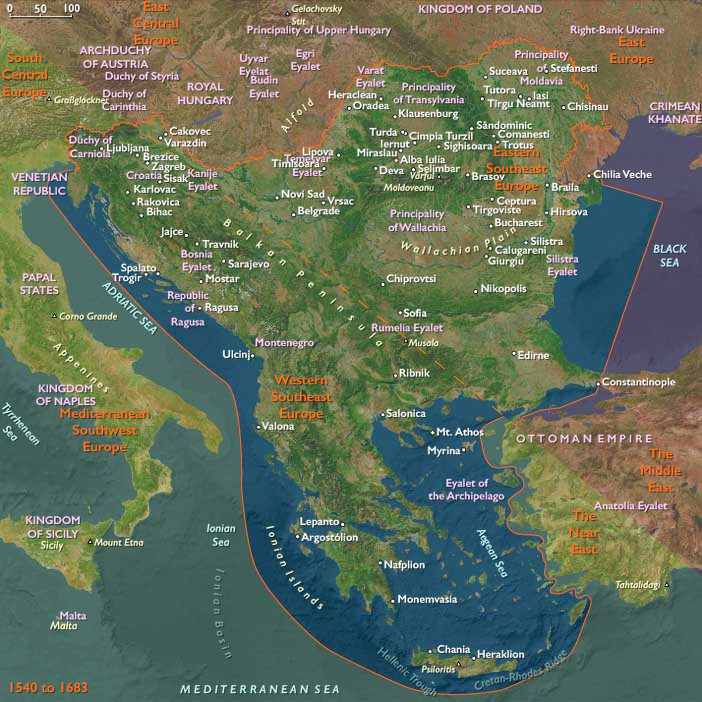
Two Imperial armies take the eastern part of central Hungary in the major but moderately successful campaign of 1552, pushing the borders of the Ottoman Empire to the second (inner) line of northern végvárs (border castles), which Hungary had originally built as defense against an expected second Mongol invasion—hence, afterwards, borders on this front have changed little.
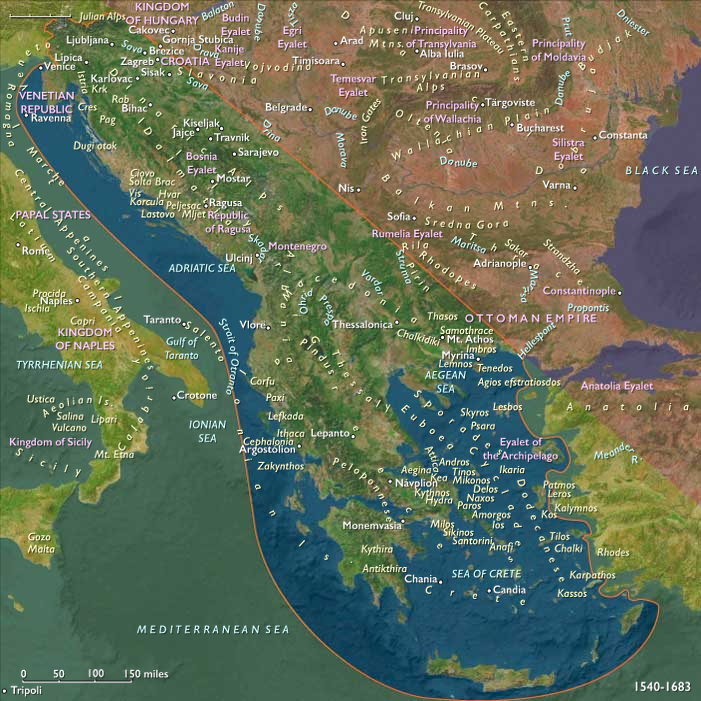
The most important change is the Turkish capture of the Banat of Temesvár (Timisoara) in 1552, which the Ottomans make into a new province.
Temesvár will remain under Ottoman control even after the Treaty of Karlowitz and will be recaptured by the Christian forces only in 1717.
The Ottomans conclude an unofficial armistice with Austria in 1553, recalling their main army for a new campaign in the protracted Turko-Persian War that had begun in 1526.
The Austrians unsuccessfully attempt a diplomatic annexation of the disputed Austrian Hungary.
The Ottomans' annual campaign finally secures their influence over Transylvania (which had fallen under Habsburg control for a time) in 1556, while failing to gain any ground on the western front, being tied down in the second (after 1555) unsuccessful siege of the southwestern Hungarian border castle of Szigetvár.
Hungary's first printing press is established in 1561 at Debrecen, whose inhabitants are mainly Hungarian Calvinists.
Austria and the Ottoman empire conclude a formal peace in 1563 that merely renews the terms of the 1547 accord, perpetuates the three Hungaries: Austrian (Royal), Buda (Ottoman), and Transylvanian.
East Central Europe (1564–1575 CE): Maximilian II's Rule, Religious Moderation, Transylvanian Autonomy, and Polish-Lithuanian Stability
Between 1564 and 1575 CE, East Central Europe—including modern-day Poland, Czechia, Slovakia, Hungary, and eastern Germany and Austria—experienced a phase of political moderation, religious coexistence, and increased stability under the comparatively tolerant rule of Emperor Maximilian II. This era also saw the consolidation of Transylvania's political autonomy within the Ottoman sphere, continuing prosperity in the Polish-Lithuanian Commonwealth under Sigismund II Augustus, and intensified Protestant-Catholic interactions within the Holy Roman Empire.
Political and Military Developments
Moderate Rule of Emperor Maximilian II (1564–1576)
-
Emperor Maximilian II promoted moderate religious policies, advocating limited toleration between Protestants and Catholics, which temporarily eased confessional tensions, especially in Bohemia, Moravia, and the Austrian lands.
-
His pragmatic governance brought relative stability, balancing religious interests across his diverse territories while reinforcing Habsburg authority.
Strengthened Autonomy in Transylvania under John Sigismund Zápolya
-
John Sigismund Zápolya (r. 1540–1571) firmly established Transylvania as a semi-independent principality under Ottoman suzerainty, maintaining diplomatic and military neutrality between the Ottomans and Habsburgs.
-
He notably issued the Edict of Torda (1568), promoting unprecedented religious freedom in Transylvania, officially recognizing Catholic, Lutheran, Calvinist, and Unitarian denominations.
Stability and Dynastic Continuity in Poland-Lithuania
-
The rule of Sigismund II Augustus (r. 1548–1572) remained stable, emphasizing dynastic continuity and maintaining the Commonwealth’s internal cohesion and external diplomatic strength.
-
Upon Sigismund’s death in 1572, the lack of a direct heir initiated an elective monarchy, leading to political uncertainty and intensified aristocratic influence.
Saxon Electoral Strength under Augustus I
-
Electoral Saxony, under Elector Augustus I (r. 1553–1586), further solidified its political and economic influence, reinforcing Lutheran orthodoxy, enhancing administration, and expanding its cultural patronage and diplomatic stature within the empire.
Economic and Technological Developments
Ongoing Economic Prosperity and Trade Networks
-
Imperial Free Cities like Augsburg, Nuremberg, and Regensburg continued flourishing economically, benefiting from stable trade networks linking Baltic, central European, and Mediterranean markets.
-
Increased agricultural productivity and artisanal specialization promoted regional prosperity, especially within Silesia, Saxony, and Bohemia.
Advances in Military and Urban Fortifications
-
Persistent Ottoman threats led to continued advancements in military engineering and fortifications along the Habsburg-Ottoman frontier, notably in Vienna, Graz, and Győr, strengthening defensive capabilities.
Cultural and Artistic Developments
Moderate Religious Climate and Cultural Exchange
-
Maximilian II’s moderate religious stance fostered relative cultural openness, encouraging intellectual exchange and tolerance between Catholic and Protestant scholars and theologians, particularly in Prague, Vienna, and Augsburg.
Renaissance Flourishing in Poland-Lithuania
-
Under Sigismund II Augustus, Poland-Lithuania enjoyed significant cultural patronage, exemplified by Renaissance architecture, humanist scholarship, artistic innovation, and expansion of printing and literary culture.
Protestant Intellectualism in Transylvania
-
Transylvania emerged as a vibrant center of Protestant theology, scholarship, and education, largely due to the principality’s exceptional religious tolerance and the establishment of influential schools in cities like Cluj (Kolozsvár).
Settlement and Urban Development
Expansion of Urban Centers and Infrastructure
-
Stable governance promoted urban growth and infrastructural expansion, particularly in Vienna, Prague, Kraków, and Wrocław, reinforcing their importance as political, economic, and cultural centers.
Continued Defensive Urbanization
-
Continued Ottoman pressures reinforced defensive urbanization, especially in frontier cities along the Hungarian, Austrian, and Transylvanian borders, significantly shaping their urban landscapes and architecture.
Social and Religious Developments
Religious Pluralism under Maximilian II and John Sigismund
-
Religious pluralism expanded, especially due to Maximilian II’s tolerant policies in Bohemia, Austria, and Moravia, and John Sigismund Zápolya’s groundbreaking Edict of Torda in Transylvania, significantly influencing regional religious dynamics.
Aristocratic Power in Poland-Lithuania
-
The Polish-Lithuanian nobility (szlachta) increased their political power upon Sigismund II Augustus’s death in 1572, laying the foundation for future elective monarchies and strengthened aristocratic governance.
Long-Term Consequences and Historical Significance
The era 1564–1575 CE proved a significant moment of moderation, cultural openness, and relative stability within East Central Europe, largely shaped by Emperor Maximilian II’s moderate policies and Transylvania’s progressive religious tolerance. Sigismund II Augustus’s stable rule concluded the Jagiellonian dynasty, initiating an era of elective monarchy and intensified aristocratic governance in Poland-Lithuania. Electoral Saxony maintained Protestant strength, reinforcing confessional divisions codified by the Peace of Augsburg. These developments collectively laid important foundations for East Central Europe's political and religious dynamics into the late 16th and early 17th centuries.