The Aramaeans, a West Semitic-speaking seminomadic people,…
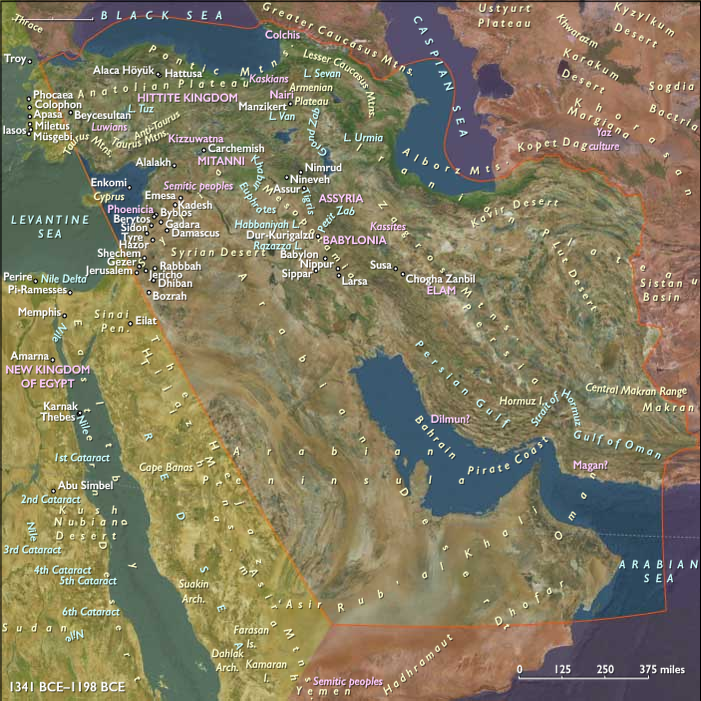
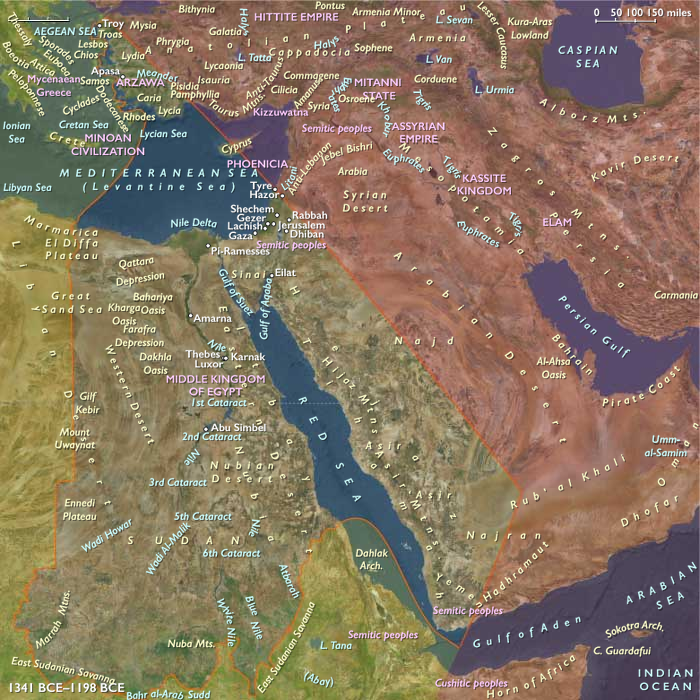
1341 BCE to 1198 BCE
The Aramaeans, a West Semitic-speaking seminomadic people, wander the Syro-Palestinian area in the Near East. (Deuteronomy 26:5 describes Jacob, a Hebrew ancestor, as a “wandering Aramaean.”)
The origin of the Aramaeans is still uncertain, arising from the limited amount of evidence regarding the mention of Aramaeans in Mesopotamian inscriptions.
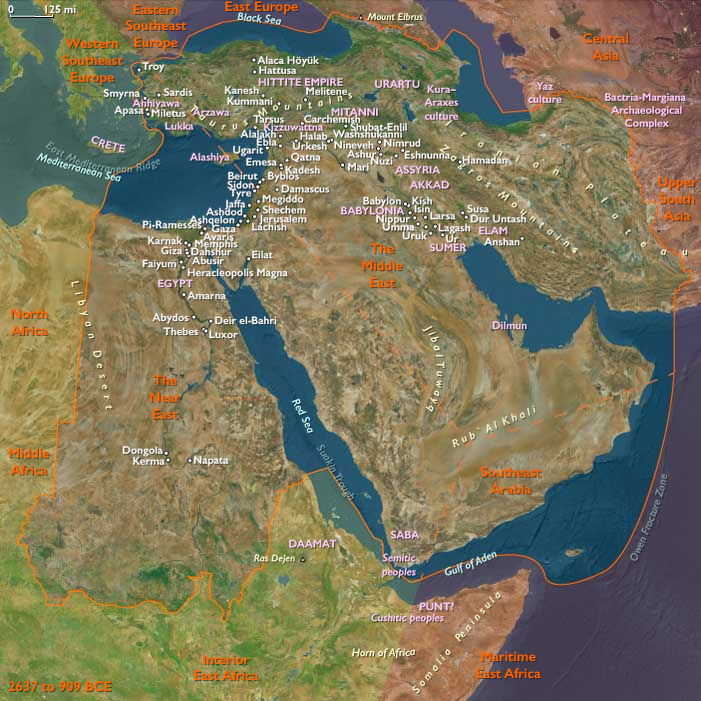
The toponym A-ra-mu appears in an inscription at Ebla listing geographical names, and the term Armi, which is the Eblaite term for nearby Aleppo, occurs frequently in the Ebla tablets of around 2300 BCE.
One of the annals of Naram-Sin of Akkad (about 2250 BCE) mentions that he captured "Dubul, the ensi of A-ra-me" (Arame is seemingly a genitive form), in the course of a campaign against Simurrum in the northern mountains.
Other early references to a place or people of "Aram" have appeared at the archives of Mari (about 1900 BCE) and at Ugarit (about 1300 BCE).
There is little agreement concerning what, if any, relationship there was between these places, or if the Aramu were actually Aramaeans; the earliest undisputed mention of Aramaeans as a people is in the inscriptions of Tiglath Pileser I (about 1100 BCE).
Subjects
Regions