
The Arsenites in Constantinople and elsewhere fanatically …
Years: 1274 - 1274
The Arsenites in Constantinople and elsewhere fanatically oppose the pro-Latin policy of Eastern Roman Emperor Michael VIII Palaiologos, professing obedience to the Holy See in the name of their emperor, accept papal supremacy over the Greek Church.
Bonaventure, after having successfully defended his order against the reproaches of the anti-mendicant party, had been elected Minister General of the Franciscan Order.
On November 24, 1265, he had been selected for the post of Archbishop of York; however, he was never consecrated and resigned the appointment in October 1266.
Bonaventure has steered the Franciscans on a moderate and intellectual course that will make them the most prominent order in the Catholic Church until the coming of the Jesuits.
His theology is marked by an attempt completely to integrate faith and reason.
He thinks of Christ as the “one true master” who offers humans knowledge that begins in faith, is developed through rational understanding, and is perfected by mystical union with God.
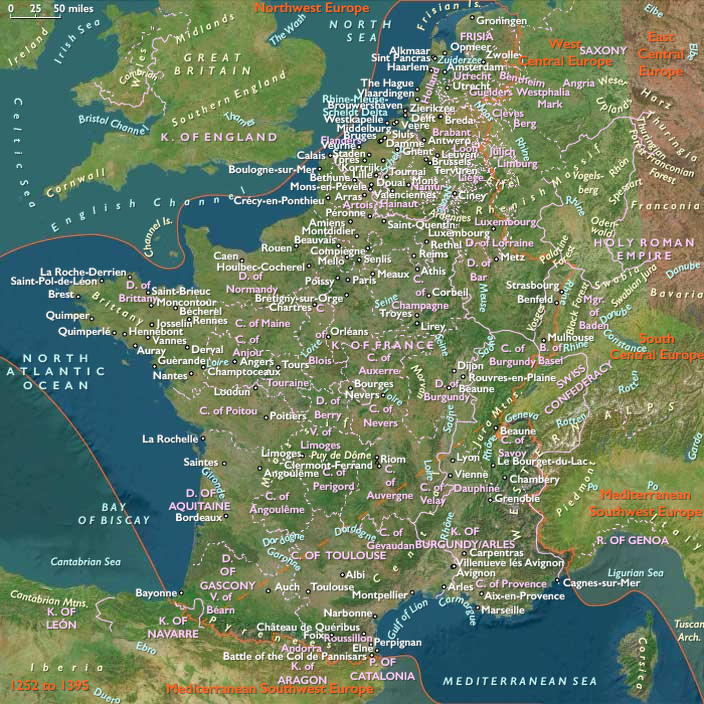
Bonaventure had been instrumental in procuring the election of Pope Gregory X, who on May 28, 1273, had rewarded him with the title of Cardinal Bishop of Albano, and insisted on his presence at the Second Council of Lyon, convoked to bring about church reform, to launch of a new Crusade to the Holy Land, and to achieve union between the Eastern and Western churches.
Bonaventure and Albertus Magnus are among the better known participants in the council; Thomas Aquinas had died on his way to attend.
The council, convened to consider the liberation of the Holy Land via Crusades and address the East-West Schism with the Eastern church, eventually approves a tithe to support efforts to liberate the Holy Land from Muslims, and works out a tenuous reunion of the two churches (but the Eastern clergy, whose hostility toward the West had greatly intensified after the sacking of Constantinople in 1204 by the Fourth Crusade, will never actually accept it).
The council defines the official Roman Catholic teaching on purgatory (from the Latin purgare, "to cleanse") as the place or state after death where those who have died in a state of grace but not free from imperfection expiate their remaining sins before entering the visible presence of God and the saints. (The damned, on the other hand, go straight to Hell.)
Bonaventure, known as the Seraphic Doctor, resigns soon afterwards as Franciscan minister general on account of illness, which proves mortal.
After his significant contributions lead to a union of the Greek and Latin churches, Bonaventure dies suddenly and in suspicious circumstances on July 15, 1274.
The Catholic Encyclopedia has citations that suggest he was poisoned.
Locations
People
Groups
- Greeks, Medieval (Byzantines)
- Muslims, Sunni
- Papal States (Republic of St. Peter)
- Christians, Roman Catholic
- Christians, Eastern Orthodox
- Franciscans, or Order of St. Francis
- Egypt and Syria, Mamluk Bahri Sultanate of
- Palestine, Mamluk
- Roman Empire, Eastern: Palaiologan dynasty
Topics
Commodoties
Subjects
Regions
Subregions
Years: 1274 - 1274
Locations
People
Groups
- Greeks, Medieval (Byzantines)
- Muslims, Sunni
- Papal States (Republic of St. Peter)
- Christians, Roman Catholic
- Christians, Eastern Orthodox
- Franciscans, or Order of St. Francis
- Egypt and Syria, Mamluk Bahri Sultanate of
- Palestine, Mamluk
- Roman Empire, Eastern: Palaiologan dynasty
Topics
Commodoties
Subjects
Regions
Subregions