Event
The Augustinian Rule, the ancient Rule of…
The Augustinian Rule, the ancient Rule of life for hermits, had been established soon after Augustine of Hippo had been converted by Bishop Ambrose in Milan around the year 384.
The extant Augustinian orders claim lineage from the communities founded by Augustine of Hippo, and while the history of ideas is evident, historic continuity is not conclusively proven according to the standards of contemporary historical method.
The most likely process of transmission occurred between the years 430 and 570 as the Roman empire collapsed—rapidly in Roman North Africa.
By the eleventh century there had appeared historically identifiable groups of clerics in various part of Europe who renounced private property and lived together in community following the Rule of St. Augustine described above.
These original Augustinians, the Augustinian, or Austin, Canons—or Canons Regular of Saint Augustine—date from the eleventh century. (Their order is today one of the oldest and most prestigious Latin Rite orders.)
The consolidation of this movement can be connected to the changes proposed by the Gregorian Reform.
Pope Innocent IV had in 1243 issued the decree Incumbit Nobis, which had called together a number of monastic communities in Tuscany.
The Augustinians owe their formal existence to the policy of Popes Innocent IV and Alexander IV, who wished to counterbalance the influence of the powerful Franciscans and Dominicans by means of a similar order under more direct papal authority and devoted to papal interests.
Pope Alexander in 1256 establishes a second main group of Augustinans, the Augustinian Hermits or Friars, uniting five Monastic congregations into the Tuscan community of Lecceto.
The traditional Augustinian habit is a black tunic, a short cape, and a cowl. (The Augustinian Hermits, eventually known as the Order of the Hermit Friars of Saint Augustine, are today a mendicant order subject to the jurisdiction of the international Prior-General in Rome.)
-
{# Image navigates to the detail page; the magnifying-glass chip is the only Fancybox lightbox trigger (kept a separate sibling — anchors can't nest). #}
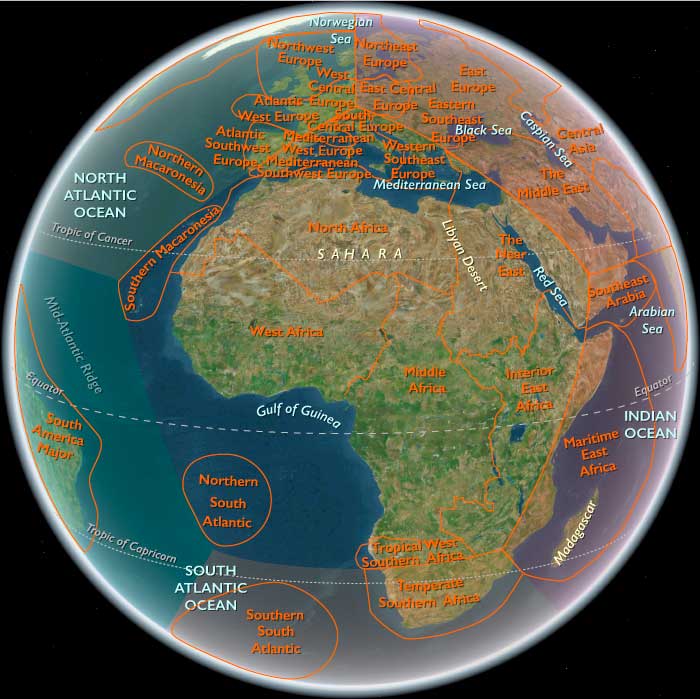
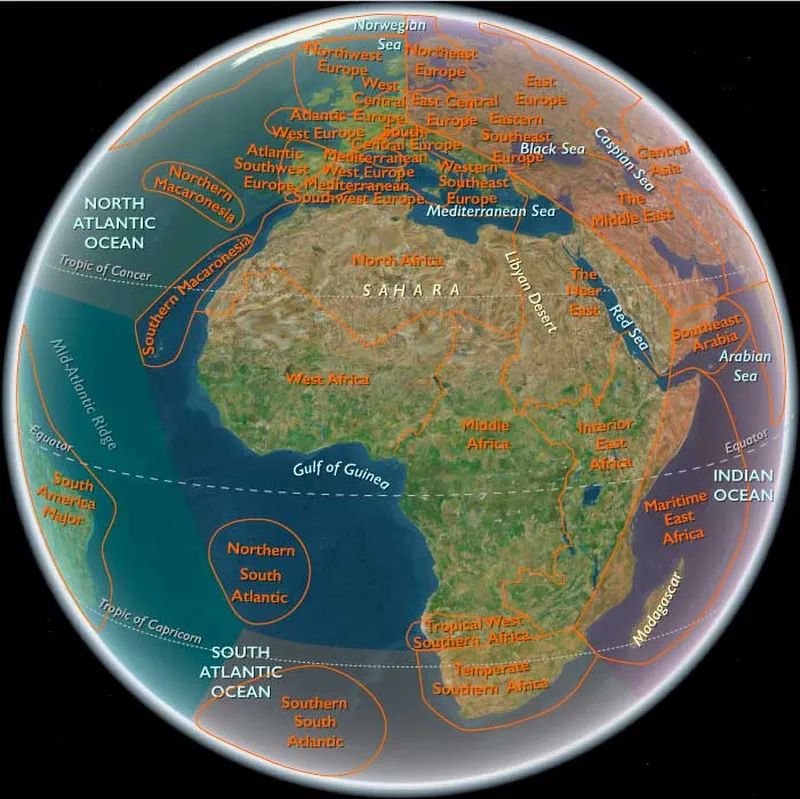 The Middle of The Earth
World
-
{# Image navigates to the detail page; the magnifying-glass chip is the only Fancybox lightbox trigger (kept a separate sibling — anchors can't nest). #}
 Southwest Europe
Region
-
{# Image navigates to the detail page; the magnifying-glass chip is the only Fancybox lightbox trigger (kept a separate sibling — anchors can't nest). #}
 Mediterranean Southwest Europe
Subregion