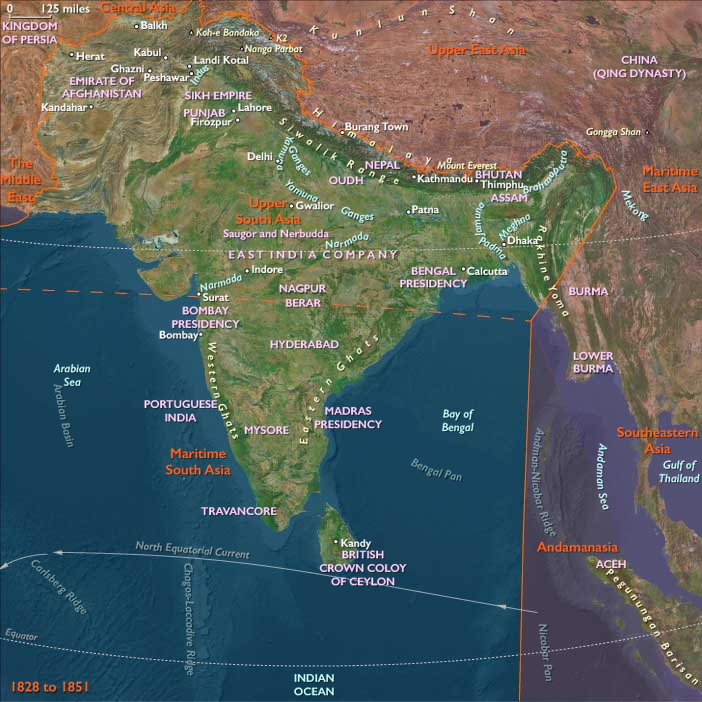
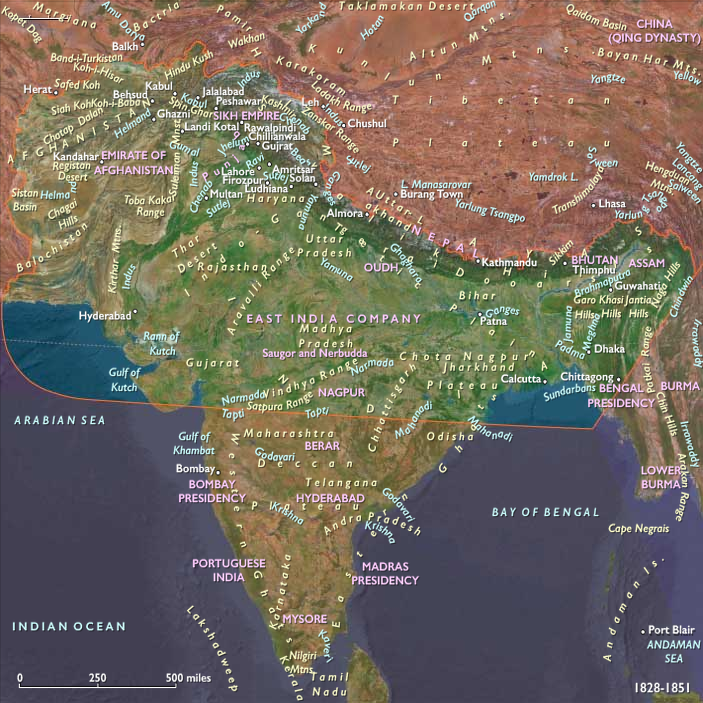
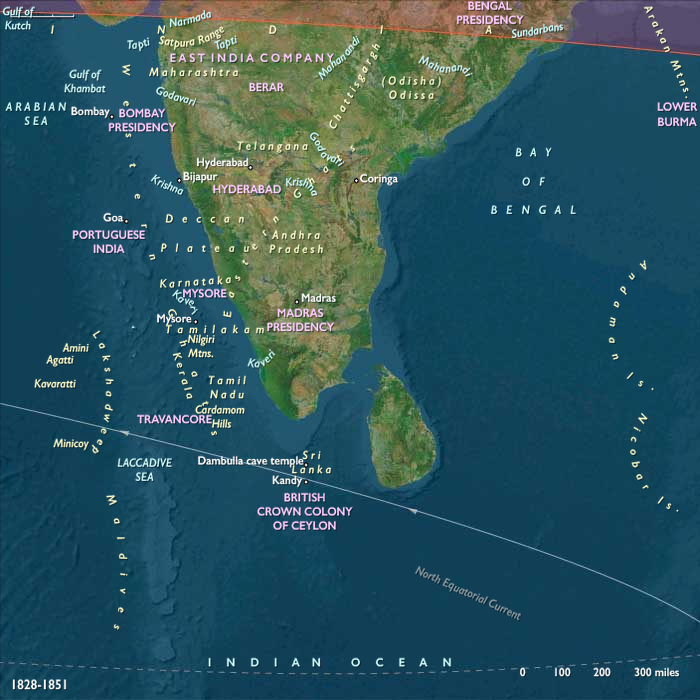
A multiplicity of motives underlie the British…
1828 CE to 1839 CE
A multiplicity of motives underlie the British penetration into India: commerce, security, and a purported moral uplift of the people.
The "expansive force" of private and British East India Company trade eventually led to the conquest or annexation of territories in which spices, cotton, and opium are produced.
British investors have ventured into the unfamiliar interior landscape in search of opportunities that promise substantial profits.
British economic penetration is aided by Indian collaborators, such as the bankers and merchants who control intricate credit networks.
British rule in India would have been a frustrated or half-realized dream had not Indian counterparts provided connections between rural and urban centers.
External threats, both real and imagined, such as the Napoleonic Wars (1796-1815) and Russian expansion toward Afghanistan (in the 1830s), as well as the desire for internal stability, have led to the annexation of more territory in India.
Political analysts in Britain had wavered initially as they were uncertain of the costs or the advantages in undertaking wars in India, but by the 1810s, as the territorial aggrandizement eventually paid off, opinion in London had welcomed the absorption of new areas.
Occasionally the British Parliament witnesses heated debates against expansion, but arguments justifying military operations for security reasons always win over even the most vehement critics.
Groups
Commodities
Regions