The Burgundian Wars and Fall of Charles…
1468 CE to 1479 CE
The Burgundian Wars and Fall of Charles the Bold (1474–1477)
The Burgundian Wars, lasting from 1474 to 1477, marked a climactic conflict between the ambitious Burgundian Duke Charles the Bold and the rival kingdoms of France and the Old Swiss Confederacy, drastically reshaping the geopolitical landscape of late medieval Atlantic West Europe. This decisive conflict ultimately led to Burgundy's dramatic downfall as an independent power, significantly influencing European political history.
Origins and Outbreak of the War (1474)
Open warfare commenced in 1474, reflecting long-simmering tensions between Charles’s aggressive territorial ambitions and King Louis XI’s strategic pursuit of centralized French power. Charles’s efforts to establish a unified Burgundian empire, extending from northern France into the Low Countries and the Rhineland, threatened both French royal interests and the autonomy of neighboring territories, particularly the fiercely independent Swiss Cantons. The alliance of Louis XI and the Swiss Confederates formed a potent coalition determined to halt Burgundian expansion.
Military Campaigns and Burgundian Defeats (1475–1477)
Over the subsequent three years, Charles suffered three catastrophic defeats:
- Battle of Grandson (March 1476): Charles’s forces suffered a devastating defeat against the Swiss Confederates, signaling the beginning of his military decline.
- Battle of Morat (Murten) (June 1476): Charles again faced defeat at the hands of Swiss forces, suffering heavy losses and severely damaging Burgundian military power.
- Battle of Nancy (January 1477): The decisive battle, fought near the Burgundian capital Nancy, resulted in a catastrophic Burgundian defeat and the death of Charles himself. His body, famously found mutilated and frozen after the battle, symbolically underscored the dramatic end of his ambitious political and military career.
Immediate Political and Territorial Consequences
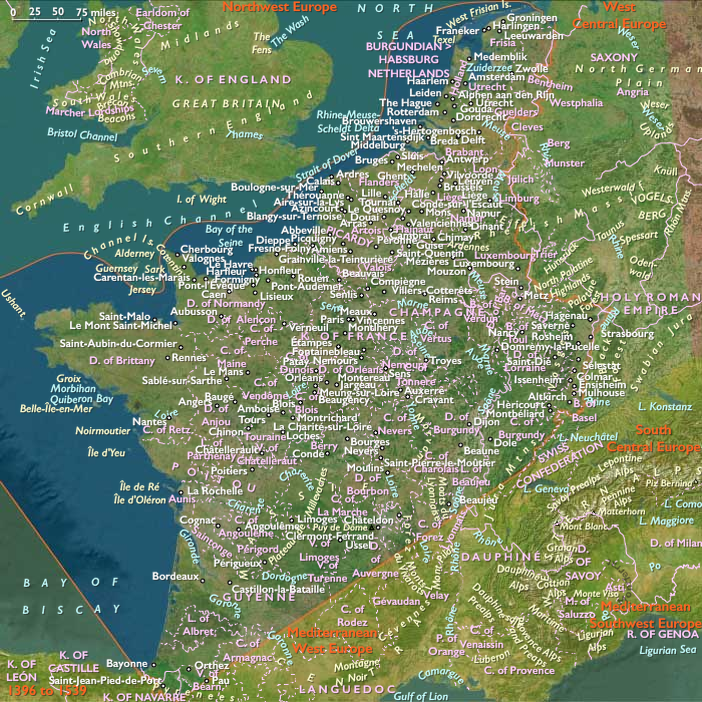
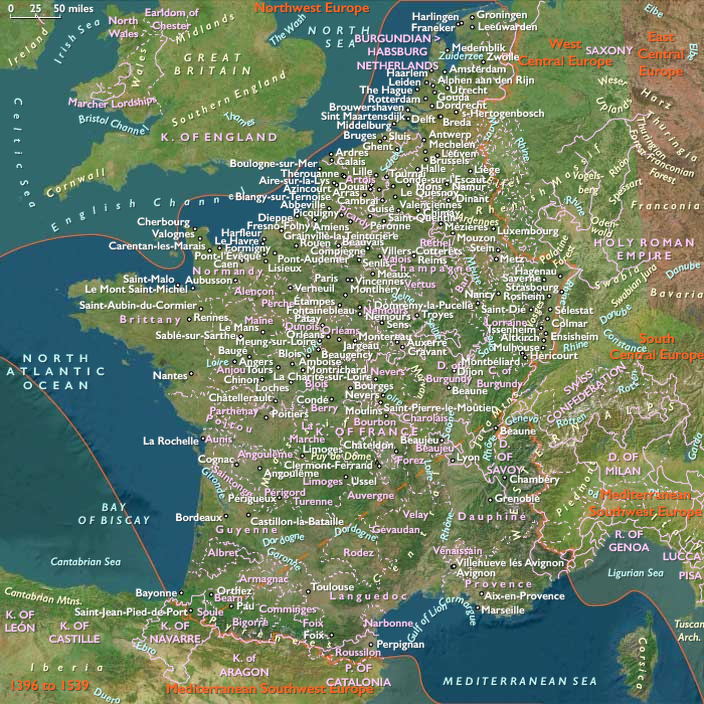
Charles’s death abruptly dissolved the Burgundian dream of a cohesive empire. The Duchy of Burgundy proper and several other territories immediately reverted to French control, significantly bolstering the territorial consolidation and centralization policies of Louis XI.
However, the expansive Burgundian Netherlands and the strategically important region of the Franche-Comté passed to Charles’s sole heir, his daughter Mary of Burgundy. Her subsequent marriage in 1477 to Austrian Archduke Maximilian of Habsburg decisively shifted Burgundian influence into the orbit of the powerful House of Habsburg, establishing a pivotal dynastic link between the Netherlands and Austria.
Cultural and Economic Impact
The Burgundian Wars not only reshaped political boundaries but also drastically altered regional economic and cultural trajectories. The dissolution of the Burgundian state weakened traditional trade networks, initially disrupting commerce. However, the subsequent integration of the Low Countries into the Habsburg domain provided renewed stability and facilitated economic prosperity, enhancing the Netherlands’ role as a major center of European trade, culture, and political influence.
Long-Term Historical Significance
The collapse of Burgundy dramatically reshaped Europe's political landscape, strengthening French royal authority under Louis XI and initiating Habsburg dominance in the Low Countries. The Burgundian Wars thus decisively marked the decline of medieval feudal principalities, paving the way toward early modern states defined by centralized monarchies and dynastic empires.
Charles the Bold’s defeat at Nancy remains a pivotal historical turning point, marking the end of Burgundy as a major independent power and laying the foundations for the intense dynastic rivalries and territorial conflicts that would shape European politics for centuries.
People
Groups
Commodities
Subjects
Regions
West Europe
View →Subregions