Ecclesiastical Architecture Around the Year 1000: A Transition Toward Romanesque Design
The period around 1000 CE witnessed an unprecedented wave of church construction, reflecting the growing stability of medieval Europe and the increasing power of both monastic and episcopal institutions. While few of these early structures have survived intact, their ground plans and architectural remnants reveal a transition from wooden-roofed basilicas to the monumental stone churches of the Romanesque period.
Key Characteristics of Churches Built Around 1000 CE
- Most were basilicas with east and west choirs, allowing for processional movement and multiple liturgical spaces.
- Wooden roofs remained common, but the shift toward stone vaulting was beginning.
- While basilicas on columns were rare, notable examples include:
- Oberzell on the island of Reichenau in the south.
- St. Peter’s at Utrecht in the north.
- Churches with a single nave were equally rare, with examples such as:
- The original St. Pantaleon in Cologne.
- St. Patroclus’s Church in Soest, Germany.
Major Cathedrals and Monastic Foundations
Among the most significant ecclesiastical centers built or rebuilt around the turn of the millennium were the cathedrals of:
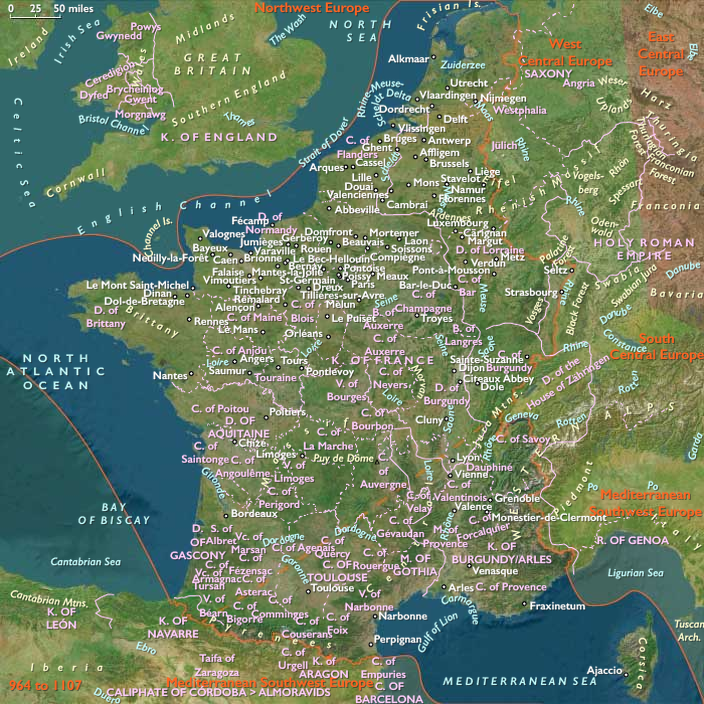
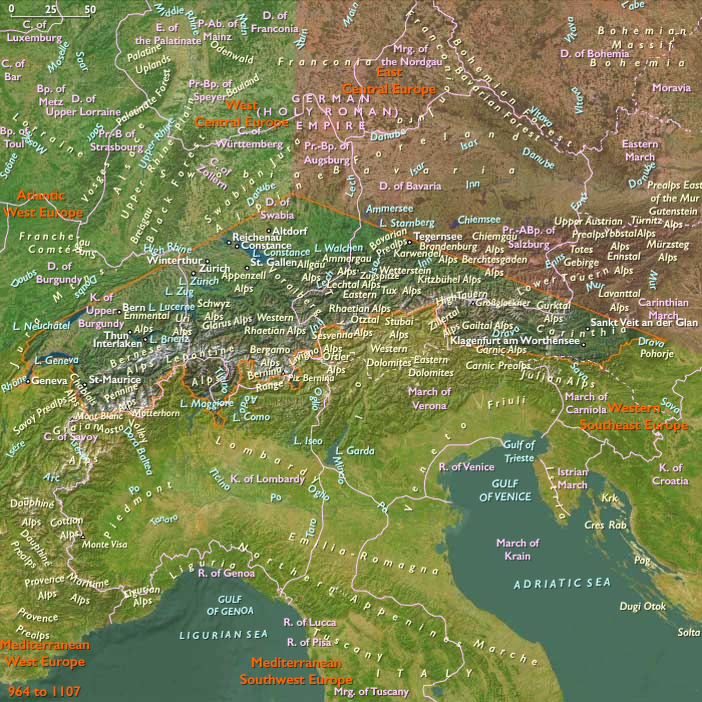
- Magdeburg, Merseburg, Paderborn, Liège, Mainz, Worms, Strasbourg, Verdun, Basel, Metz, Eichstätt, Bamberg, Regensburg, Augsburg, Lausanne, and Dijon.
- Many of these structures were later rebuilt in Romanesque or Gothic styles, but their original layouts reveal early Ottonian and pre-Romanesque influences.
Influence of the Aachen Chapel
- The octagonal chapel of Aachen, built by Charlemagne, remained an architectural inspiration, influencing churches such as:
- Ottmarsheim in Alsace, France.
- Nijmegen in The Netherlands.
- At Essen Minster, the west choir uniquely adopted the forms of the Aachen chapel but placed them within a semihexagonal ground plan.
St. Michael’s at Hildesheim: The Apex of Ottonian Architecture
- Among the best-preserved Ottonian churches, St. Michael’s Abbey in Hildesheim stands as a landmark in medieval architecture.
- The church introduced the cubical (or cushion) capital, a stylistic element that would later define Romanesque architecture.
Conclusion: Foundations of the Romanesque Style
The churches built around the millennium represent a crucial architectural transition, bridging the gap between Carolingian and Romanesque styles. Their ground plans, sculptural elements, and structural innovations laid the groundwork for the monumental cathedrals of the 11th and 12th centuries, shaping the sacred architecture of medieval Europe.