European missionaries, convinced in large measure of…
1876 CE to 1887 CE
European missionaries, convinced in large measure of the value of colonial rule, therefore reinforce colonial policy.
In reaction, some African Christian communities form their own independent churches.
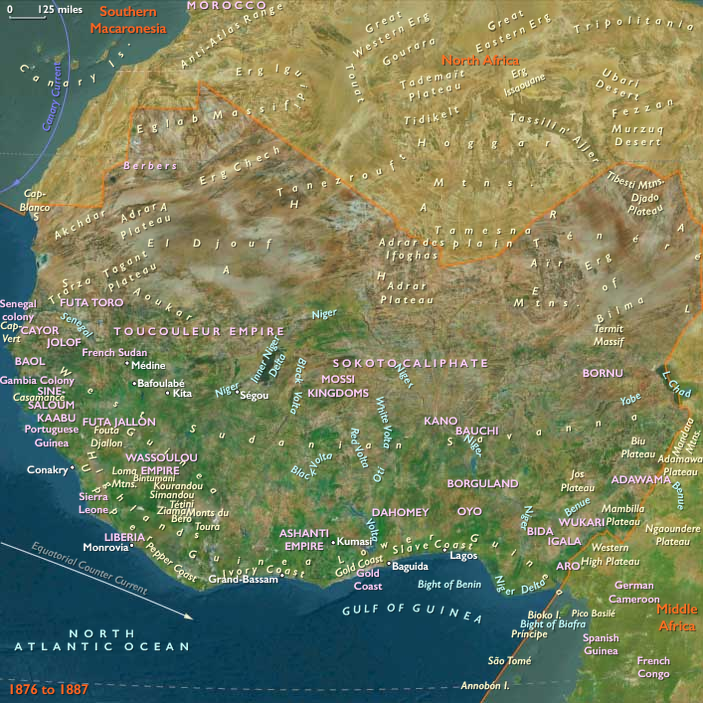
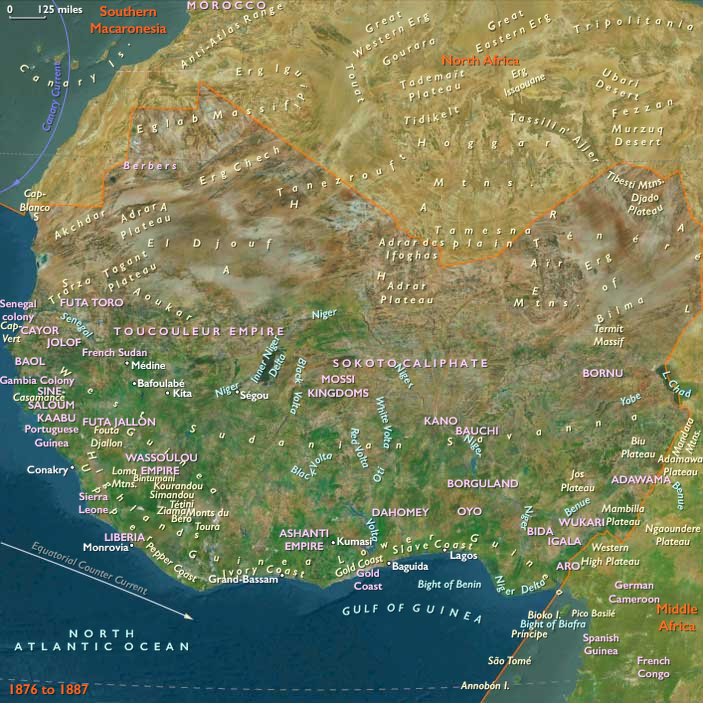
Prodded by the instability created by the Yoruba wars and by the activities of other European powers, Britain moves cautiously but inexorably toward colonial domination of the lower Niger Basin.
In the decades that follow Britain's abolition of the slave trade, British diplomacy weaves a fabric of treaties with kings and chieftains whose cooperation is sought in suppressing the traffic.
British interests also dictate occasional armed intervention by the Royal Navy and by the Royal Niger Company Constabulary to staunch the flow of slaves to the coast, to protect legitimate commerce, and to maintain peace.
Moreover, the missionaries cry out for protection and assistance in stamping out slavery and other "barbarous practices" associated with indigenous religions.
Finally, the posting of consular officials by the Foreign Office to service the increasing amount of trade in the ports of the bights of Benin and Biafra helps project British influence inland.
Locations
Groups
Regions
West Africa
View →Subregions