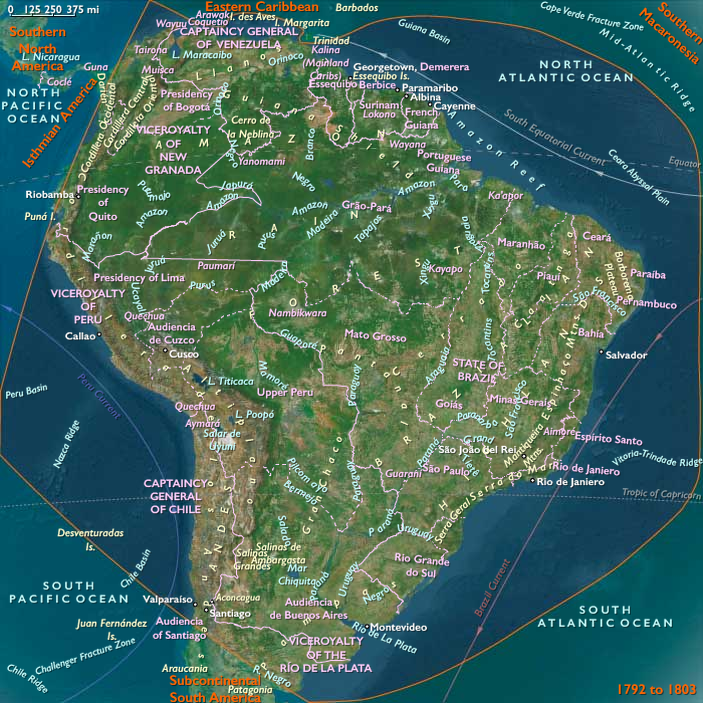
Not only scientific concepts but also ideas…
1792 CE to 1803 CE
Not only scientific concepts but also ideas subversive of the existing political order manage to penetrate late-colonial New Granada, which is in principle an absolute monarchy.
News of the American and French revolutions penetrates, too, and in 1793 a prominent member of the criollo elite, Antonio Nariño, printed in Santa Fe a translation of the French revolutionary "La Declaration des Droits de l'Homme et du Citoyen" (Declaration of the Rights of Man and Citizen) of 1789.
For this act, Nariño is arrested in 1794 and will spend much of his time in prison until the final independence movement begins.
It would seem that even at that early date he is hoping ultimately for outright independence, in which regard he is ahead of most New Granadans.
Yet it occurs to more and more New Granadans, especially in the ranks of the educated minority, that the colonial regime is susceptible to improvement, even short of breaking all ties to Spain.
Political unrest reflects more than just the appearance of liberal and democratic ideas or the example of the British American colonies, which have demonstrated the feasibility of breaking loose from imperial control.
Locations
People
Groups
Topics
Commodities
Subjects
Regions

South America
View →Subregions