Establishment of Postal Communication in England and…
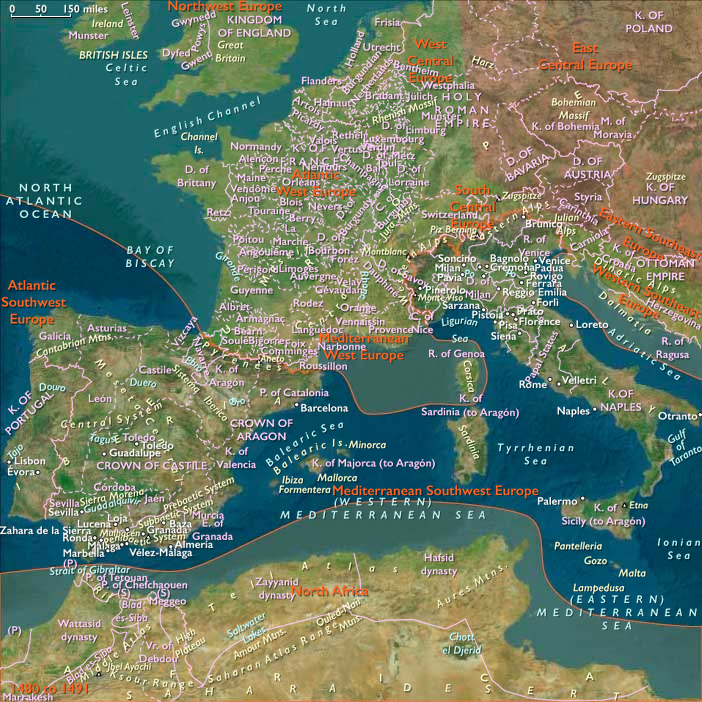
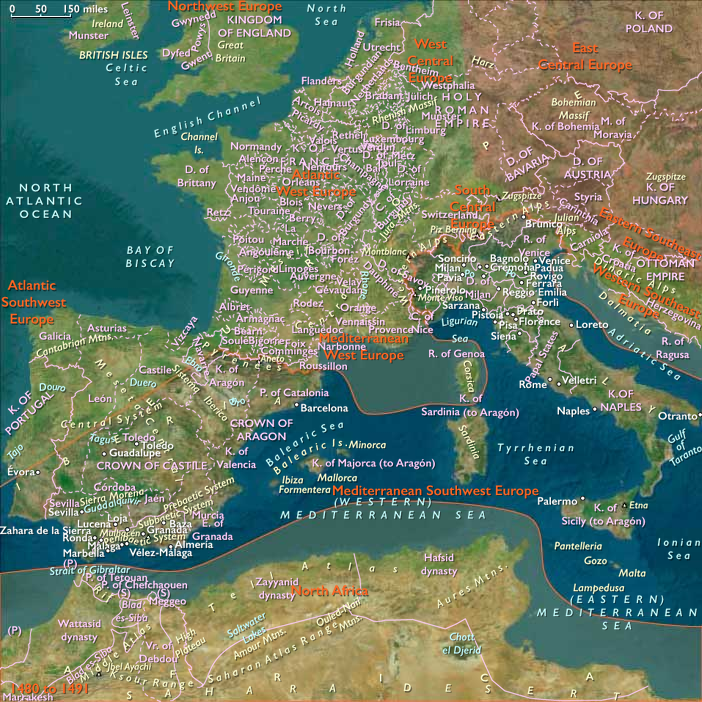
1480 CE to 1491 CE
Establishment of Postal Communication in England and Atlantic West Europe (1479)
In 1479, England, influenced by contemporary developments on the continent—especially the successful communication system established by King Louis XI of France in the previous decade—launched its own structured postal network. Following the French model, the English royal administration sought to establish efficient communication by means of mounted couriers and designated relay stations. This system significantly improved the delivery of official royal correspondence, enhancing administrative efficiency and centralized authority.
Origins and Continental Influence
The concept for structured royal communication via postal relays had been pioneered by Louis XI, who, beginning in the 1470s, systematically organized networks of relay stations throughout France. Louis's mounted couriers delivered written instructions and collected written responses, substantially improving administrative coherence within his extensive domains. England, under Edward IV, closely observed these continental innovations and was inspired to establish similar postal arrangements to improve governmental effectiveness, diplomatic relations, and military coordination.
Structure and Organization
The English postal system consisted of strategically located relay stations, staffed by mounted couriers tasked with swiftly delivering royal correspondence between major towns, fortifications, and ports. This allowed official communications to move more reliably and rapidly than ever before. Crucially, written rather than verbal instructions became standard, significantly reducing misunderstandings that arose from messages traditionally transmitted orally by messengers.
Diplomatic and Military Impact
The establishment of efficient postal services significantly enhanced English administrative and diplomatic capacity. Rapid communication facilitated more effective military mobilization, enabled better coordination of governmental responses to crises, and improved diplomatic negotiations by ensuring clarity and speed in official correspondence.
Economic and Cultural Implications
Beyond immediate political and administrative benefits, the establishment of postal services indirectly boosted commercial communication by offering merchants improved reliability and security in trade transactions, leading to greater economic interconnectedness. Moreover, the growth of structured postal networks facilitated the spread of cultural ideas, news, and intellectual exchanges, reinforcing England’s integration within broader European political, economic, and cultural networks.
Influence and Expansion of Postal Services
The success of England’s postal system, coupled with France’s earlier innovation, encouraged similar systems across Europe. By the late fifteenth century, prominent states and principalities throughout Atlantic West Europe—including regions such as the Low Countries, northern German states, and various Italian principalities—began establishing similar courier services, recognizing the strategic necessity and political benefits of efficient communication.
Long-Term Historical Significance
The establishment of structured postal systems in England and across continental Europe during this period marked an important evolution in governmental administration and represented an early step toward the development of modern communication networks. This innovation significantly reshaped state administration, strengthening centralized authority, facilitating national unity, and influencing governance practices across late medieval and early modern Europe.