The final outcome of the imperial election…
June 1519 CE
The final outcome of the imperial election is not determined by the exorbitant bribes, which include Leo promising to make the Archbishop of Mainz his permanent legate.
The general outrage of the populace at the idea of a French Emperor had given the Electors pause.
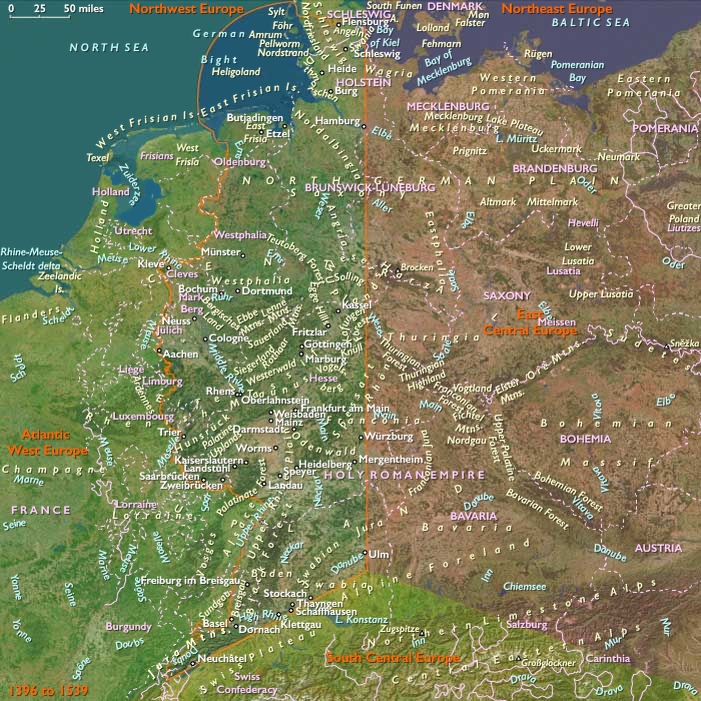
Sickingen had accepted bribes from Francis in the contest for the imperial throne, but when the election takes place, he leads his troops to Frankfurt, where their presence on June 28, 1519, assists in securing the election of Charles.
For this service he is made imperial chamberlain and councilor.
Charles assumes the throne as German king and Holy Roman emperor Charles V, now in possession a vast territorial inheritance.
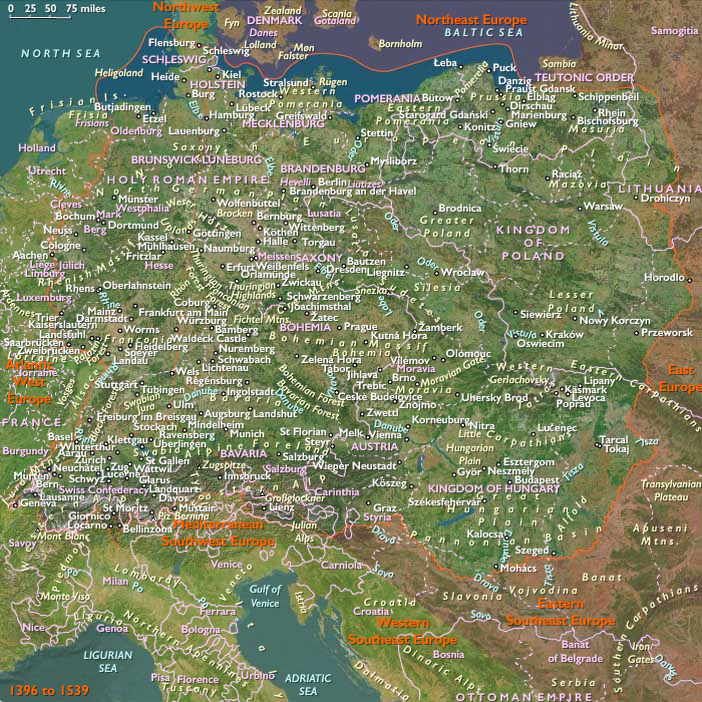
Maximilian’s younger grandson, Ferdinand, and granddaughter had, respectively, married the daughter and son of Ladislas II, king of Hungary.
A few days later the Pope will grant Charles, now Charles V, the right to name himself Elected Emperor.
It will only be in 1530 that Charles is crowned Emperor by the Pope in Bologna; he will be the last Emperor to receive a papal coronation.
Locations
People
Groups
Commodities
Subjects
Regions
Central Europe
View →Subregions