Count Istvan Szechenyi accepts the portfolio of…
1840 CE to 1851 CE
Count Istvan Szechenyi accepts the portfolio of ways and communications "in the first responsible Magyar administration" under Lajos Batthyány in March 1848, but he fears the disruption of revolution.
The first great Hungarian figure of the reform era had come to the fore during the 1825 convocation of the Diet, this magnate from one of Hungary's most powerful families had shocked the Diet when he delivered the first speech in Hungarian ever uttered in the upper chamber and backed a proposal for the creation of a Hungarian academy of arts and sciences by pledging a year's income to support it.
In 1831 angry nobles burned Szechenyi 's book Hitel (Credit), in which he argues that the nobles' privileges are both morally indefensible and economically detrimental to the nobles themselves.
Szechenyi has called for an economic revolution and argues that only the magnates are capable of implementing reforms.
Szechenyi favors a strong link with the Habsburg Empire and calls for abolition of entail and serfdom, taxation of landowners, financing of development with foreign capital, establishment of a national bank, and introduction of wage labor.
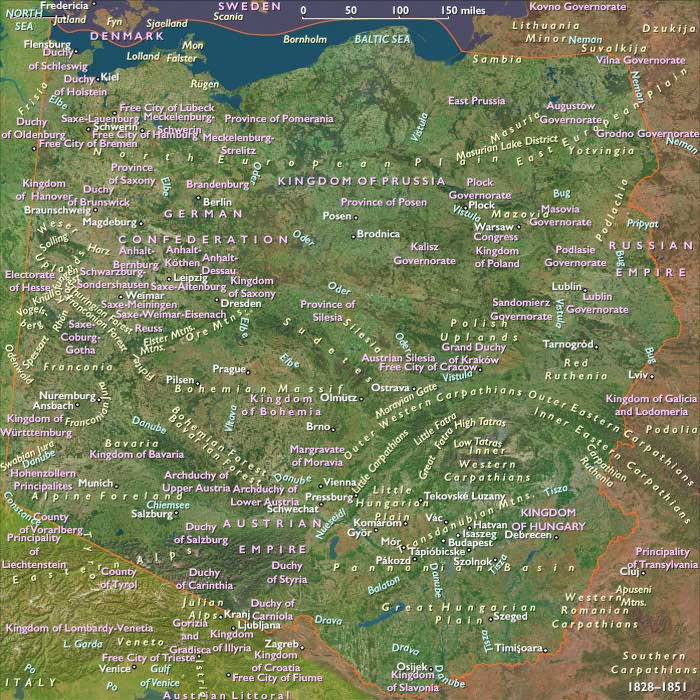
He inspires such projects as the construction of the suspension bridge linking Buda and Pest.
Szechenyi's reform initiatives ultimately fail because they are targeted at the magnates, who are not inclined to support change, and because the pace of his program is too slow to attract disgruntled lesser nobles.
His relations with Lajos Kossuth were not good: he always thought Kossuth was a political agitator who overplayed his popularity. Széchenyi, although in a minority, continued to counsel for caution in the Diet and other meetings.
Locations
People
Groups
Topics
Commodities
Subjects
Regions
Central Europe
View →Subregions