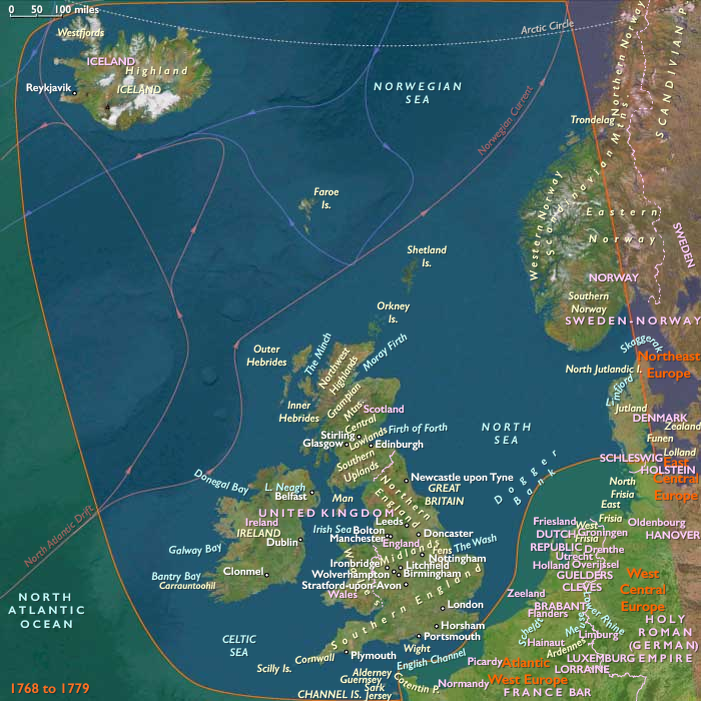
After fighting began in the North American…
September 1775 CE
After fighting began in the North American Colonies, the Second Continental Congress had launched a final attempt to avert war, which Parliament had rejected as insincere.
The King's Proclamation of Rebellion leads to an emboldening of hitherto weak support for independence in the colonies.
After a speech by the King, Parliament rejects to oppose coercive measures on the colonies by one hundred and seventy votes.
British Tories refuse to compromise, while Whigs argue current policy will drive the colonists towards secession.
The Irish Parliament pledges to send troops to America, and Irish Catholics are allowed to enlist in the army for the first time.
Irish Protestants favor the Americans, while Catholics favor the King.
Militarily, the initial hostilities have provided a sobering lesson for the British, causing them to rethink their views on colonial military capability.
The weak British response gives the Patriots the advantage; the British will soon lose control over every colony.
The army has been kept deliberately small since 1688 to prevent abuses of power by the King.
Parliament secures treaties with small German states for additional troops, and, after a year, will be able to send an army of thirty-two thousand men to America, the largest it has ever sent outside Europe at this time.
Groups
Regions
North Europe
View →Subregions