
Mycenaeans of the fifteenth and fourteenth centuries…
1341 BCE to 1198 BCE
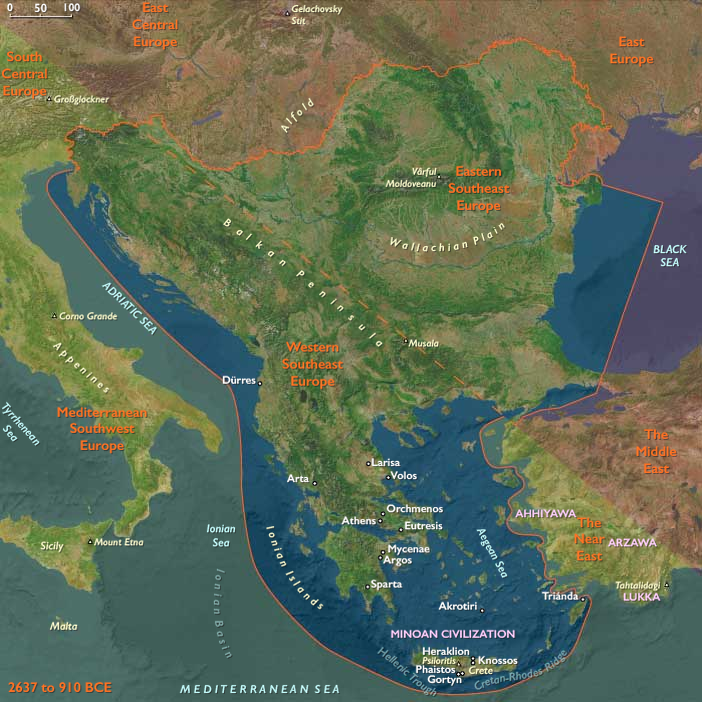
Mycenaeans of the fifteenth and fourteenth centuries BCE evidently bury their princes in “tholoi,” or tholos tombs, circular, beehive-shaped stone-built chambers with high, corbelled vaults.
The largest and most spectacular of the Mycenaean tholos-graves, (known as the Treasury of Atreus, after the father of Agamemnon), is probably among the last to be built in the mid-thirteenth century BCE.
It is formed of a semi-subterranean room of circular plan, with a corbel arch covering that is ogival in section.
With an interior height of thirteen and a half meters and a diameter of fourteen and a half meters, it is to remain the tallest and widest dome in the world for over a thousand years until construction of the Temple of Hermes in Baiae and the Pantheon in Rome.
Great care is taken in the positioning of the enormous stones, to guarantee the vault's stability over time in bearing the force of compression from its own weight.
This obtains a perfectly smoothed internal surface, onto which could be placed gold, silver, and bronze decoration.
Perhaps built to hold the remains of the sovereign who completed the reconstruction of the fortress or one of his successors, the grave is in the style of the other tholoi of the Mycenaean World, of which there are nine in total around the citadel of Mycenae and five more in the Argolid.
However, in its monumental shape and grandeur it is one of the most impressive monuments surviving from Mycenaean Greece.
The tholos was entered from an inclined uncovered hall or dromos, thirty-six meters long and with dry-stone walls.
A short passage led from the tholos chamber to the actual burial chamber, which was dug out in a nearly cubical shape.
The entrance portal to the tumulus is richly decorated: half-columns in green limestone with zigzag motifs on the shaft, a frieze with rosettes above the architrave of the door, and spiral decoration in bands of red marble that close the triangular aperture above an architrave.
The capitals are influenced by ancient Egyptian examples.
Other decorative elements are inlaid with red porphyry and green alabaster, a surprising luxury for the Bronze Age.
Locations
Groups
Topics
Regions
Southeast Europe
View →Subregions
