
Venezuela has produced not only Francisco de …
Years: 1816 - 1827
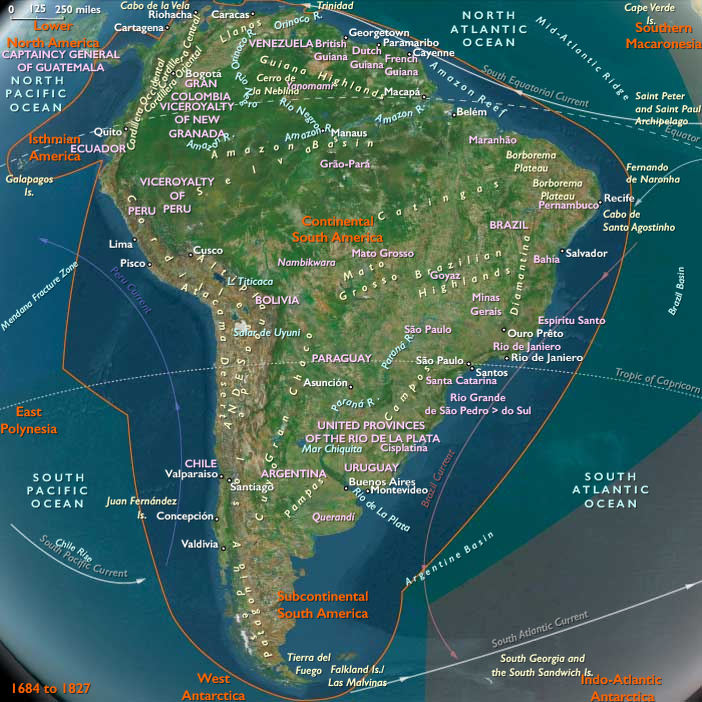
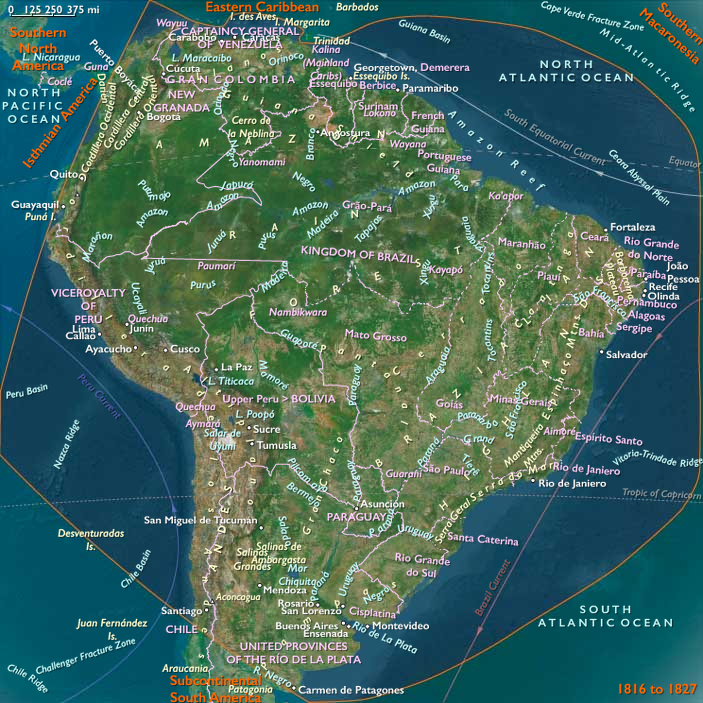
Venezuela has produced not only Francisco de Miranda, the best known of the precursors of the Spanish American revolution, but also the first successful revolt against Spanish rule in America and, of course, the leading hero of the entire epic of Latin America's struggle for independence, Simon Bolivar Palacios.
Miranda was born in Caracas of wealthy criollo parents in 1750.
Following a checkered career in the Spanish Army, Miranda will spend virtually the rest of his life living in nations that are at odds with Spain, seeking support for the cause of the independence of his native Spanish America.
Although he is a professed admirer of the newly independent United States, Miranda's political vision of Latin America, beyond independence, remains equivocal.
In 1806 he leads an expedition that sails from New York and lands at Coro, in western Venezuela.
Expecting a popular uprising, he encounters instead hostility and resistance.
Miranda returns to Britain, where in 1810 Bolivar persuades him to return to Venezuela at the head of a second insurrectionary effort.
Events in Europe are perhaps even more crucial to the movement for Latin American independence than Miranda's efforts.
In 1808 French emperor Napoleon Bonaparte's troops invade Spain amid a family dispute in which the Spanish king Charles IV had been forced to abdicate the throne in favor of his son, Ferdinand VII.
The fearful Bourbon royal family had soon become Napoleon's captives, and in 1810 the conquering French emperor grants his brother, Joseph, the Spanish throne, precipitating a four-year-long guerrilla war in Spain.
These events have important repercussions in the Caracas cabildo (city council).
Composed of a criollo elite whose allegiance to the crown have already been stretched thin by the gross incompetence of Charles and his feud with his son, the cabildo refuse to recognize the French usurper.
Meeting as a cabildo abierto (town meeting) on April 19, 1810, the Caracas cabildo ousts Governor Vicente Emparan and, shortly thereafter, declares itself to be a junta governing in the name of the deposed Ferdinand VII.
Miranda was born in Caracas of wealthy criollo parents in 1750.
Following a checkered career in the Spanish Army, Miranda will spend virtually the rest of his life living in nations that are at odds with Spain, seeking support for the cause of the independence of his native Spanish America.
Although he is a professed admirer of the newly independent United States, Miranda's political vision of Latin America, beyond independence, remains equivocal.
In 1806 he leads an expedition that sails from New York and lands at Coro, in western Venezuela.
Expecting a popular uprising, he encounters instead hostility and resistance.
Miranda returns to Britain, where in 1810 Bolivar persuades him to return to Venezuela at the head of a second insurrectionary effort.
Events in Europe are perhaps even more crucial to the movement for Latin American independence than Miranda's efforts.
In 1808 French emperor Napoleon Bonaparte's troops invade Spain amid a family dispute in which the Spanish king Charles IV had been forced to abdicate the throne in favor of his son, Ferdinand VII.
The fearful Bourbon royal family had soon become Napoleon's captives, and in 1810 the conquering French emperor grants his brother, Joseph, the Spanish throne, precipitating a four-year-long guerrilla war in Spain.
These events have important repercussions in the Caracas cabildo (city council).
Composed of a criollo elite whose allegiance to the crown have already been stretched thin by the gross incompetence of Charles and his feud with his son, the cabildo refuse to recognize the French usurper.
Meeting as a cabildo abierto (town meeting) on April 19, 1810, the Caracas cabildo ousts Governor Vicente Emparan and, shortly thereafter, declares itself to be a junta governing in the name of the deposed Ferdinand VII.
Locations
People
- Charles IV of Spain
- Ferdinand VII of Spain
- Francisco de Miranda
- Joseph Bonaparte
- Napoleon
- Simón Bolívar
Groups
- Basque people
- Christians, Roman Catholic
- Franciscans, or Order of St. Francis
- Spaniards (Latins)
- Spain, Habsburg Kingdom of
- Capuchin, Order of Friars Minor
- Canary Islanders
- Britain, Kingdom of Great
- Guipuzcoan Company of Caracas
- New Granada, Viceroyalty of
- Venezuela, Captaincy General of
Topics
- Colonization of the Americas, Spanish
- Columbian Exchange
- Spanish American wars of independence
- Venezuelan War of Independence
Commodoties
- Hides and feathers
- Domestic animals
- Grains and produce
- Slaves
- Fuels, lubricants and sealants
- Stimulants
- Tobacco
Subjects
Regions
Subregions
Related Events
Showing 10 events out of 20863 total
Years: 1816 - 1827
Locations
People
- Charles IV of Spain
- Ferdinand VII of Spain
- Francisco de Miranda
- Joseph Bonaparte
- Napoleon
- Simón Bolívar
Groups
- Basque people
- Christians, Roman Catholic
- Franciscans, or Order of St. Francis
- Spaniards (Latins)
- Spain, Habsburg Kingdom of
- Capuchin, Order of Friars Minor
- Canary Islanders
- Britain, Kingdom of Great
- Guipuzcoan Company of Caracas
- New Granada, Viceroyalty of
- Venezuela, Captaincy General of
Topics
- Colonization of the Americas, Spanish
- Columbian Exchange
- Spanish American wars of independence
- Venezuelan War of Independence
Commodoties
- Hides and feathers
- Domestic animals
- Grains and produce
- Slaves
- Fuels, lubricants and sealants
- Stimulants
- Tobacco
Subjects
Regions
Subregions