Event
Outbreaks of ciguatera, a food-borne illness caused…
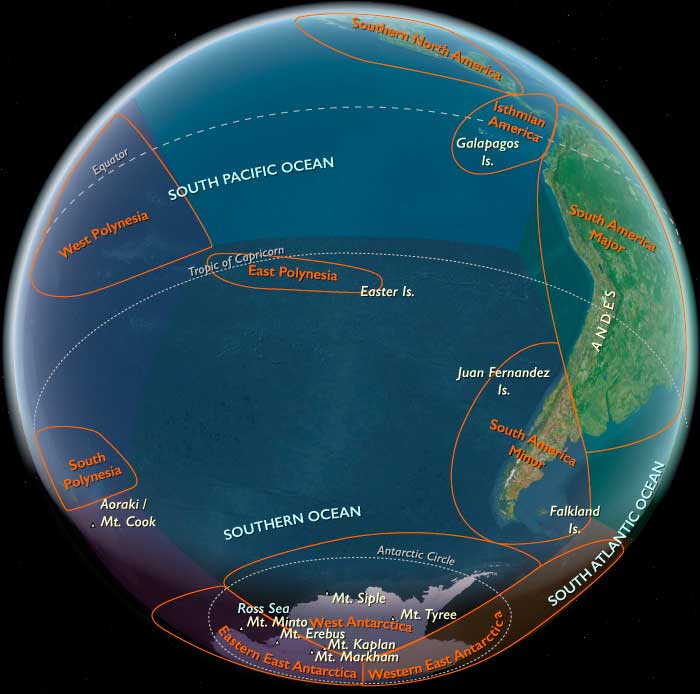
Outbreaks of ciguatera, a food-borne illness caused by eating certain reef fish whose flesh is contaminated with toxins ultimately caused by warm climatic conditions, may be the impetus for the migratory voyages of Polynesians between 1000 and 1400.
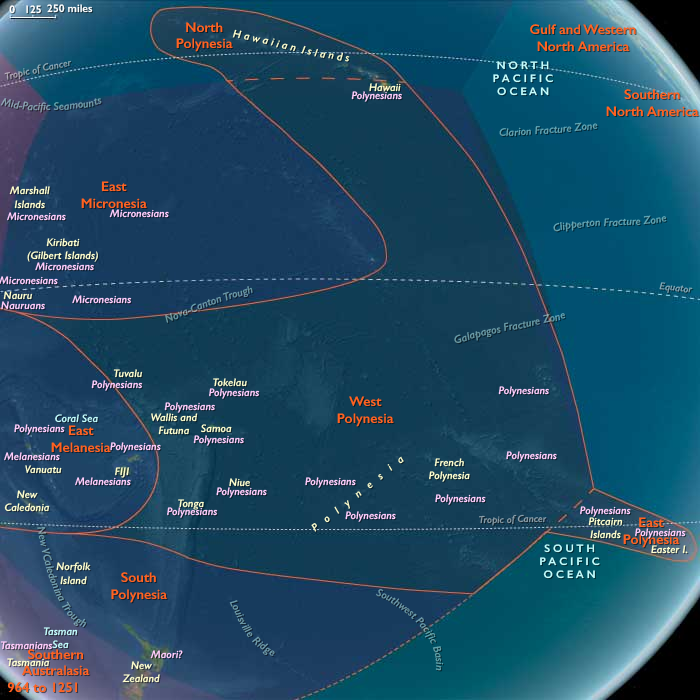
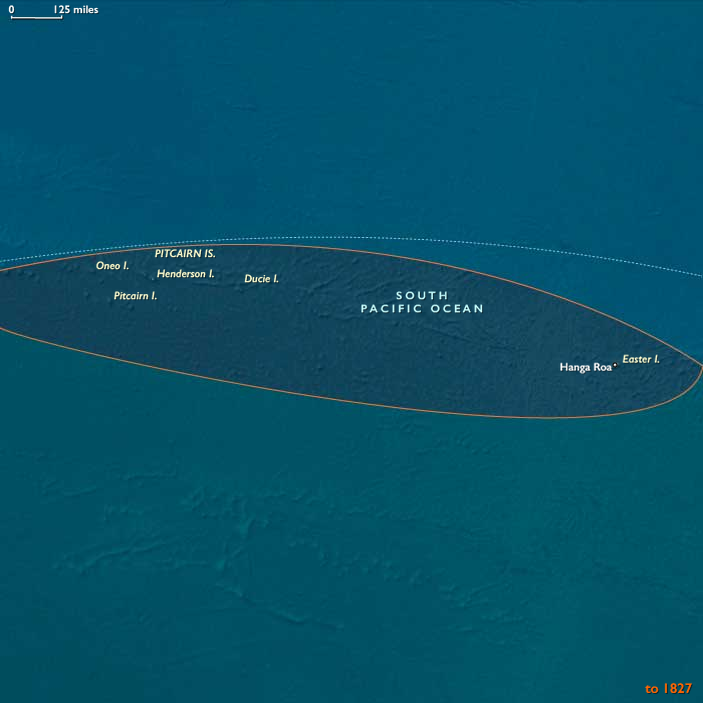
The Austronesian Polynesians, who first settled Easter Island, are likely to have arrived from the Marquesas Islands from the west.
Researchers suggest that the reason settlers sought an isolated island was because of high levels of ciguatera fish poisoning in their then current surrounding area.
Early European visitors to Easter Island will record the local oral traditions about the original settlers.
In these traditions, Easter Islanders claimed that a chief, Hotu Matu'a, arrived on the island in one or two large canoes with his wife and extended family.
They are believed to have been Polynesian.
There is considerable uncertainty about the accuracy of this legend as well as the date of settlement.
Published literature suggests the island was settled in the fourth century CE, or at about the time of the arrival of the earliest settlers in Hawaii.
Some scientists say that Easter Island was not inhabited until 700-800 CE.
This date range is based on glottochronological calculations and on three radiocarbon dates from charcoal that appears to have been produced during forest clearance activities.
Moreover, a recent study which included radiocarbon dates from what is thought to be very early material suggests that the island was settled as recently as 1200 CE.
This seems to be supported by a 2006 study of the island's deforestation, which could have started around the same time.
A large now extinct palm, Paschalococos disperta, related to the Chilean wine palm (Jubaea chilensis), was one of the dominant trees as attested by fossil evidence; this species, whose sole occurrence was Easter Island, became extinct due to deforestation by the early settlers.
These settlers brought bananas, taro, sugarcane, and paper mulberry, as well as chickens and Polynesian rats.
The island at one time supported a relatively advanced and complex civilization.
Cultural similarities exist between Easter Island and South American native cultures, as documented by Thor Heyrdahl and many others.
Some contact between the two cultures is proved by the dispersion of the sweet potato: this staple of the pre-contact Polynesian diet is of South American origin, and there is no evidence that its seed could spread by floating across the ocean.
Either Polynesians traveled to South America and back, or South American balsa rafts drifted to Polynesia, possibly unable to make a return trip because of their less developed navigational skills and more fragile boats.
The Polynesian name for the small islet of Sala y Gómez (Manu Motu Motiro Hiva, "Bird's islet on the way to a far away land") east of Easter Island has also been seen as a hint that South America was known before European contacts.
Further complicating the situation is that the word Hiva ("far away land") was also the name of the islanders' legendary home country.
Inexplicable insistence on an eastern origin for the first inhabitants was unanimous among the islanders in all early accounts.
Geneticist Erik Thorsby and colleagues have published two studies in the peer-reviewed journal Tissue Antigens that present evidence for an Amerindian genetic contribution to the Eastern Island population, which was probably introduced prior to the European discovery of the island.
According to local legends, a group of people called hanau epe (meaning either "long eared" or "stocky" people) came into conflict with another group called the hanau momoko (either "short eared" or "slim" people).
After mutual suspicions erupted in a violent clash, the hanau epe were overthrown and nearly exterminated, leaving only one survivor.
Various interpretations of this story have been made—that it represents a struggle between natives and incoming migrants; that it recalls inter-clan warfare; or that represents a class conflict.
-
{# Image navigates to the detail page; the magnifying-glass chip is the only Fancybox lightbox trigger (kept a separate sibling — anchors can't nest). #}
 The Ends of the Earth
World
-
{# Image navigates to the detail page; the magnifying-glass chip is the only Fancybox lightbox trigger (kept a separate sibling — anchors can't nest). #}
 Polynesia
Region
-
{# Image navigates to the detail page; the magnifying-glass chip is the only Fancybox lightbox trigger (kept a separate sibling — anchors can't nest). #}
 East Polynesia
Subregion