The earliest written accounts of the Huron…
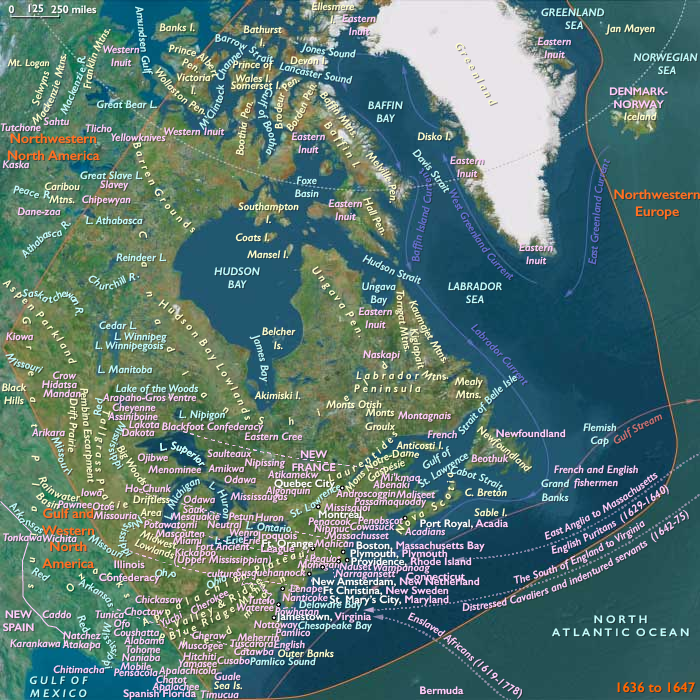
1636 CE to 1647 CE
News of the Europeans reached the Huron, particularly when Samuel de Champlain explored the Saint Lawrence River in the early seventeenth century.
Some Huron decided to go and meet the Europeans.
Atironta, the principal headman of the Arendarhonon tribe, went to Quebec and made an alliance with the French in 1609.
Jesuits living among the Hurons in the sixteenth century wrote that the Hurons had a fascinating account of their own history, but, as it represented nothing but superstition and the lies of the Devil, the Black Robes deemed it unworthy of record.
The Jesuit Relations of 1639 describes the Huron:
They are robust, and all are much taller than the French. Their only covering is a beaver skin, which they wear upon their shoulders in the form of a mantle; shoes and leggings in winter, a tobacco pouch behind the back, a pipe in the hand; around their necks and arms bead necklaces and bracelets of porcelain; they also suspend these from their ears, and around their locks of hair. They grease their hair and faces; they also streak their faces with black and red paint.
— Jesuit François du Peron, Jesuit Relations (1898) Volume XV
Locations
Groups
Iroquois (Haudenosaunee, also known as the League of Peace and Power, Five Nations, or Six Nations)
View →
Algonquin, or Algonkin, people (Amerind tribe)
View →
Wyandot, or Wendat, or Huron people (Amerind tribe)
View →
Mahican (Amerind tribe)
View →
Innu (Montagnais, Naskapi) (Amerind tribe)
View →
New France (French Colony)
View →
Topics
Commodities
Regions
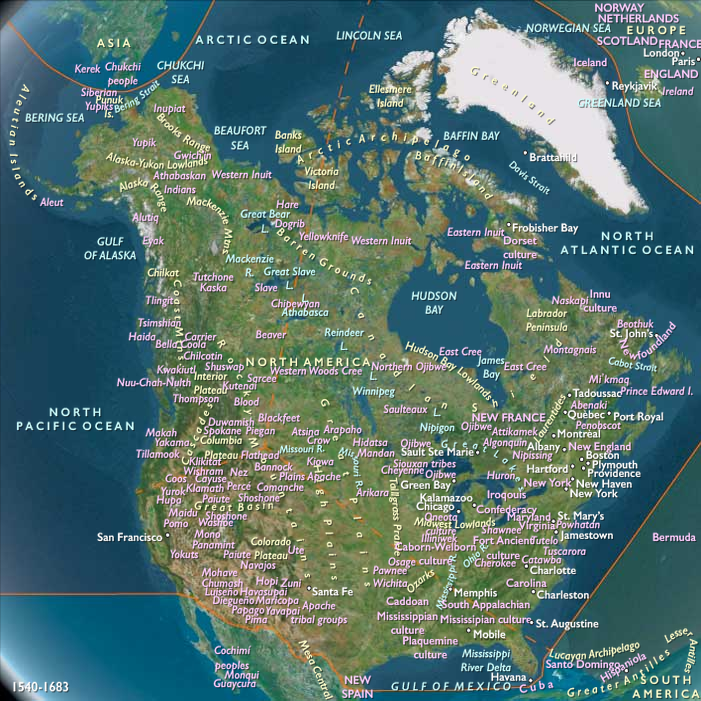
Northern North America
View →Subregions