French forces led by Napoleon Bonaparte in…
January 1799 CE
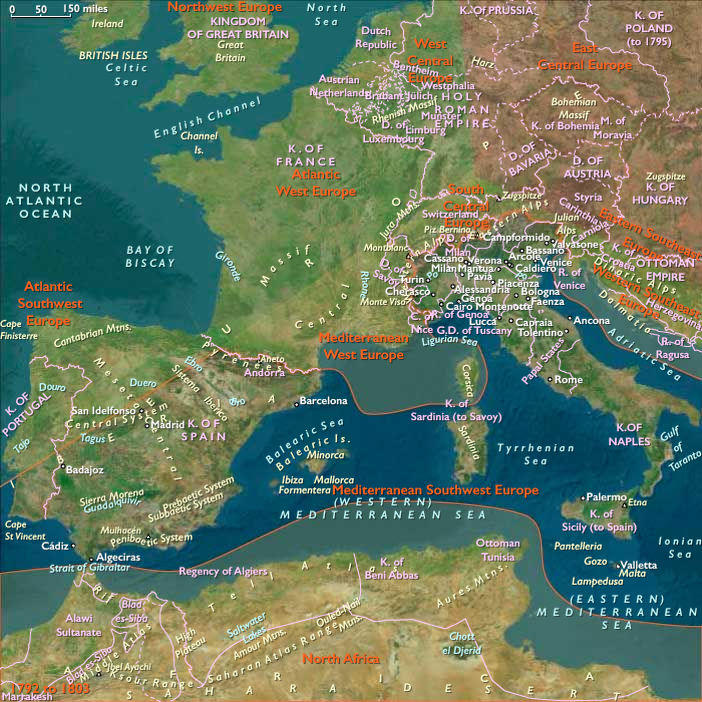
French forces led by Napoleon Bonaparte in June 1798 had taken over the two Maltese islands from the increasingly oppressive rule of the Knights of Malta.
Initially, the populace had accepted the change, believing in the possibility of having better government.
However, in successive months, the French forces had removed the rights of the Maltese nobility, and decided to stand against the Maltese church.
Outraged by the plundering of their churches and faced by an unprecedented financial crisis that had been precipitated by the draining of most of the cash, on September 2, 1798 they had risen against the French garrison in Notabile (Città Vecchia or Mdina).
Soon both islands were in a state of full rebellion, and the Maltese formed a National Assembly.
The French forces ha retreated in the fortified cities around the harbor, while the Maltese petitioned for help from the Kingdom of the Two Sicilies and Great Britain.
During the blockade of the cities, hundreds of people were dying from starvation and deprivation.
Elements from within the fortress hence decided to risk their life in order to resolve the situation, and these are led by Dun Mikiel Xerri.
The Maltese have planned an attack against the French forces in Valletta and in Cottonera, but the French forces have discovered the plot.
Dun Mikiel Xerri is among the forty-nine persons captured in the ensuing investigation.
In the morning of January 17, 1799, the archbishop of Malta, Labini, visits Xerri and his companions.
The prisoners are taken from Fort Saint Elmo to Palace Square, where a platoon of soldiers are waiting for them.
On their way to the square, Dun Mikiel encouragea his companions, and when they arrive in the square, he demands a few minutes to talk to them.
After they fortified themselves with prayers, and ask for remission of their sins, Xerri gives a silver watch to the official on duty and asks him to shoot him in the heart.
Then he turns on the crowd in the square, and with the others he shouts, "May God have pity on us! Long live Malta!"
They are then shot in the square, then taken to the chapel of Saint Rocco, where the still-living are finished off.
The greater part of these men are buried on the side of the church of Saint Publius in Floriana.
Locations
People
Groups
Topics
Commodities
Subjects
Regions
Southwest Europe
View →Subregions