The little that is known of Giorgione's…
1503 CE
The little that is known of Giorgione's life is given in Giorgio Vasari's Lives of the Most Excellent Painters, Sculptors, and Architects.
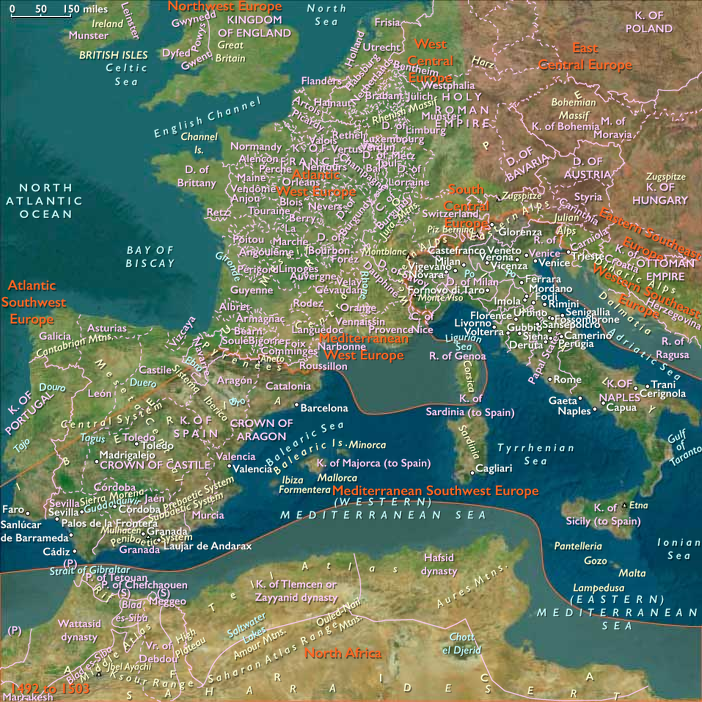
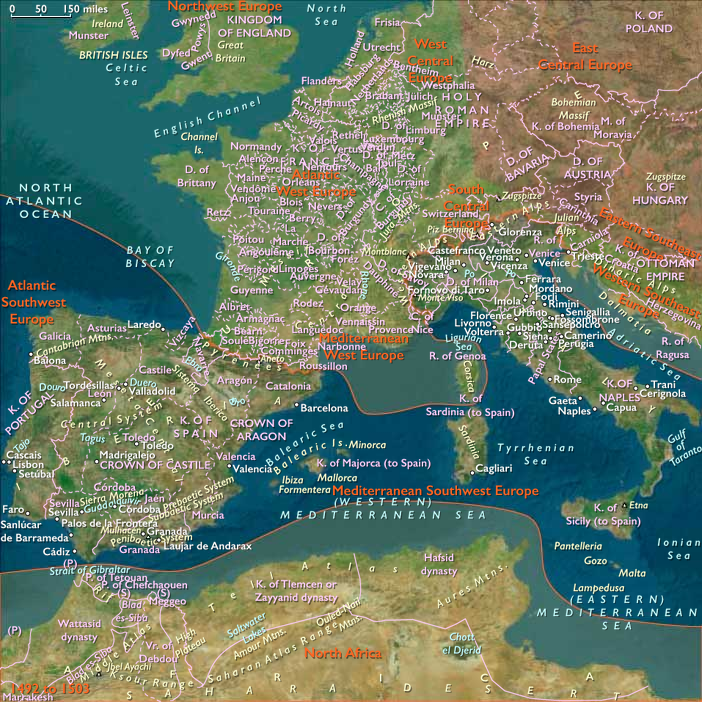
The painter came from the small town of Castelfranco Veneto, forty kilometers inland from Venice.
His name sometimes appears as Zorzo.
The variant Giorgione (or Zorzon) may be translated "Big George".
How early in boyhood he went to Venice we do not know, but stylistic evidence supports the statement of Carlo Ridolfi that he served his apprenticeship there under Giovanni Bellini; there he settled and made his fame.
Contemporary documents record that his gifts were recognized early.
In 1500, when he was only twenty-three (that is, if Vasari is correct about his age when he died), he was chosen to paint portraits of the late Doge Agostino Barbarigo and the condottiere Consalvo Ferrante.
He is in 1503 hcommissioned to paint an altarpiece in memory of another condottiere, Matteo Costanzo, in the cathedral of his native town, Castelfranco.
Giorgione paints the Madonna and Child Between St. Francis and St. Nicasius, also known as Castelfranco Madonna, an altarpiece in sacra conversazione form—Madonna enthroned, with saints on either side forming an equilateral triangle.
This gives the landscape background an importance that marks an innovation in Venetian art, and will be quickly followed by his master Giovanni Bellini and others.
It is housed in the Cathedral of Castelfranco Veneto, Giorgione's native city, in Veneto, northern Italy.
The altarpiece had been commissioned by the condottiero Tuzio Costanzo in memory of his son Matteo, who died of a fever in 1499 while serving the Republic of Venice.
Also commissioned as a family chapel, containing the tombs of Matteo and Tuzio, built into the walls on either side of the painting.
Locations
Regions
Southwest Europe
View →Subregions