
The Madness of Charles VI and the …
Years: 1384 - 1395
The Madness of Charles VI and the Struggle for Power (1392–1420)
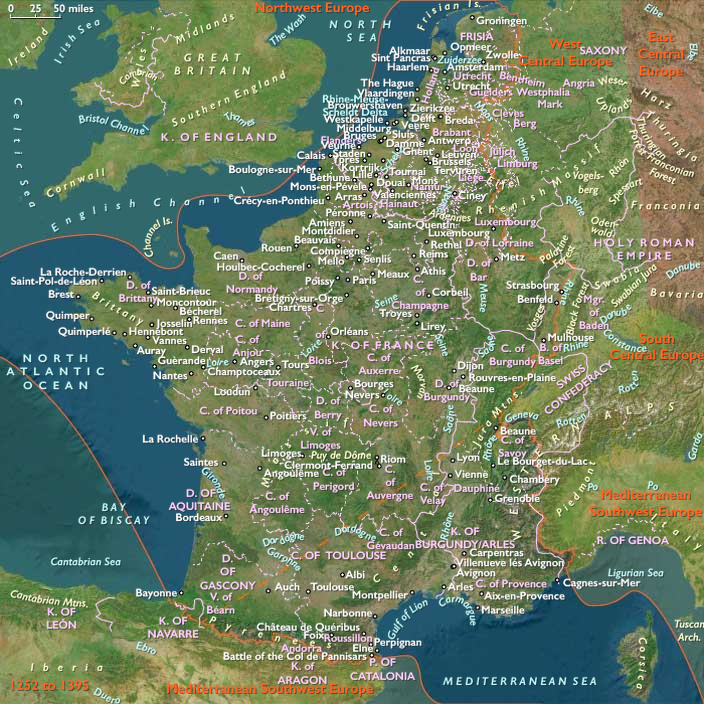
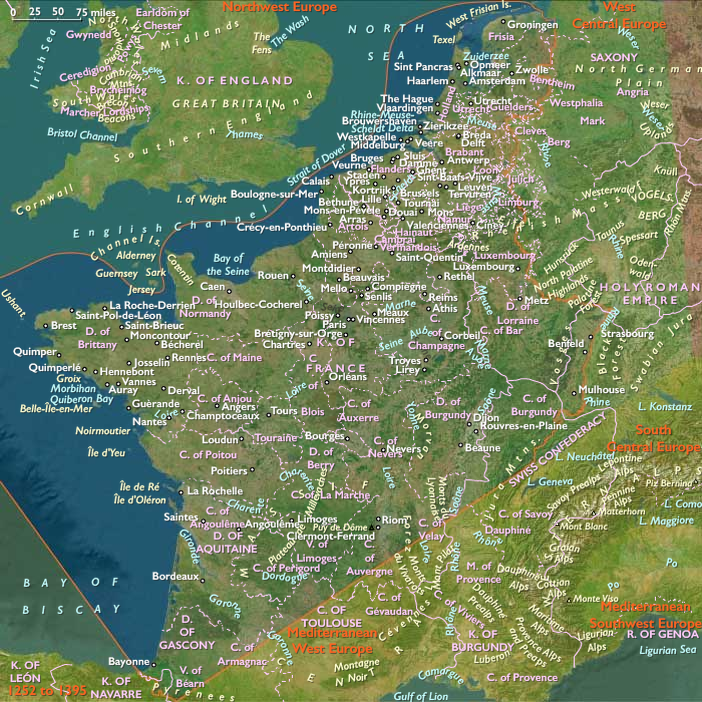
Between 1388 and 1392, King Charles VI of France implemented governmental reforms and financial economies, seeking to stabilize royal administration after the tumultuous reign of his father, Charles V. However, after 1392, Charles VI began to suffer from recurrent bouts of insanity, rendering him incapable of ruling effectively. His mental decline created a power vacuum, leading to a prolonged struggle for control of the French government between the House of Burgundy and the House of Orléans.
The Rivalry Between Burgundy and Orléans
With the king unable to govern, two factions emerged to fill the void:
- The Burgundians, led by Philip the Bold, Duke of Burgundy (the king’s uncle), and later his son John the Fearless.
- The Armagnacs, led by Louis, Duke of Orléans (the king’s younger brother), and after his assassination in 1407, by his son Charles of Orléans and his allies.
This dynastic struggle eventually erupted into a civil war (1407–1435) that paralyzed France, weakening its financial and military systems and leaving the kingdom vulnerable to English intervention in the later stages of the Hundred Years’ War.
The Disintegration of France’s Military and Financial System
As factional conflicts intensified, the once-strong French military and taxation system—carefully built under Charles V—began to fall apart:
- Royal finances collapsed, as tax revenues were siphoned off by competing factions.
- Mercenary bands, known as the Écorcheurs ("Skinners"), ravaged the countryside as central authority eroded.
- The English renewed their invasion, with Henry V delivering a crushing defeat to the French at Agincourt (1415).
- The Burgundian-Orléanist feud ultimately resulted in John the Fearless' assassination in 1419, leading Burgundy to ally with England and support the Treaty of Troyes (1420), which disinherited the dauphin (future Charles VII) in favor of Henry V of England.
Long-Term Consequences
The mental decline of Charles VI and the subsequent struggle for power not only crippled France’s ability to defend itself, but also paved the way for English dominance in northern France. The kingdom would remain in turmoil until Joan of Arc’s intervention in 1429, which helped turn the tide in favor of the Valois dynasty.
Locations
People
- Charles VI of France
- Christine de Pizan
- Jean Froissart
- John IV, Duke of Brittany
- John the Fearless
- Louis I, Duke of Orléans
- Philip the Bold
Groups
- Jews
- Flanders, County of
- Normandy, Duchy of
- Brittanny, Duchy of
- Aquitaine, (Angevin) Duchy of
- Burgundy, Duchy of
- Christians, Roman Catholic
- England, (Plantagenet, Angevin) Kingdom of
- Franciscans, or Order of St. Francis
- Dominicans, or Order of St. Dominic
- Artois, County of
- France, (Valois) Kingdom of
- Aquitaine, or Guyenne, (contested) Duchy of
Topics
- Western Architecture: 1252 to 1396
- Hundred Years' War
- Western Schism or Papal Schism (also known as the Great Schism of Western Christianity)
- Western Art: 1384 to 1396
- Hundred Years' War: Second Peace
Subjects
- Commerce
- Architecture
- Sculpture
- Painting and Drawing
- Labor and Service
- Conflict
- Faith
- Government
- Custom and Law
Regions
Subregions
Related Events
Showing 10 events out of 43629 total
Years: 1384 - 1395
Locations
People
- Charles VI of France
- Christine de Pizan
- Jean Froissart
- John IV, Duke of Brittany
- John the Fearless
- Louis I, Duke of Orléans
- Philip the Bold
Groups
- Jews
- Flanders, County of
- Normandy, Duchy of
- Brittanny, Duchy of
- Aquitaine, (Angevin) Duchy of
- Burgundy, Duchy of
- Christians, Roman Catholic
- England, (Plantagenet, Angevin) Kingdom of
- Franciscans, or Order of St. Francis
- Dominicans, or Order of St. Dominic
- Artois, County of
- France, (Valois) Kingdom of
- Aquitaine, or Guyenne, (contested) Duchy of
Topics
- Western Architecture: 1252 to 1396
- Hundred Years' War
- Western Schism or Papal Schism (also known as the Great Schism of Western Christianity)
- Western Art: 1384 to 1396
- Hundred Years' War: Second Peace
Subjects
- Commerce
- Architecture
- Sculpture
- Painting and Drawing
- Labor and Service
- Conflict
- Faith
- Government
- Custom and Law
Regions
Subregions