Event
The main pillars of Ibn Ra'iq's regime…
The main pillars of Ibn Ra'iq's regime are the Turkish troops under Bajkam and Tuzun, former subordinates of Mardavij.
To secure his own position, Ibn Ra'iq even massacres the old caliphal bodyguard, the Hujariyya, destroying the last body of troops still loyal to the Abbasid dynasty.
Ibn Ra'iq's authority is soon weakened, however, when he falls out with the Baridis of Ahwaz, who had initially supported his rise to power.
When he tries to deprive them of their province, they reopen their contacts with the Buyids.
Finally, it is discontent among the Turkish military that leads to his downfall: the Turks under Bajkam rise up against him, and after a brief struggle, Bajkam becomes the new amir al-umara in September 938, while Ibn Ra'iq is sent to govern Diyar Mudar.
The struggle between Bajkam and Ibn Ra'iq has one long-term and disastrous consequence: trying to impede Bajkam's advance towards Baghdad, Ibn Ra'iq orders the blocking of the Nahrawan Canal to flood the countryside.
This action does not avail Ibn Ra'iq, but it heavily impairs the local agriculture for centuries to come, since the canal plays a central role in the ancient irrigation system of the Sawad.
Created in the sixth century, it had reached its peak under the Abbasid Caliphate, serving as the main water supply for the Abbasid capital of Baghdad, while the regions irrigated by it serve as the city's main breadbasket.
-
{# Image navigates to the detail page; the magnifying-glass chip is the only Fancybox lightbox trigger (kept a separate sibling — anchors can't nest). #}
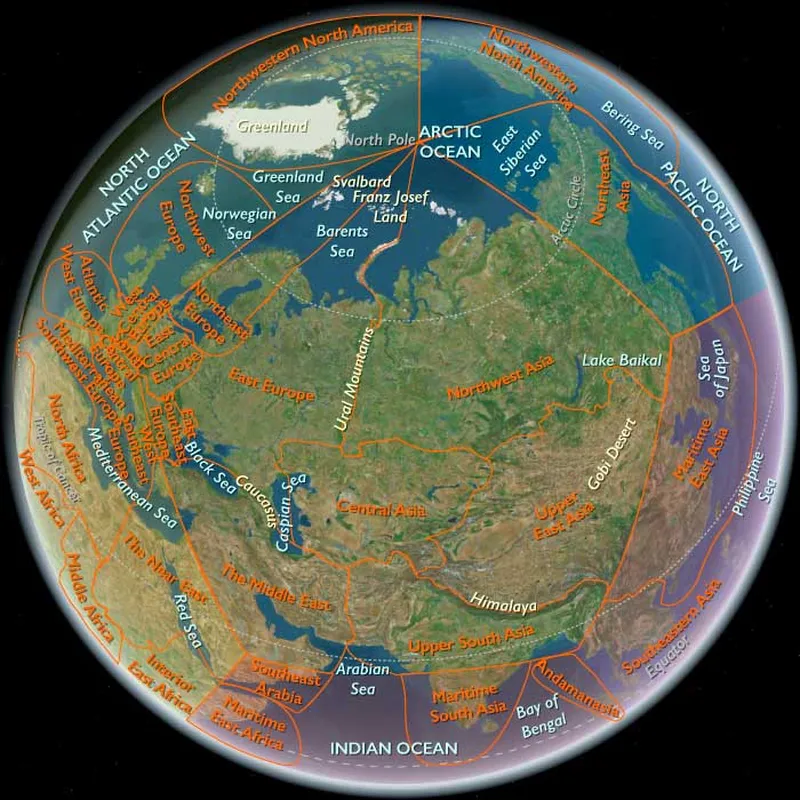 The Great Crossroads
World
The Great Crossroads
World
-
{# Image navigates to the detail page; the magnifying-glass chip is the only Fancybox lightbox trigger (kept a separate sibling — anchors can't nest). #}
 The Near and Middle East
Region
The Near and Middle East
Region
-
{# Image navigates to the detail page; the magnifying-glass chip is the only Fancybox lightbox trigger (kept a separate sibling — anchors can't nest). #}
 Middle East
Subregion
Middle East
Subregion