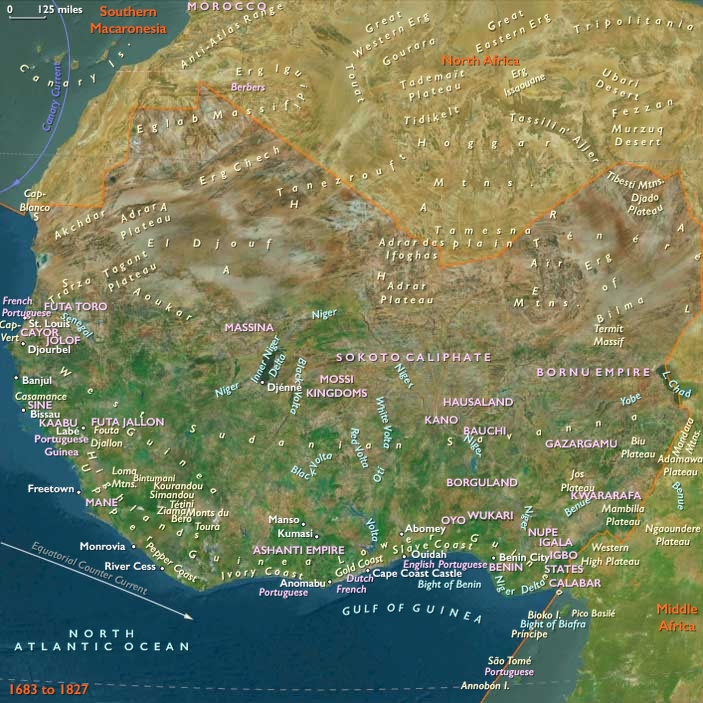
The ecological and political instability of the…
1684 CE to 1827 CE
The ecological and political instability of the eighteenth century provides the background for the momentous events of the first decade of the nineteenth century, when the jihad of Usman dan Fodio revolutionizes the whole of northern Nigeria.
The military rivalries of the Hausa states and the political weakness of Borno put a severe strain on the economic resources of the region, just at a time when drought and famine undermine the prosperity of farmers and herders.
Many Fulani move into Hausaland and Borno at this time to escape areas where drought conditions are even worse, and their arrival increases tensions because they have no loyalty to the political authorities, who see them as a source of increased taxation.
By the end of the eighteenth century, some Muslim clerics begin to articulate the grievances of the common people.
Political efforts to eliminate or control these clerics only heightens the tensions.
The stage is set for jihad.
Locations
People
Groups
Topics
Subjects
Regions

West Africa
View →Subregions