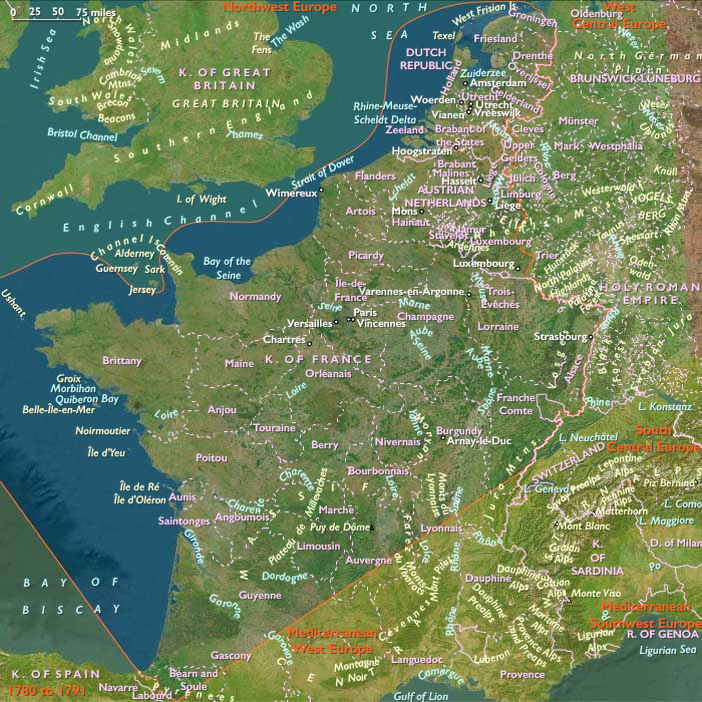
Inside the Austrian Netherlands themselves, the lawyers…
August 1789 CE
Weapons and revolutionary tracts have been distributed.
Most of the members of the organization come from the liberal professions (such as lawyers, writers and merchants).
Most are moderates who do not object to Joseph II's reforms in principle but because they had been levied on the territories without consultation.
They are supported financially by the clergy.
Initially members of the opposition had been divided on how the uprising should occur.
Unlike Van der Noot, Vonck believes that Belgium should liberate itself rather than rely on foreign aid.
With the support of the Belgian clergy, all the opposition factions (including Van der Noot) agree to unite and a Brabant Patriot Committee (Brabants patriottisch Comité) is formed in Hasselt.
On August 30, Pro Aris et Focis votes to install Jean-André van der Mersch (or Vandermersch), a retired military officer, as the commander of the émigré army in Breda.
The Committee agrees that the rebellion should begin in October 1789.
Locations
Groups
Regions
West Europe
View →Subregions