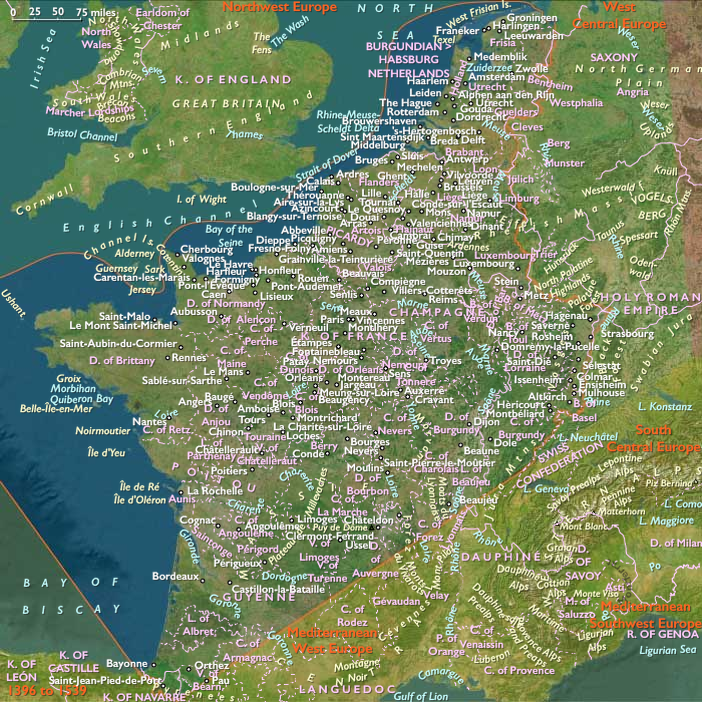
The Netherlandish Revolts and Habsburg Centralization (1477–1480s)…
December 1477 CE
The Netherlandish Revolts and Habsburg Centralization (1477–1480s)
In the aftermath of Charles the Bold’s death (1477), the ambitious efforts of his daughter Mary of Burgundy and her husband Maximilian of Austria to impose a centralized Habsburg governance encountered fierce resistance from the Netherlanders, who had long cherished their traditions of local autonomy and self-governance. These revolts underscored the tensions inherent in the transition from Burgundian rule, marked by local privileges and decentralized power, to the more centralized administrative ambitions of the Habsburgs.
Origins of the Revolts
Accustomed to substantial regional autonomy under the Burgundian dukes, the towns and cities of the Netherlands and Flanders viewed Maximilian’s attempts at administrative centralization and tighter fiscal controls as oppressive and alien. The financial burden imposed by the costly military campaigns against France, which contested Mary’s inheritance, further exacerbated tensions. These heavy war expenses forced Mary and Maximilian initially to suppress local privileges and increase taxation, fueling widespread resentment and rebellion across the Low Countries.
Conflict between Autonomy and Central Authority
The Netherlanders, like the Swiss Confederation, had historically guarded their autonomy fiercely, emphasizing privileges granted by earlier ducal authorities. Mary and Maximilian’s attempts to build a unified and powerful central administration contradicted these deeply rooted local traditions, provoking significant backlash from influential urban centers and trade guilds that resisted centralized economic control and the encroachment of royal bureaucratic oversight.
Restoration of Local Privileges
Faced with determined revolts and needing the cooperation of local communities to finance their ongoing war with the French crown over Burgundy, Mary and Maximilian were compelled to moderate their policies. Pragmatic necessity led them to restore and confirm traditional local privileges, granting concessions designed to pacify rebellious cities. This compromise acknowledged the enduring strength of local traditions, yet also exposed a fundamental tension in Habsburg rule: their reliance on regional cooperation to sustain ambitious military and political campaigns severely limited their capacity for full administrative centralization.
Long-Term Consequences
The revolts had lasting historical implications, underscoring both the limits of centralized authority in late medieval Atlantic West Europe and the enduring strength of local governance and autonomy. The Netherlandish resistance to centralization foreshadowed later, more extensive rebellions against the Habsburgs, notably the Dutch Revolt in the sixteenth century. These initial revolts under Mary and Maximilian laid the foundations for future tensions between the Habsburg dynasty and local populations, tensions that would significantly shape political, economic, and cultural developments in the region.
Historical Significance
Ultimately, these revolts illustrated the delicate balance between local autonomy and centralized governance in medieval Europe. The forced concessions made by Mary and Maximilian highlighted their pragmatic need to accommodate regional interests in pursuit of larger strategic goals. This accommodation set a lasting precedent, influencing the character of Habsburg governance in the Low Countries, ensuring a persistent tradition of negotiation, resistance, and compromise between central rulers and local communities throughout subsequent centuries.
People
Groups
Commodities
Subjects
Regions
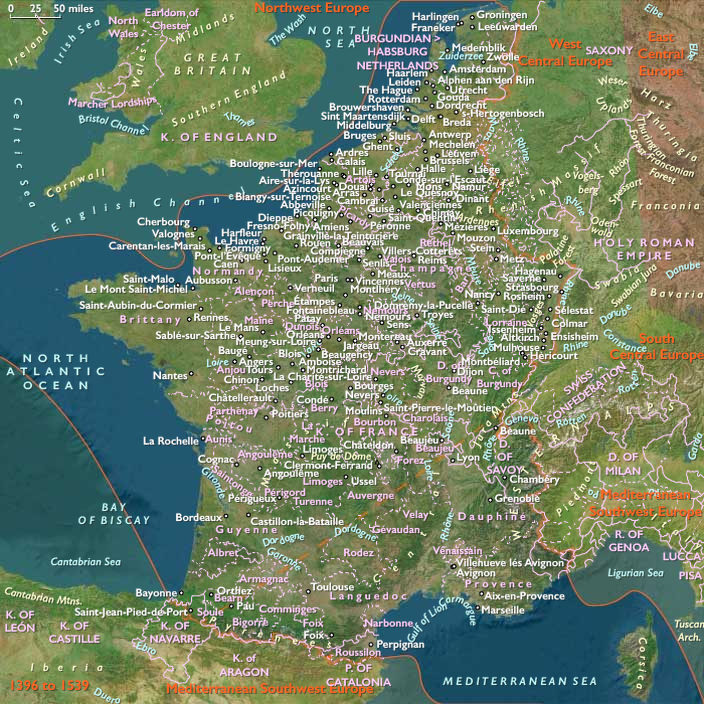
West Europe
View →Subregions