The Guaraní are unaccustomed to the discipline…
1684 CE to 1827 CE
By 1700 the Jesuits again count one hundred thousand neophytes in about thirty reducciones.
The reducciones export goods, including cotton and linen cloth, hides, tobacco, lumber, and above all, yerba mate, a plant used to produce a bitter tea that is popular in Paraguay and Argentina.
The Jesuits also raise food crops and teach arts and crafts.
In addition, they are able to render considerable service to the crown by supplying native armies for use against attacks by the Portuguese, English, and French.
At the time of the expulsion of the Jesuits from the Spanish Empire in 1767, the reducciones are enormously wealthy and comprise more than twenty-one thousand families.
Their vast herds include approximately seven hundred and twenty-five thousand head of cattle, forty-seven thousand oxen, ninety-nine thousand horses, two hundred and thirty thousand sheep, fourteen thousand mules, and eight thousand donkeys.
Because of their success, the fourteen thousand Jesuits who have volunteered over the years to serve in Paraguay gain many enemies.
They are a continual goad to the settlers, who view them with envy and resentment and spread rumors of hidden gold mines and the threat to the crown from an independent Jesuit republic.
To the crown, the reducciones seem like an increasingly ripe plum, ready for picking.
The reducciones fell prey to changing times.
During the 1720s and 1730s, Paraguayan settlers rebel against Jesuit privileges and the government that protects them.
Although this revolt fails, it is one of the earliest and most serious risings against Spanish authority in the New World and causes the crown to question its continued support for the Jesuits.
The Jesuit-inspired War of the Seven Reductions (1750-61), which is fought to prevent the transfer to Portugal of seven missions south of the Rio Uruguay, increases sentiment in Madrid for suppressing this '"empire within an empire."
In a move to gain the reducciones' wealth to help finance a planned reform of Spanish administration in the New World, the Spanish king, Charles III (1759-88), expels the Jesuits in 1767.
Within a few decades of the expulsion, most of what the Jesuits had accomplished is lost.
The missions lose their valuables, became mismanaged, and are abandoned by the Guaraní.
The Jesuits vanish almost without a trace.
Today, a few weed-choked ruins are all that remain of this one hundred and sixty-year period in Paraguayan history.
Locations
People
Groups
Tupi people (Amerind tribe)
View →
Germans
View →
Guaraní (Amerind tribe)
View →
Portuguese people
View →
French people (Latins)
View →
Christians, Roman Catholic
View →
English people
View →
Querandí
View →
Spain, Habsburg Kingdom of
View →
Spaniards (Latins)
View →
Jesuits, or Order of the Society of Jesus
View →
Río de la Plata, Governorate of the
View →
Charcas, Real Audiencia of (Upper Peru)
View →
Spain, Habsburg Kingdom of
View →
Commodities
Regions
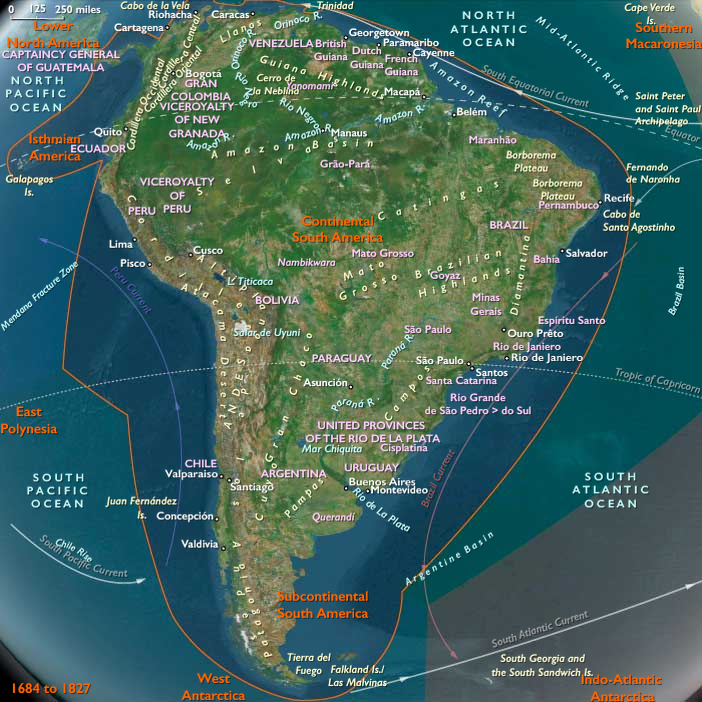
South America
View →Subregions