
The Arrival of the Sweet Orange in…
1542 CE
The Arrival of the Sweet Orange in Europe and Its Influence on Language (15th–16th Century)
The bitter Persian orange (Citrus aurantium), introduced to southern Europe via Italy in the 11th century, was widely cultivated but primarily used for medicinal purposes, perfumes, and cooking due to its sour and bitter taste. However, in the 15th century, Portuguese traders introduced the sweet orange (Citrus sinensis) from India, which quickly replaced the bitter variety and became the dominant orange cultivated in Europe.
The Role of the Portuguese in the Spread of the Sweet Orange
- During the Age of Exploration, Portuguese merchants and sailors established direct trade routes to India and China, where the sweet orange was already widely grown.
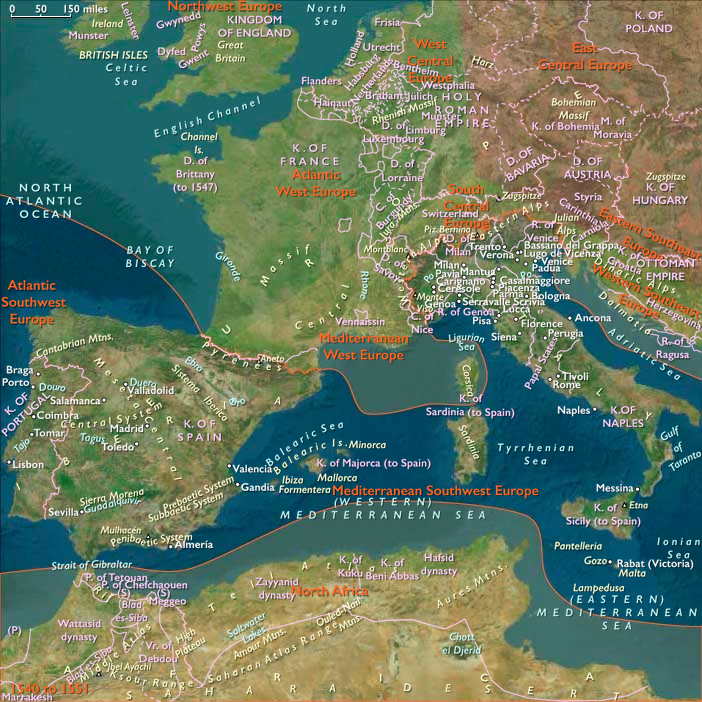
- By the late 15th century, Portuguese ships transported sweet oranges from India and introduced them to southern Europe, particularly in Portugal, Spain, and Italy.
- These oranges became highly valued and were soon cultivated in Mediterranean climates, where they flourished.
The Impact on Language: "Orange" as a Color (1542)
- Before the arrival of sweet oranges, there was no widely recognized word for the color orange in most European languages.
- The fruit’s popularity led to the use of its name to describe the color, with the earliest recorded use of "orange" as a color name dating to 1542.
- This linguistic shift occurred in multiple languages, including:
- Portuguese: laranja
- Spanish: naranja
- French: orange
- English: orange
Conclusion: A Cultural and Linguistic Transformation
The Portuguese introduction of the sweet orange to Europe in the 15th century not only revolutionized citrus cultivation but also influenced the evolution of language. By 1542, the fruit’s vibrant color had become a standard descriptor in European languages, illustrating how global trade shaped both agriculture and vocabulary.
Locations
Topics
Subjects
Regions
Southwest Europe
View →Subregions
