
Jacqueline of Bavaria’s Flight to England and …
Years: 1421 - 1421
Jacqueline of Bavaria’s Flight to England and the Changing Political Landscape in the Low Countries (1421)
By 1421, the political landscape of the Low Countries and France had been transformed due to the assassination of John the Fearless (1419), the Treaty of Troyes (1420), and the continuing civil war over the succession in Holland, Zeeland, and Hainaut.
As John IV of Brabant’s rule proved increasingly disastrous, Jacqueline of Bavaria sought to annul her marriage, but after losing her last stronghold in Leiden, she was forced to flee to England on March 6, 1421, where King Henry V welcomed her with great honor.
I. The Assassination of John the Fearless and the Treaty of Troyes (1419–1420)
- John the Fearless, Duke of Burgundy, was murdered at Montereau in September 1419 during a meeting with the French Dauphin Charles.
- As a result, Charles was blamed as an accomplice, leading to his disinheritance under the Treaty of Troyes (1420).
- The treaty recognized Henry V of England as the rightful heir to the French throne, effectively excluding Charles from the line of succession.
- This further complicated the war in the Low Countries, as Burgundy, England, and local factions competed for control over Holland and Zeeland.
II. Jacqueline’s Struggles Against John IV of Brabant and John III of Bavaria
- By February 1421, Jacqueline publicly denounced her husband, John IV of Brabant, citing his destructive policies and seeking annulment of their marriage.
- Meanwhile, her uncle and rival, John III of Bavaria-Straubing (John the Pitiless), continued his fight to seize full control of Holland and Zeeland.
- The conflict between Jacqueline’s supporters (the Hook faction) and the Cod faction (backing John III) escalated, culminating in the fall of Leiden, the last city loyal to Jacqueline.
III. The Fall of Leiden and Jacqueline’s Flight to England (March 1421)
- With Leiden captured by John III’s forces, Jacqueline was forced to concede defeat.
- On March 6, 1421, she fled to England, seeking aid from King Henry V.
- Henry, eager to strengthen English influence in the Low Countries, received her with a glamorous reception, signaling that he might support her claims.
IV. Consequences and Jacqueline’s Next Moves
- With Henry V’s backing, Jacqueline hoped to regain her lost territories, though her fight for Holland and Zeeland was far from over.
- However, the situation in England soon changed dramatically, as Henry V died unexpectedly in 1422, leading to new political uncertainties.
- Her return to the Low Countries would be marked by continued conflict, shifting alliances, and eventual Burgundian dominance.
Jacqueline of Bavaria’s flight to England in 1421 marked a turning point in her struggle for power, as she sought support from Henry V after losing her last stronghold in the Low Countries. However, her political future remained uncertain as English and Burgundian ambitions continued to shape the region.
Locations
People
- Charles VI of France
- Charles VII of France
- Henry V of England
- Jacqueline of Hainaut
- John III the Pitiless
- John IV, Duke of Brabant
- Philip the Good
Groups
- Burgundy, Duchy of
- Christians, Roman Catholic
- Hainaut, County of
- Holland, County of
- Brabant, Duchy of
- Zeeland, County of
- France, (Valois) Kingdom of
- Bavaria-Straubing, Wittelsbach Duchy of
- Netherlands, Burgundian
- England, (Plantagenet, Lancastrian) Kingdom of
Topics
- Hundred Years' War
- Hook and Cod wars
- Armagnac-Burgundian Civil War
- Hundred Years' War: Resumption of the war under Henry V
Commodoties
Subjects
Regions
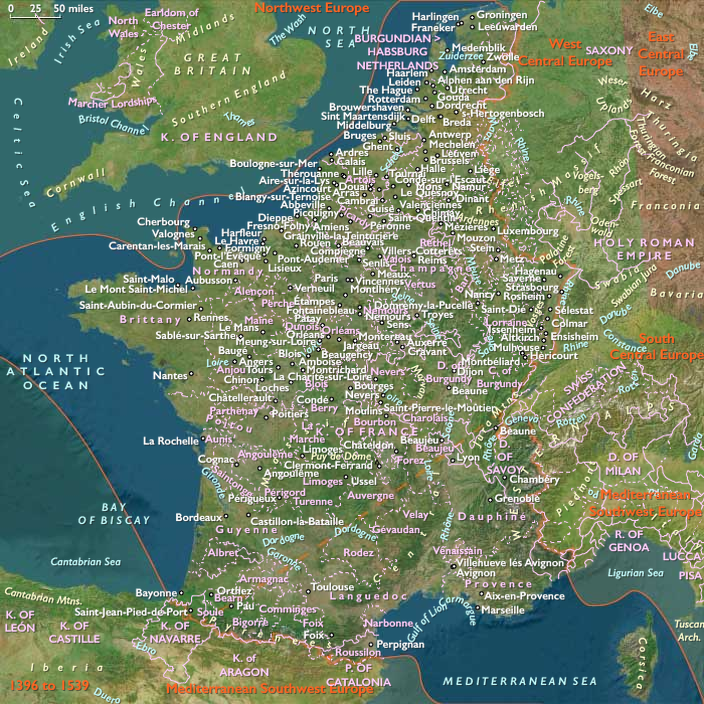
Subregions
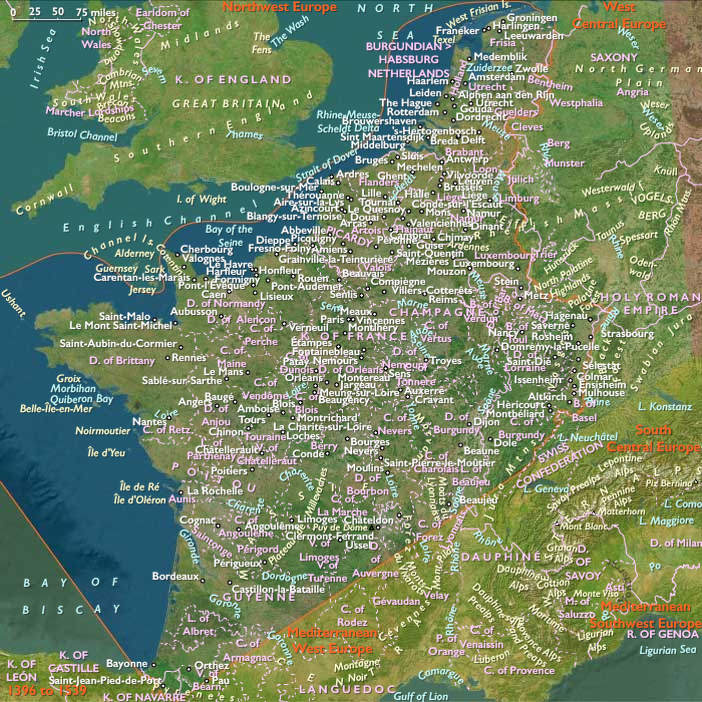
Years: 1421 - 1421
Locations
People
- Charles VI of France
- Charles VII of France
- Henry V of England
- Jacqueline of Hainaut
- John III the Pitiless
- John IV, Duke of Brabant
- Philip the Good
Groups
- Burgundy, Duchy of
- Christians, Roman Catholic
- Hainaut, County of
- Holland, County of
- Brabant, Duchy of
- Zeeland, County of
- France, (Valois) Kingdom of
- Bavaria-Straubing, Wittelsbach Duchy of
- Netherlands, Burgundian
- England, (Plantagenet, Lancastrian) Kingdom of
Topics
- Hundred Years' War
- Hook and Cod wars
- Armagnac-Burgundian Civil War
- Hundred Years' War: Resumption of the war under Henry V
Commodoties
Subjects
Regions
Subregions