The Pontifical Swiss Guard has its origins…
January 1506 CE
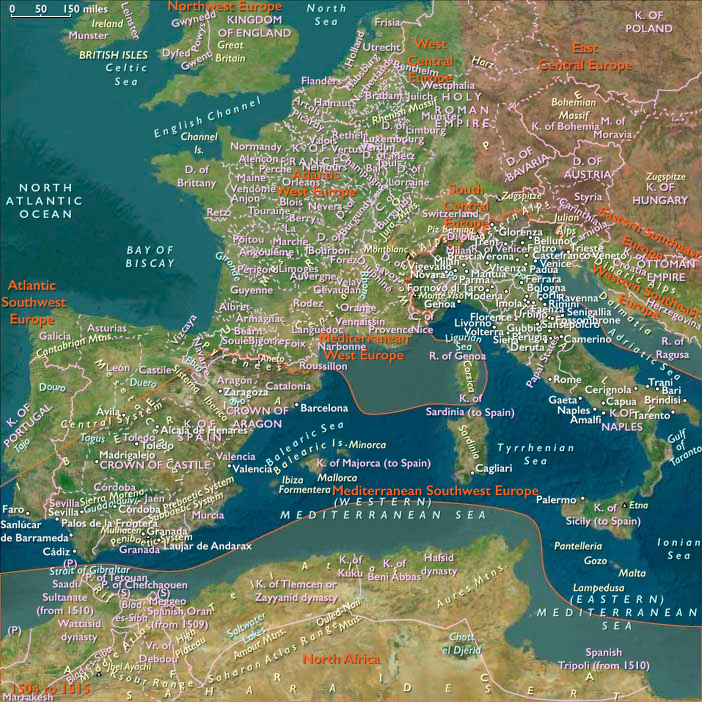
The Pontifical Swiss Guard has its origins in the fifteenth century.
Pope Sixtus IV (1471–1484) had already made an alliance with the Swiss Confederation and built barracks in Via Pellegrino after foreseeing the possibility of recruiting Swiss mercenaries.
The pact had been renewed by Innocent VIII (1484–1492) in order to use them against the Duke of Milan.
Alexander VI (1492–1503) later actually used the Swiss mercenaries during their alliance with the King of France.
During the time of the Borgias, however, the Italian Wars began in which the Swiss mercenaries had been a fixture in the front lines among the warring factions, sometimes for France and sometimes for the Holy See or the Holy Roman Empire.
The mercenaries had enlisted when they heard King Charles VIII of France was going to war with Naples in 1494.
Among the participants in the war against Naples had been Cardinal Giuliano della Rovere, the future Pope Julius II, who is well acquainted with the Swiss, having been Bishop of Lausanne years earlier.
The expedition had failed, in part thanks to new alliances made by Alexander VI against the French.
When Cardinal della Rovere became Pope Julius II in 1503, he had asked the Swiss Diet to provide him with a constant corps of two hundred Swiss mercenaries.
In September 1505, the first contingent of one hundred and fifty soldiers had started their march towards Rome, under the command of Kaspar von Silenen, and enter the city on January 22, 1506, today given as the official date of the Guard's foundation.
The Pope’s Ea quae pro bono pacis of January 24, 1506, confirms papal approval of the mare clausum policy being pursued by Spain and Portugal amid their explorations and approves the changes of the 1494 Treaty of Tordesillas to previous papal bulls.
Locations
People
Groups
Topics
Commodities
Subjects
Regions
Southwest Europe
View →Subregions