Event
The Suppression of the Jacquerie: The Battle…
The Suppression of the Jacquerie: The Battle of Mello and Noble Reprisals (June 1358)
The Jacquerie revolt, which had swept across northern France in May–June 1358, was brutally suppressed by the French nobility, led by Charles II of Navarre ("Charles the Bad"), a cousin, brother-in-law, and political rival of the Dauphin (later Charles V). Though Charles had ambitions of usurping the throne, he saw an opportunity to crush the revolt and strengthen his own position by siding with the nobility.
The Betrayal and Execution of Guillaume Cale (June 10, 1358)
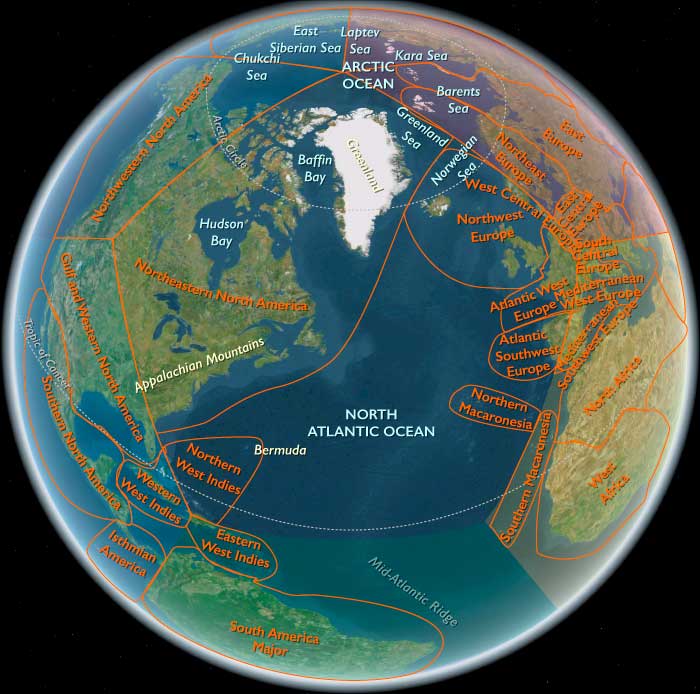
- The final confrontation between the nobles and the peasants occurred near Mello on June 10, 1358.
- Guillaume Cale, the leader of the peasant army, was invited to truce talks by Charles the Bad, who promised negotiations.
- Trusting the offer, Cale entered the enemy camp, where he was immediately seized by the nobles.
- Because he was not a nobleman, the rules of chivalry did not apply to him.
- He was tortured and decapitated, leaving the peasant army leaderless at a critical moment.
The Battle of Mello and the Noble Counterattack
- Jean Froissart, whose account is shaped by chivalric ideals, claimed that the peasant army numbered 20,000.
- With no organized leadership, the peasant forces were easily defeated by divisions of mounted knights, who rode them down with brutal efficiency.
- The battle was not a true fight but rather a massacre, as heavily armored knights slaughtered defenseless peasants.
Reprisals: A Campaign of Terror Across Northern France
- After their victory at Mello, the French nobility carried out a campaign of brutal vengeance throughout the Beauvais region.
- Knights, squires, men-at-arms, and mercenaries roamed the countryside, lynching and slaughtering peasants indiscriminately.
- Maurice Dommaget noted that:
- The few hundred aristocratic victims of the Jacquerie were individually named in chronicles, with detailed descriptions of the violence they suffered.
- In contrast, an estimated 20,000 anonymous peasants were killed in the noble reprisals, their deaths largely unrecorded and unmourned by chroniclers.
Legacy and Aftermath of the Jacquerie
- The nobility’s overwhelming response crushed the revolt, but it exposed deep divisions in French society between the privileged upper classes and the oppressed peasantry.
- The fear of future peasant uprisings led to harsher controls on rural populations, but the resentment remained, contributing to later rural revolts and social unrest.
- The Jacquerie reinforced the rigid feudal hierarchy, ensuring that peasants would remain politically powerless for centuries.
The Jacquerie of 1358 ended in mass slaughter at Mello, with the noble counterattack turning into a campaign of terror that exterminated tens of thousands of peasants. Though suppressed, the revolt exposed the deep fractures within French society, foreshadowing future conflicts between the ruling classes and the oppressed.
-
{# Image navigates to the detail page; the magnifying-glass chip is the only Fancybox lightbox trigger (kept a separate sibling — anchors can't nest). #}
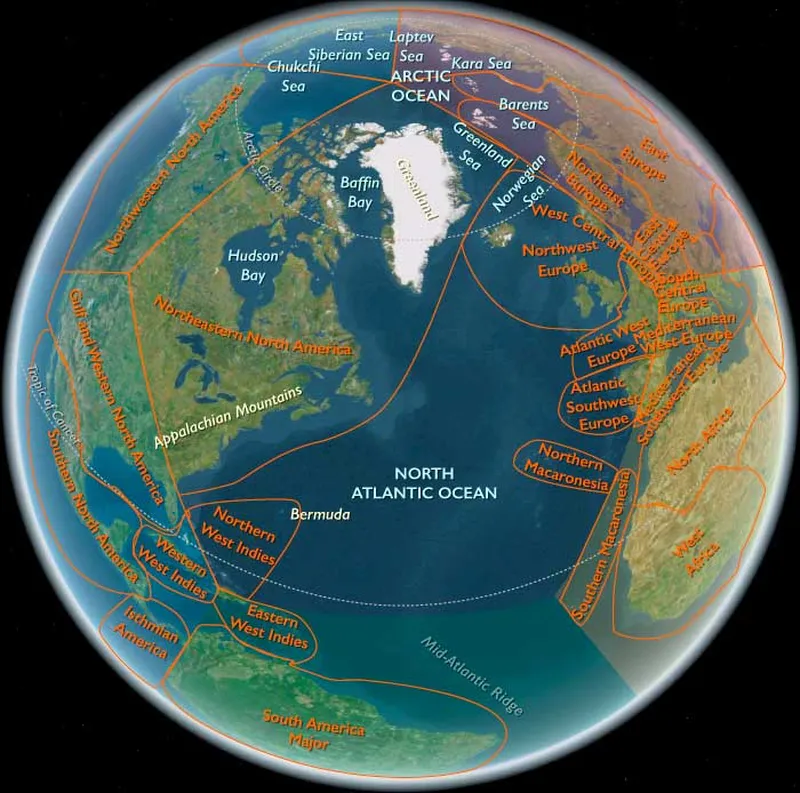 The Atlantic Lands
World
The Atlantic Lands
World
-
{# Image navigates to the detail page; the magnifying-glass chip is the only Fancybox lightbox trigger (kept a separate sibling — anchors can't nest). #}
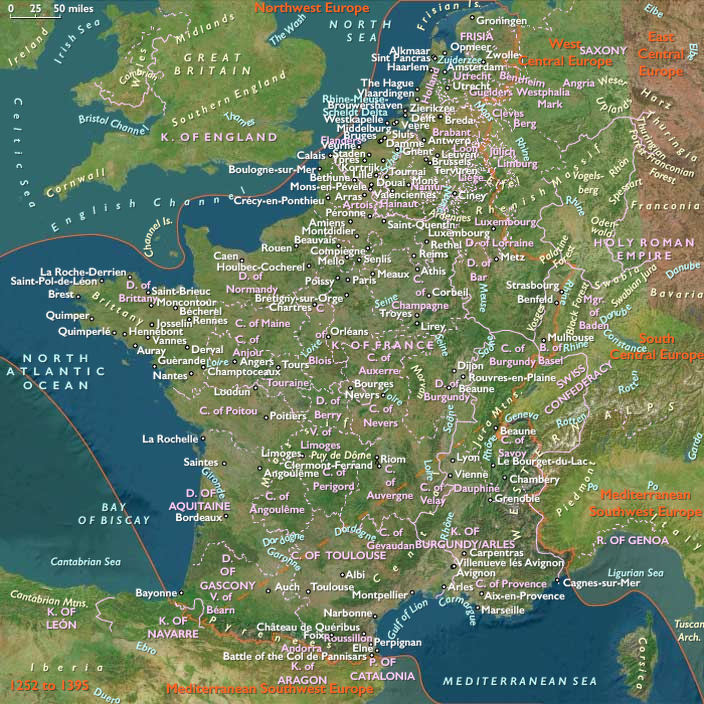 West Europe
Region
West Europe
Region
-
{# Image navigates to the detail page; the magnifying-glass chip is the only Fancybox lightbox trigger (kept a separate sibling — anchors can't nest). #}
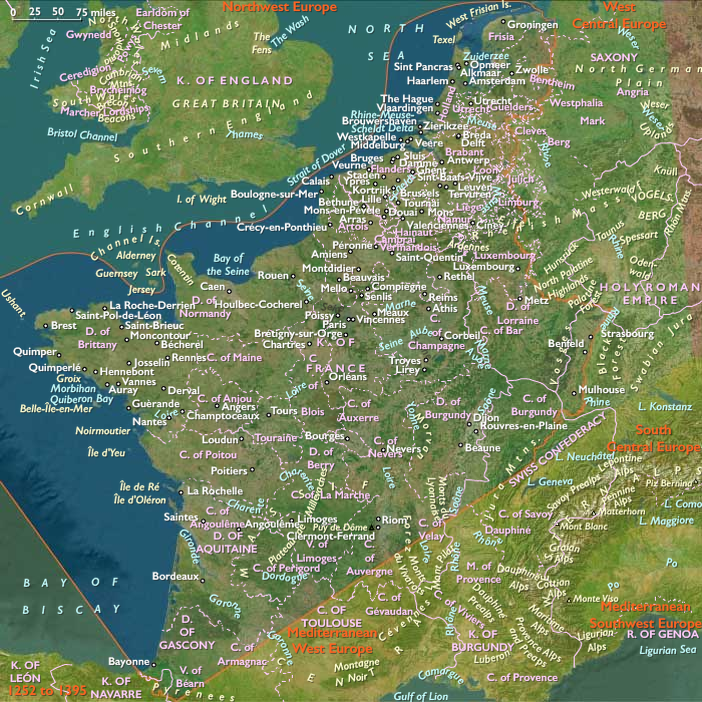 Atlantic West Europe
Subregion
Atlantic West Europe
Subregion