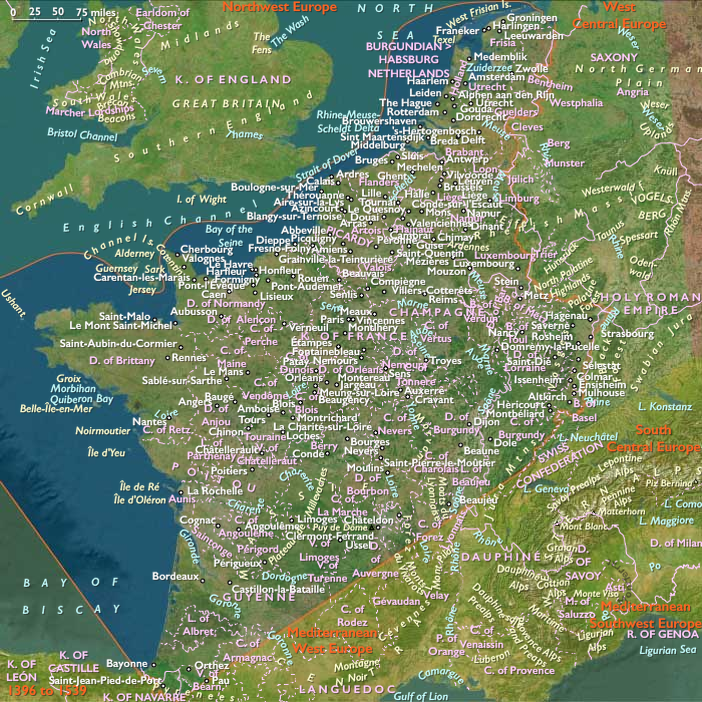
Atlantic West Europe: Consolidation, Diplomacy, and Cultural…
1444 CE to 1455 CE
Atlantic West Europe: Consolidation, Diplomacy, and Cultural Flourishing (1444–1455)
The period 1444–1455 in Atlantic West Europe during the Upper Late Medieval Age (1396–1539) is characterized by increased political stability, cautious diplomacy, economic recovery, and cultural expansion, setting the stage for broader developments in subsequent decades.
Political and Military Developments
This decade sees France consolidating its territorial gains under the capable leadership of Charles VII, steadily diminishing English influence on the continent. The Truce of Tours (1444) provides a temporary halt in hostilities, allowing France to rebuild internally. Meanwhile, tensions within England escalate, foreshadowing the Wars of the Roses, as factions within the English nobility begin to polarize around York and Lancaster. The Burgundian state, under Philip the Good, expands its territories through strategic marriages and diplomacy rather than overt warfare, cementing Burgundy’s role as a diplomatic and cultural powerhouse in Western Europe.
Economic Developments
Economic recovery accelerates notably, especially in the prosperous trading centers of Bruges, Ghent, and Antwerp. Commerce revives along the Atlantic coast and the English Channel, with wool, textiles, and luxury goods driving regional prosperity. Maritime trade increases in significance, bolstered by improved naval capabilities, notably from the ports of Dieppe and La Rochelle. Guilds and merchant networks consolidate their influence, strengthening urban economies and setting foundations for sustained growth.
Cultural and Artistic Trends
This decade marks a golden age of artistic patronage and intellectual vigor in Burgundy and Flanders, driven by the sophisticated court of Philip the Good. Artists such as Rogier van der Weyden, who produces celebrated altarpieces like The Descent from the Cross, bring unprecedented emotional depth and realism to Northern European art. Illuminated manuscripts, notably those by the Master of Mary of Burgundy, flourish in courtly settings. Humanist thought, influenced by early Italian Renaissance scholars, starts to make its presence felt, particularly in Paris and Bruges, indicating the region’s intellectual vitality.
Technological and Societal Changes
Advances in military technology, including more effective cannon and artillery fortifications, continue to reshape warfare and fortification design across the region. Urban growth drives increased literacy and education, with universities and schools benefiting from relative stability. Societal structures remain stratified but show increasing mobility among merchant and artisan classes, especially in prosperous urban centers.
Long-term Consequences and Significance
The years 1444–1455 solidify the shift toward political consolidation and cultural vitality. The temporary peace between France and England, though fragile, allows France significant recovery and internal strengthening. Economically, the resurgence of trade sets conditions favorable for future prosperity. Culturally, Burgundian patronage fosters enduring artistic and intellectual traditions, solidifying the Low Countries’ status as a major European cultural center.
Overall, this era is pivotal in transforming Atlantic West Europe from a region scarred by chronic warfare into one positioned for renewed economic strength, diplomatic influence, and vibrant cultural life.
Groups
Commodities
Subjects
Regions
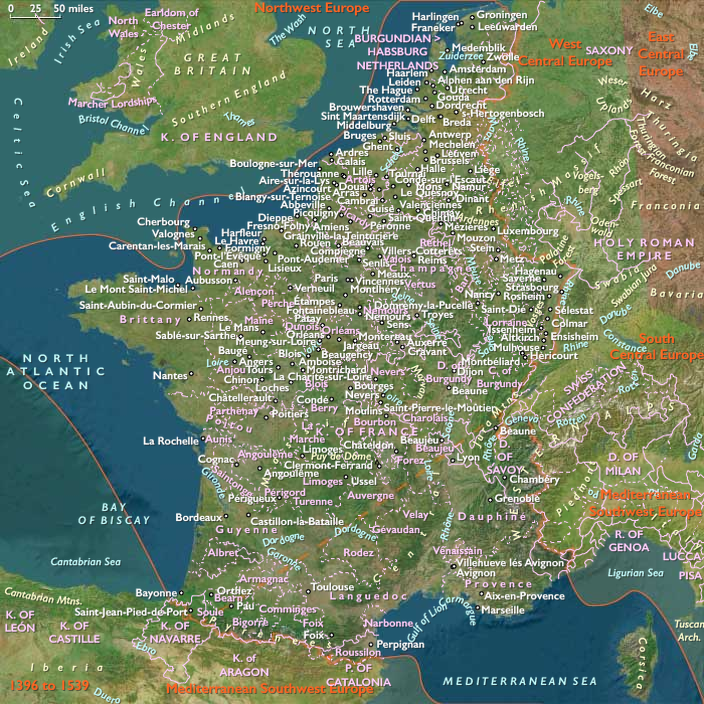
West Europe
View →Subregions