
Basta's army in Transylvania persecutes Protestants and …
Years: 1540 - 1683
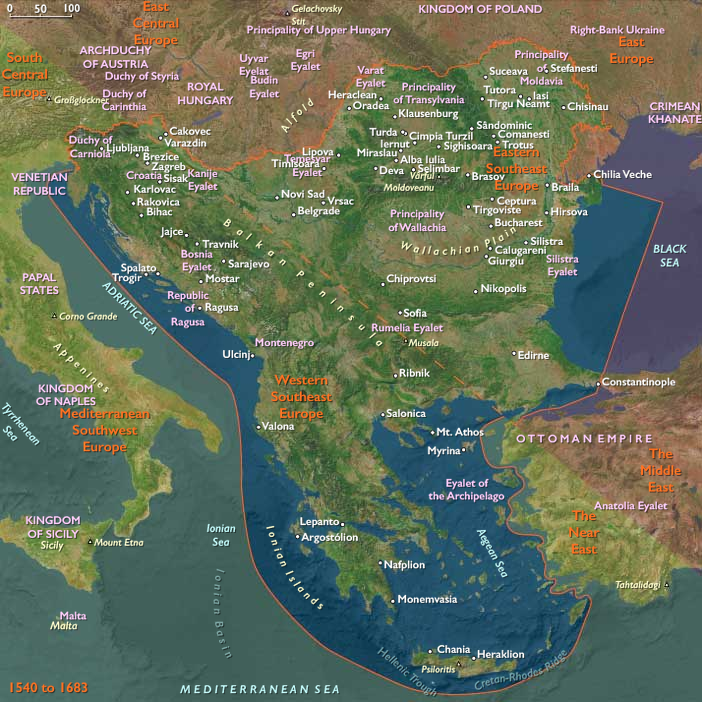
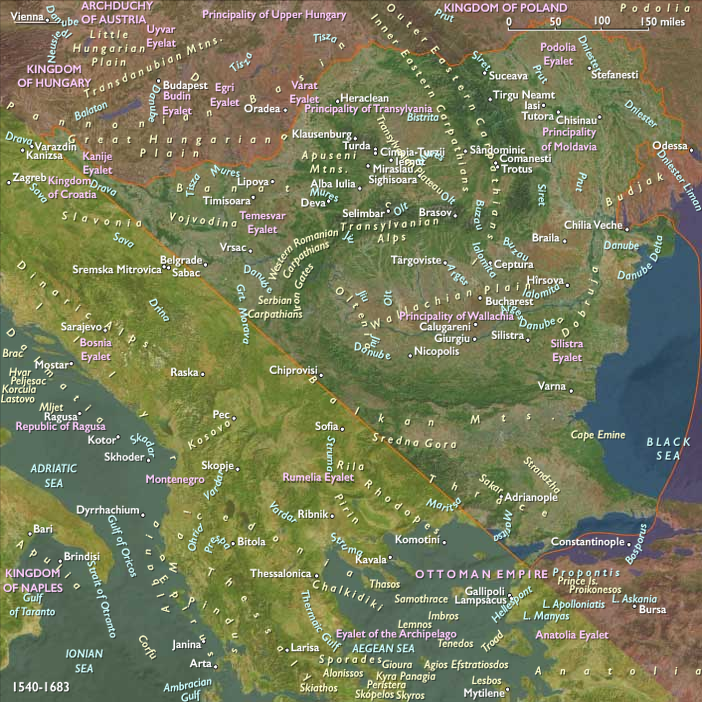
Basta's army in Transylvania persecutes Protestants and illegally expropriates their estates until Stephen Bocskay (1605-07), a former Habsburg supporter, musters an army that expels the imperial forces.
In 1606 Bocskay concludes treaties with the Habsburgs and the Turks that secure his position as prince of Transylvania, guarantee religious freedom, and broaden Transylvania's independence.
After Bocskay' s death and the reign of the tyrant Gabriel Bathory (1607-13), the Porte compels the Transylvanians to accept Gabor Bethlen (1613-29) as prince.
Transylvania experiences a golden age under Bethlen's enlightened despotism.
He promotes agriculture, trade, and industry, sinks new mines, sends students abroad to Protestant universities, and prohibits landlords from denying an education to children of serfs.
After Bethlen dies, however, the Transylvanian Diet abolishes most of his reforms.
Soon Gyorgy Rakoczi I (1630-40) becomes prince.
Rakoczi, like Bethlen, sends Transylvanian forces to fight with the Protestants in the Thirty Years' War; and Transylvania gains mention as a sovereign state in the Peace of Westphalia.
Transylvania's golden age ends after Gyorgy Rakoczi II (1648-60) launches an ill-fated attack on Poland without the prior approval of the Porte or Transylvania's Diet.
A Turkish and Tatar army routs Rakoczi's forces and seizes Transylvania.
For the remainder of its independence, Transylvania will suffer a series of feckless and distracted leaders, and throughout the seventeenth century Transylvania's Romanian peasants will linger in poverty and ignorance.
Locations
People
Groups
- Germans
- Vlachs
- Romanians
- Poles (West Slavs)
- Christians, Roman Catholic
- Christians, Eastern Orthodox
- Tatars
- Wallachia (Ottoman vassal), Principality of
- Turkish people
- Ottoman Empire
- Greeks (Modern)
- Protestantism
- Habsburg Monarchy, or Empire
- Moldavia (Ottoman vassal), Principality of
- Transylvania (Ottoman vassal), Principality of
- Polish-Lithuanian Commonwealth (Commonwealth of the Two Nations)
Subjects
Regions
Subregions
Years: 1540 - 1683
Locations
People
Groups
- Germans
- Vlachs
- Romanians
- Poles (West Slavs)
- Christians, Roman Catholic
- Christians, Eastern Orthodox
- Tatars
- Wallachia (Ottoman vassal), Principality of
- Turkish people
- Ottoman Empire
- Greeks (Modern)
- Protestantism
- Habsburg Monarchy, or Empire
- Moldavia (Ottoman vassal), Principality of
- Transylvania (Ottoman vassal), Principality of
- Polish-Lithuanian Commonwealth (Commonwealth of the Two Nations)
Subjects
Regions
Subregions