Northwest Asia (1396–1539 CE): Khanates, Siberian Forest…
1396 CE to 1539 CE
Northwest Asia (1396–1539 CE): Khanates, Siberian Forest Worlds, and Steppe Frontiers
Geographic & Environmental Context
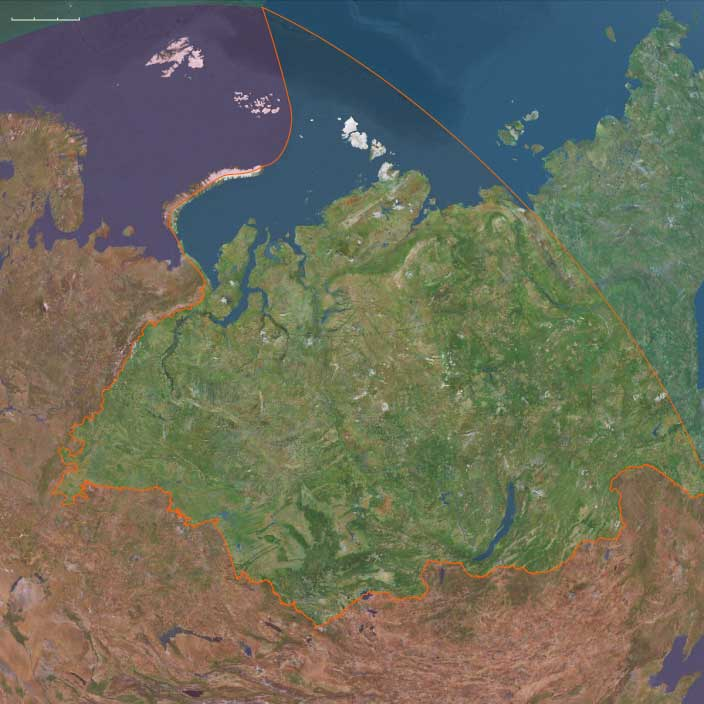
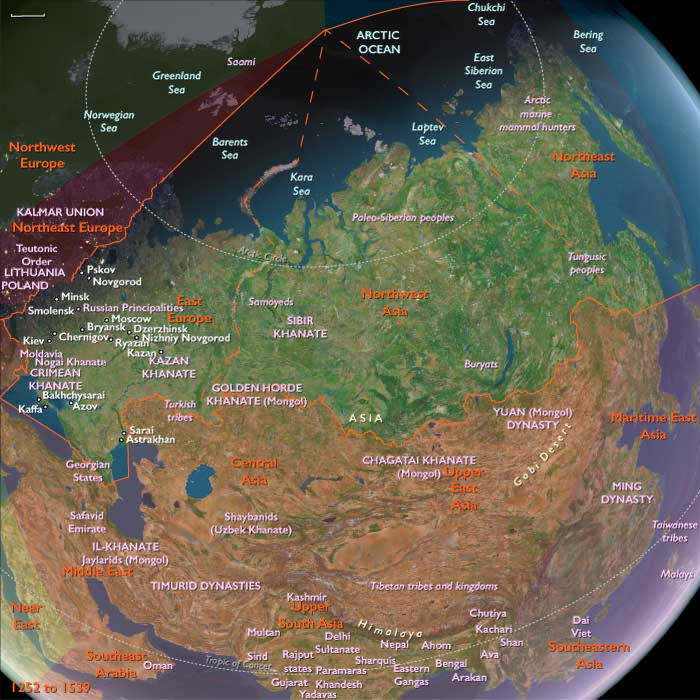
The subregion of Northwest Asia includes the western and central Siberian lands stretching from the Ural Mountains to about 130°E, bounded in the north by the Arctic Ocean and in the south by the Kazakh steppe and Altai. Anchors included the Ob, Irtysh, and Yenisei river basins, the taiga and tundra frontiers reaching to the Kara and Laptev Seas, the forest–steppe margins abutting the Kazakh steppe, and the Altai uplands. This immense interior zone blended nomadic steppe corridors with fur-rich boreal forests and fishing–hunting river valleys.
Climate & Environmental Shifts
The Little Ice Age deepened cold winters and shortened growing seasons. Permafrost extended farther south; river ice lingered into late spring. Steppe drought cycles pushed nomads across forest margins. Taiga communities adapted to harsher winters with deeper reliance on fur hunting, ice fishing, and preserved stores. Flood pulses in summer swelled the Ob–Irtysh–Yenisei, replenishing fish stocks but inundating lowland settlements.
Subsistence & Settlement
-
Steppe margins: Turkic and Mongol nomads herded horses, sheep, and cattle, moving seasonally between pastures.
-
Taiga zones: Ob-Ugric, Samoyedic, and Yeniseian-speaking groups relied on hunting (elk, sable, reindeer), trapping, and riverine fishing. Birchbark shelters, winter log huts, and portable tents supported mobility.
-
Altai & forest–steppe: Mixed agro-pastoralists farmed millet, barley, and garden crops in river valleys, alongside horse and cattle herding.
-
Arctic fringe: Samoyed and Nenets reindeer herders managed migratory herds, supplementing diets with seal and fish.
Technology & Material Culture
Composite bows, lances, and sabers armed steppe warriors; yurts and felt tents provided mobile shelter. Sledges, skis, and river canoes gave mobility in forests. Birchbark containers, fur garments, and iron knives formed everyday toolkits. Taiga smiths produced small iron goods through barter with steppe caravans. Fur robes and sable pelts became prized trade goods, reaching markets in Kazan and beyond. Ritual regalia—shaman drums, antler headdresses—anchored spiritual life.
Movement & Interaction Corridors
-
Steppe corridors: Successor states of the Golden Horde contested control — notably the Siberian Khanateemerging around Tyumen and the Irtysh by the early 15th century.
-
Caravan trails: Linked Ural–Siberian valleys to Kazan, Bukhara, and other Central Asian markets. Furs and slaves moved south; textiles, grain, and iron moved north.
-
River routes: Canoes and rafts carried hunters and fishers along the Ob, Yenisei, and tributaries.
-
Trans-Eurasian steppe: The disintegration of the Mongol Golden Horde left a mosaic of khanates — Kazan, Astrakhan, Nogai — which raided, traded, and drew Siberian furs into Eurasian commerce.
Cultural & Symbolic Expressions
Turkic khanates professed Islam in towns and steppe courts, while forest peoples practiced animist and shamanic traditions. Drumming, chanting, and trance embodied connections to spirits of animals and rivers. Heroic epics in Turkic languages celebrated khans and warriors; oral traditions among Ugric and Samoyedic groups traced kin ties to animals and sacred landscapes. River shrines, antler offerings, and clan dances reinforced communal bonds.
Environmental Adaptation & Resilience
Nomads shifted herds seasonally to buffer drought and snowpack extremes. Taiga hunters set seasonal traplines, smoked fish, and stored fat and berries for winter. Birchbark and fur technologies provided insulation and waterproofing. Reindeer husbandry stabilized mobility on the tundra. Clan reciprocity and exchange between steppe and forest zones spread risk.
Technology & Power Shifts (Conflict Dynamics)
-
Siberian Khanate: Established in the early 15th century by descendants of the Golden Horde, centered on the Tyumen–Irtysh corridor. Its rulers controlled tribute from forest peoples and mediated fur trade.
-
Steppe wars: The khanates of Kazan and Nogai contested Ural and Tobol access, raiding into forest zones.
-
Forest resistance: Ugric and Samoyedic groups paid fur tribute but resisted raids; skirmishes erupted along river confluences.
-
No Russian presence yet: Muscovy was expanding east of the Urals but had not yet crossed them; Siberia remained under khanate and indigenous control.
Transition
By 1539 CE, Northwest Asia remained a frontier of khanates and forest societies. The Siberian Khanate collected tribute along the Irtysh, while nomadic raids linked steppe and forest. Furs moved toward Kazan and Central Asia, anchoring the region’s role in Eurasian commerce. Yet Muscovy was strengthening beyond the Urals, poised in the next age to begin the conquest of Siberia.
Groups
Commodities
Regions
Northeastern Eurasia
View →Subregions