The slow collapse of the Sumerian Third…
1917 BCE to 1774 BCE
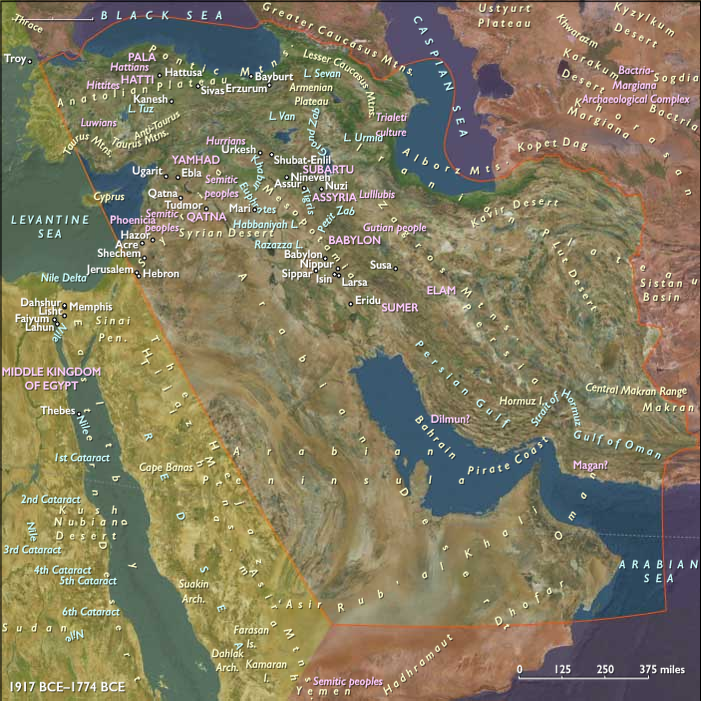
The slow collapse of the Sumerian Third Dynasty of Ur at the end of the third millennium BCE had left a power vacuum that the larger city-states, now apparently dominated by Amorites (as the Semitic speakers had come to be called), scrambled to fill.
The dynasty’s final king, Ibbi-Sin, had had neither the resources nor the organized government needed to expel the aggressive forces that were invading from Elam, and the dynasty had ended in 2004.
One of his governmental officials, Ishbi-Erra, had relocated from Ur to Isin, another city in the south of Mesopotamia, and established himself as a ruler there.
Although he is not considered part of the Third Dynasty of Ur, Ishbi-Erra had attempted to continue the dynasty, most likely to justify his rule.
Ishbi-Erra had had ill luck expanding his kingdom, however, for other city-states in Mesopotamia had risen to power also: Eshnunna and Ashur were beginning to develop as powerful centers.
However, he did have some military luck in defeating, to the point of retreat, the Elamites who had invaded Ur, which had given the Isin dynasty control over the culturally significant cities of Ur, Uruk, and the spiritual center of Nippur.
Locations
People
Groups
Topics
Regions
The Near and Middle East
View →Subregions