Event
Taino society is organized along distinct class…
Taino society is organized along distinct class lines.
At the top is the chief, or cacique, who manages all the affairs of the community and rules over a specific territory.
The line of inheritance to become a cacique is not direct; the eldest son of the cacique's eldest sister becomes chief when the former cacique dies.
If the cacique does not have any sisters, then his eldest son inherits the post.
The caciques are aided by the nitainos, a group of advisors who supervise communal work and seem to have been in charge of various sectors of the population.
Aware of the nitainos importance in controlling the labor supply, the Spaniards will use them later on as overseers on their plantations.
Next to the nitainos is the medicine man, or behique.
The lower class is composed of the nabories, who do most of the work of the village.
-
{# Image navigates to the detail page; the magnifying-glass chip is the only Fancybox lightbox trigger (kept a separate sibling — anchors can't nest). #}
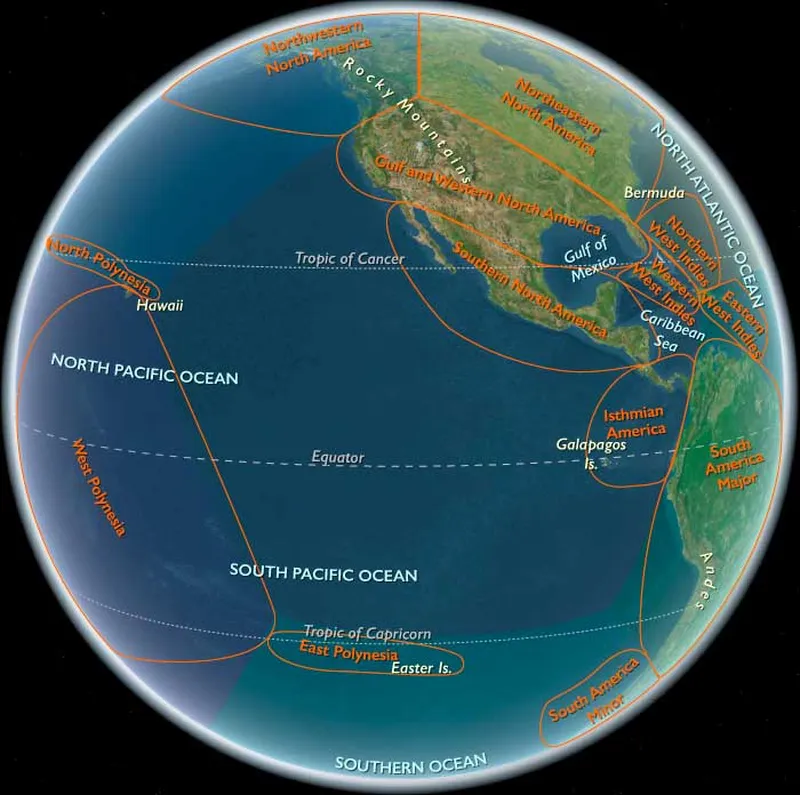 The Far West
World
-
{# Image navigates to the detail page; the magnifying-glass chip is the only Fancybox lightbox trigger (kept a separate sibling — anchors can't nest). #}
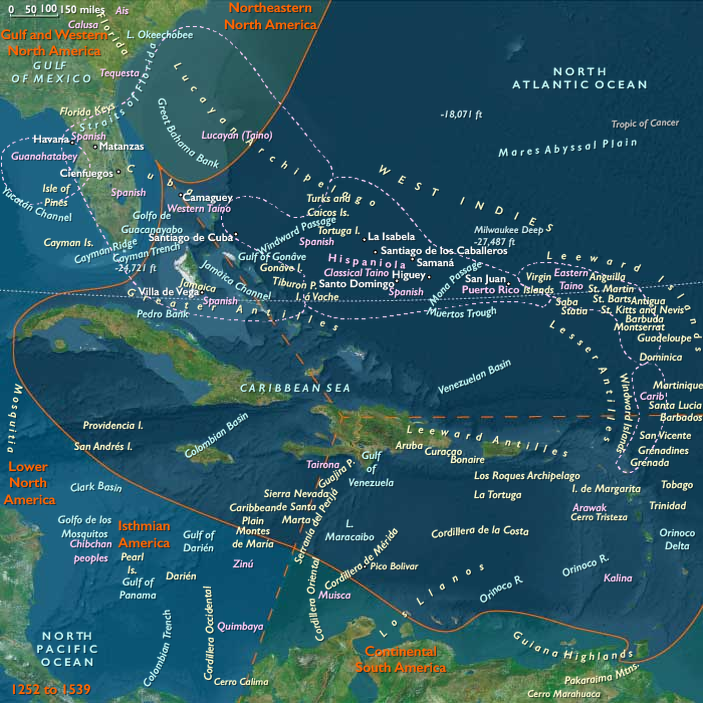 West Indies
Region
-
{# Image navigates to the detail page; the magnifying-glass chip is the only Fancybox lightbox trigger (kept a separate sibling — anchors can't nest). #}
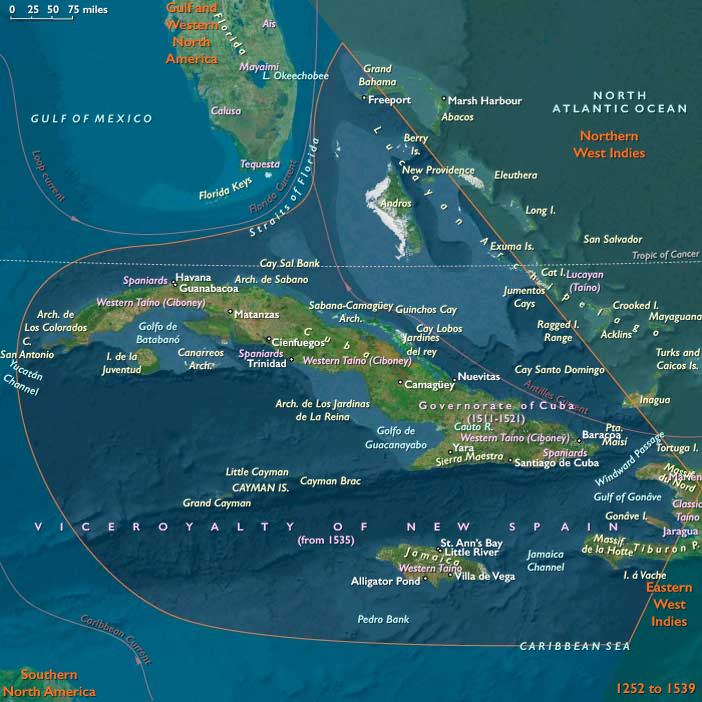 Western West Indies
Subregion