
Upper East Asia (1828–1971 CE): Empires, Revolutions, …
Years: 1828 - 1971
Upper East Asia (1828–1971 CE): Empires, Revolutions, and the Strains of Modernization
Geography & Environmental Context
Upper East Asia includes Mongolia and western China: Tibet, Xinjiang, Qinghai, Gansu, Ningxia, Inner Mongolia, northwestern Sichuan, northwestern Shaanxi, and northwestern Heilongjiang. Anchors include the Tibetan Plateau, the Taklamakan and Gobi Deserts, the Altai, Tianshan, Kunlun, and Qilian mountains, the Qinghai Lake basin, the Ordos Loop of the Yellow River, and the grasslands of Inner and Outer Mongolia. Landscapes ranged from deserts and alpine plateaus to steppe pastures and oasis valleys.
Climate & Environmental Shifts
A continental highland climate brought extreme cold winters and hot, dry summers. Desertification expanded in the Gobi and Tarim basins through the 19th and 20th centuries. Droughts and harsh winters (dzud) repeatedly devastated herds. Irrigated oases (Turpan, Kashgar, Hami) survived on meltwater, though salinization and canal neglect reduced yields. After 1950, the PRC launched dam building, afforestation, and irrigation campaigns, though often with mixed results for fragile ecologies.
Subsistence & Settlement
-
Pastoralism: Mongols and other nomadic peoples herded horses, sheep, camels, yaks, and goats. Seasonal migrations remained central, though increasingly restricted by modern borders and state policy.
-
Agriculture: Oases of Xinjiang produced wheat, barley, melons, fruit, and cotton; Tibetan valleys grew barley and potatoes; Gansu–Ningxia cultivated wheat, millet, and later maize.
-
Urban centers: Lhasa remained Tibet’s spiritual capital; Urumqi, Kashgar, and Hotan anchored Xinjiang; Lanzhou, Xining, and Hohhot grew into industrial hubs after 1949.
-
Settlement shifts: Russian expansion north of Mongolia, Qing colonization of Xinjiang, and later Chinese state-sponsored migration altered demography.
Technology & Material Culture
-
19th century: Caravans and camel trains carried tea, jade, furs, and textiles; firearms spread via Central Asian trade.
-
20th century: Railways (Lanzhou–Xinjiang line from the 1950s), motor roads, radios, and later electrification connected remote areas.
-
Everyday life: Yurts and monasteries in Mongolia, mud-brick oasis dwellings in Xinjiang, and whitewashed Tibetan houses persisted alongside new Soviet-style apartment blocks and Chinese work-unit housing.
-
Cultural products: Tibetan thangka paintings, Mongolian epic songs, and Uyghur muqam music endured; socialist realist art and mass-printed texts circulated after 1949.
Movement & Interaction Corridors
-
Caravan routes: Declining but persistent into the 19th century, carrying jade, cotton, and tea across Central Asia.
-
Imperial frontiers: Russian advances into Siberia and Central Asia pressed against Xinjiang and Mongolia; Qing forts and garrisons secured routes.
-
Soviet links: Mongolia became a Soviet satellite (1924 onward), with close economic and military ties.
-
Chinese integration: The Qing collapse (1911) left Xinjiang and Tibet semi-autonomous until the PRC incorporated them (1950s); highways and garrisons extended state presence.
Cultural & Symbolic Expressions
-
Religion: Tibetan Buddhism flourished until the mid-20th century, with monasteries controlling land and labor; Islam structured Xinjiang’s oases (Sufi orders, shrines, Friday mosques). Mongolian Buddhism blended with shamanic traditions. Post-1949, both Buddhism and Islam faced suppression under Communist campaigns.
-
National awakenings: Pan-Mongolist and Uyghur nationalist movements arose under Russian and Chinese pressures; Tibet asserted autonomy under the 13th and 14th Dalai Lamas.
-
Literature & folklore: Oral epics (Epic of King Gesar, Mongolian heroic songs) endured; print and translation under Soviet and PRC regimes produced new literatures in Cyrillic and pinyin alphabets.
Environmental Adaptation & Resilience
-
Pastoral adaptation: Herd diversification (camels, yaks, sheep) buffered against climatic volatility.
-
Irrigation: Oasis communities maintained canals and karez until modern pumping systems expanded after 1950.
-
Food security: Grain imports increasingly supplemented local harvests during crises.
-
Mobility: Nomadic routes shrank under sedentarization, but mobility persisted as resilience in remote zones.
Political & Military Shocks
-
Qing decline: Muslim uprisings in Xinjiang (e.g., Yaqub Beg, 1860s–70s) and Tibetan assertion of autonomy followed the weakening of Qing rule.
-
Russian empire & USSR: Encroached on Mongolia and Xinjiang; Outer Mongolia declared independence (1911), becoming the Mongolian People’s Republic (1924) under Soviet tutelage.
-
Republican China (1911–49): Xinjiang warlords (Yang Zengxin, Sheng Shicai) alternated between Moscow and Nanjing; Tibet operated autonomously.
-
PRC consolidation:
-
1950s: People’s Liberation Army entered Tibet and Xinjiang; land reform, collectivization, and infrastructure projects began.
-
1959: Tibetan uprising crushed; Dalai Lama fled to India.
-
1960s–70s: Cultural Revolution campaigns devastated monasteries and mosques, suppressed local traditions, and resettled Han Chinese into Xinjiang.
-
-
Mongolia: Soviet-aligned state industrialized, collectivized herding, and hosted Soviet bases.
Transition
Between 1828 and 1971, Upper East Asia shifted from a world of caravans, monasteries, and nomadism into a borderland of empires and socialist regimes. The collapse of Qing authority gave rise to local revolts and nationalist awakenings; Russian and Soviet encroachment shaped Mongolia; the PRC asserted control over Tibet and Xinjiang, integrating them into its state system. Pastoral mobility, oasis irrigation, and religious institutions sustained life into the early 20th century, but collectivization, industrialization, and political repression transformed them by mid-century. By 1971, Upper East Asia stood as a Cold War frontier—Mongolia a Soviet ally, Tibet under Chinese control, and Xinjiang a militarized periphery—its ancient lifeways drastically constrained but not extinguished.
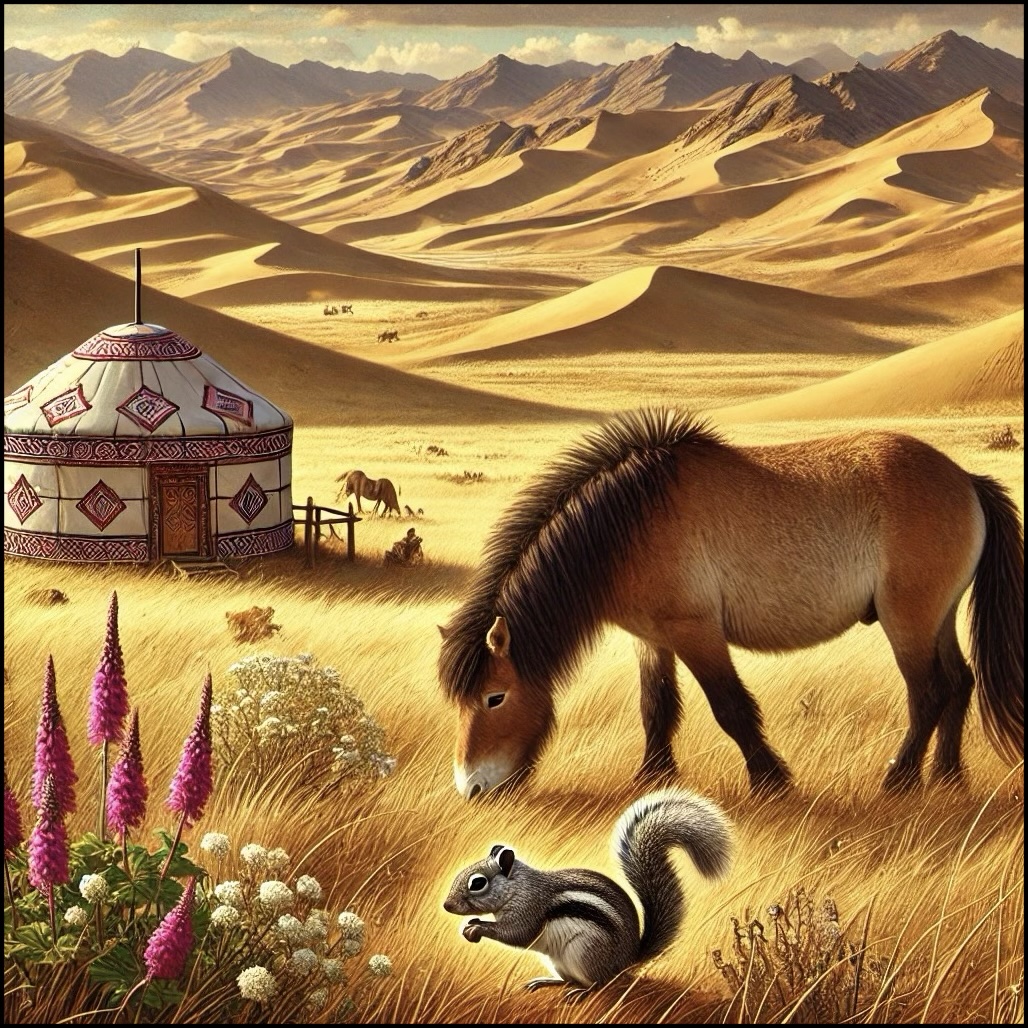
Upper East Asia (with civilization) ©2024-25 Electric Prism, Inc. All rights reserved.
Groups
- Buddhism
- Buddhism, Tibetan
- Taoism
- Buddhists, Zen or Chán
- Tibetan people
- Oirats
- Mongols
- Mongol Empire
- Chagatai Khanate
- Tibet under Yuan rule
- Chinese Empire, Yüan, or Mongol, Dynasty
- Chagatai Khanate, Western
- Chinese Empire, Ming Dynasty
- Northern Yuan dynasty
Topics
Commodoties
- Weapons
- Hides and feathers
- Glass
- Colorants
- Domestic animals
- Grains and produce
- Fibers
- Textiles
- Ceramics
- Strategic metals
- Salt
- Aroma compounds
- Stimulants
Subjects
Regions
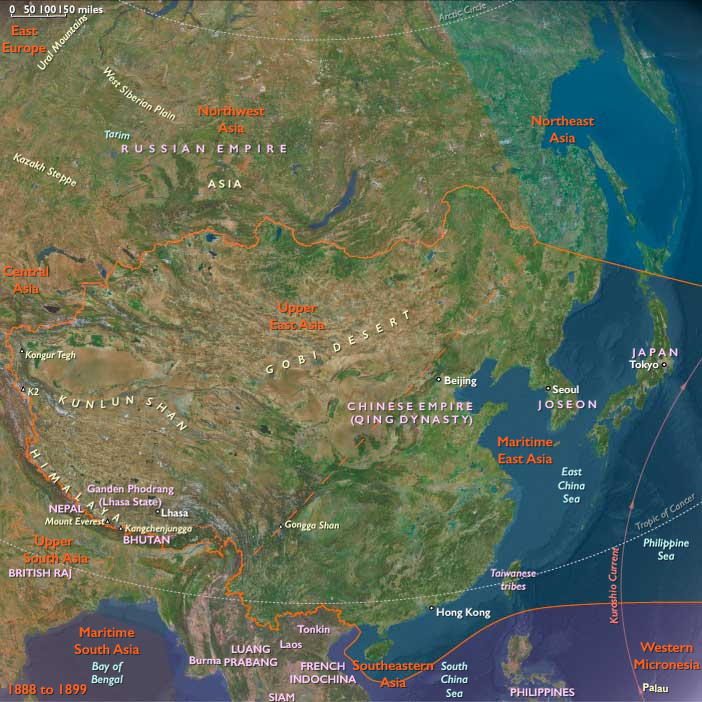
Subregions
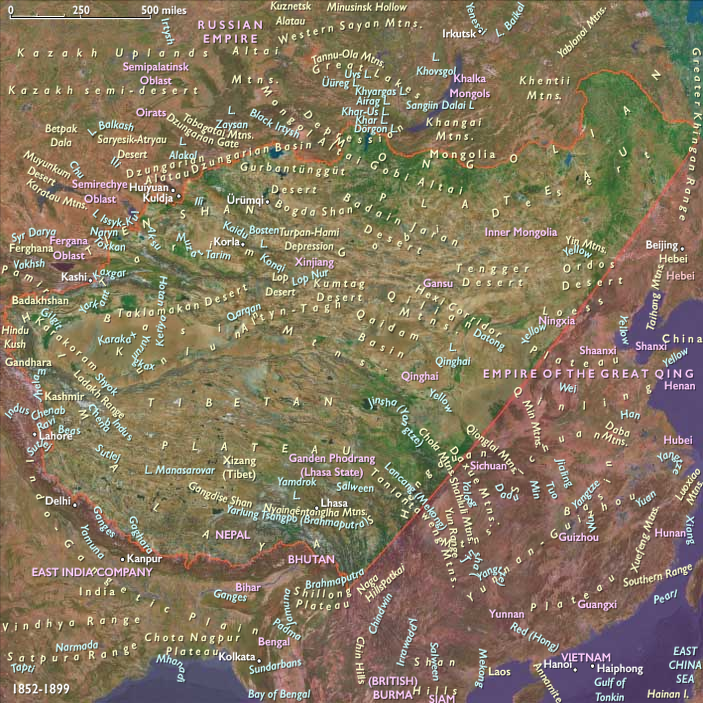
Years: 1828 - 1971
Upper East Asia (with civilization) ©2024-25 Electric Prism, Inc. All rights reserved.
Groups
- Buddhism
- Buddhism, Tibetan
- Taoism
- Buddhists, Zen or Chán
- Tibetan people
- Oirats
- Mongols
- Mongol Empire
- Chagatai Khanate
- Tibet under Yuan rule
- Chinese Empire, Yüan, or Mongol, Dynasty
- Chagatai Khanate, Western
- Chinese Empire, Ming Dynasty
- Northern Yuan dynasty
Topics
Commodoties
- Weapons
- Hides and feathers
- Glass
- Colorants
- Domestic animals
- Grains and produce
- Fibers
- Textiles
- Ceramics
- Strategic metals
- Salt
- Aroma compounds
- Stimulants
Subjects
Regions
Subregions