Wahhabi fervor is also significant in the…
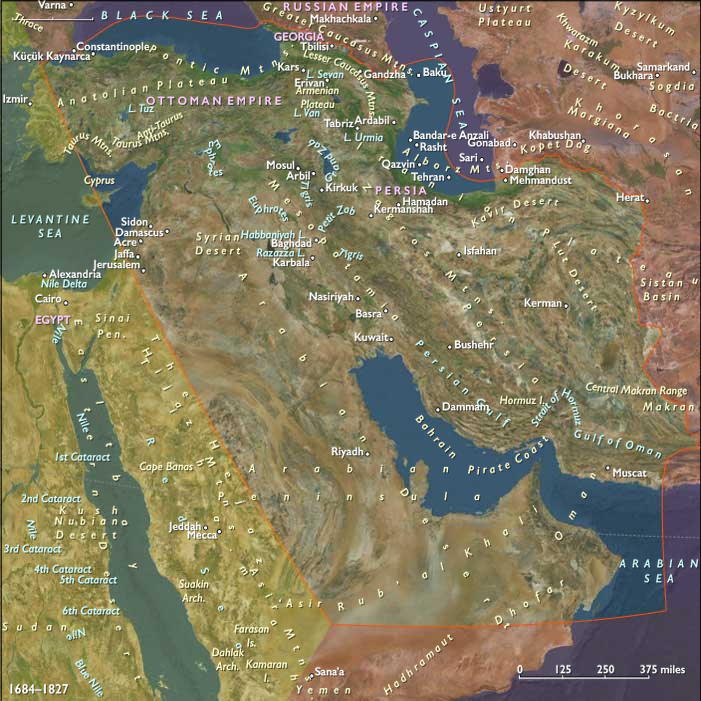
1684 CE to 1827 CE
The Al Qasimi tribes that have controlled the area since the eighteenth century adapt Wahhabi ideas and transfer the movement's religious enthusiasm to the piracy in which they had traditionally engaged.
Whereas Wahhabi thought opposes all that is not orthodox in Islam, it particularly opposes non-Muslim elements such as the increasing European presence in the Persian Gulf.
The increased European presence results in large part from commercial competition between Al Qasimi merchants and British merchants for the lucrative trade between India and the Persian Gulf in the early nineteenth century.
British merchants enlist the British navy to assist them by launching attacks on Al Qasimi strongholds in the present-day UAE as early as 1809.
The navy does not succeed in controlling the situation until 1819, in which year, the British send a fleet from India that destroys Ras al Khaymah, an Al Qasimi port at the eastern end of the gulf.
From Ras al Khaymah, the British fleet destroys Al Qasimi ships along both sides of the gulf.
The British have no desire to take over the desolate areas along the gulf; they only wish to control the trading cities.
The British decide to leave most tribal leaders in power and conclude a series of treaties with them.
As a result of these truces, the Arab side of the gulf comes to be known as the "Trucial Coast."
This area had previously been under the nominal control of the sultan in Oman, although the Trucial Coast tribes are not part of the Ibadi imamate.
The area has also been referred to as "Trucial Oman" to distinguish it from the part of Oman under the sultan that is not bound by treaty obligation.
The British in 1820 seem primarily interested in controlling the Al Qasimi, whose main centers are Ras al Khaymah, Ajman, and Sharjah, which were all small ports along the southeastern gulf coast.
The original treaties, however, also involve Dubai and Bahrain, which are entrepôts.
The inclusion of these ports bring two other extended families, the Bani Yas and the Al Khalifa, into the trucial system.
Groups
Iranian peoples
View →
Arab people
View →
Omanis
View →
Persian people
View →
Islam
View →
Muslims, Sunni
View →
Muslims, Kharijite
View →
Muslims, Shi'a
View →
Muslims, Ibadi
View →
Ismailism
View →
Qarmatians
View →
Ottoman Empire
View →
Bani Yas (Arab tribe)
View →
Persia, Safavid Kingdom of
View →
Sabah, House of
View →
Abyssinia (also called "Mecca and Medina"), Ottoman eyalet of
View →
Oman, Second Imamate of
View →
Yaruba dynasty
View →
Thani, House of
View →
Abu Dhabi, Emirate of
View →
Al Qasimi (Adnani Arabian tribe)
View →
Ra's al-Khaymah, or Ras al-Khaimah, Emirate of
View →
Al Khalifa family
View →
Britain, Kingdom of Great
View →
Sharjah (ash-Shariqah), Emirate of
View →
Wahhabism
View →
Diriyah, Emirate of
View →
Oman, Sultanate of
View →
Ajman, or 'Ujman, Emirate of
View →
Kuwait, Sheikhdom of
View →
Umm al-Qaywayn, or Umm al-Quwain, Emirate of
View →
Dubai, Emirate of
View →
al-Fujayrah, or Fujairah, Emirate of
View →
Britain (United Kingdom of Great Britain and Ireland)
View →
Bahrain, Saudi-Wahhabi
View →
Commodities
Subjects
Regions
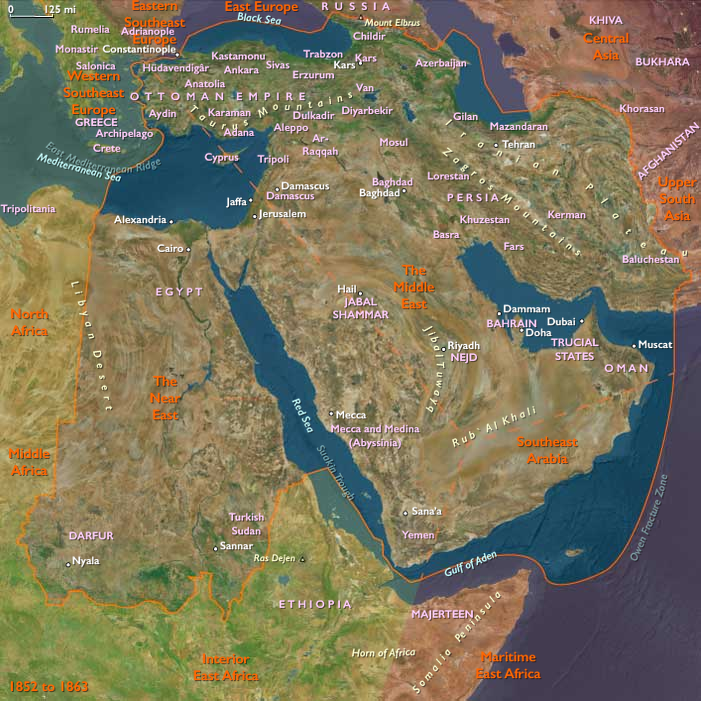
The Near and Middle East
View →Subregions