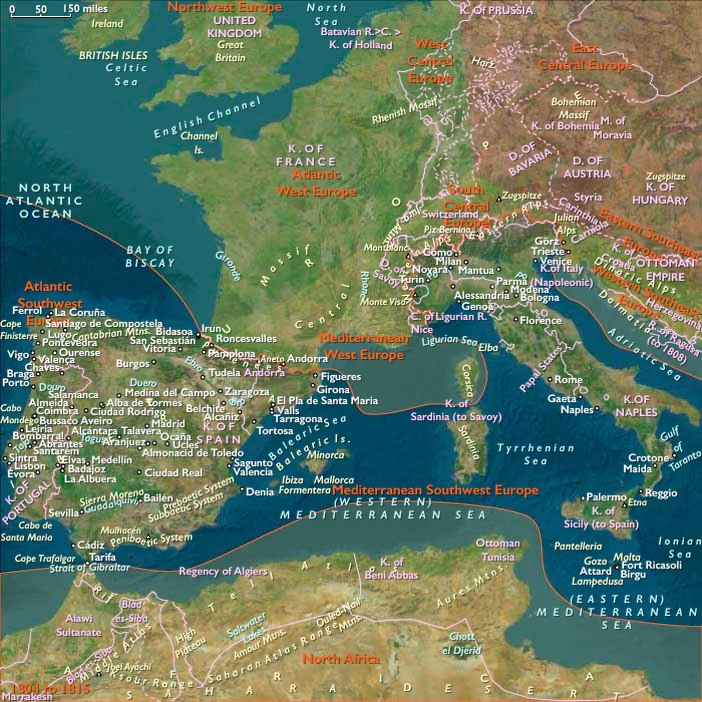
The Convention of Sintra (August 30, 1808)…
August 1808 CE
The Convention of Sintra (August 30, 1808) – Controversy and Strategic Consequences
The Convention of Sintra, signed on August 30, 1808, brought an end to the first French occupation of Portugal. However, the leniency of its terms caused an uproar in Britain, leading to a political and military crisis.
Terms of the Convention – A Favorable Exit for the French
- The entire defeated French army was to be transported back to France by the British Navy.
- The troops would keep their weapons, equipment, and even their looted treasures from Portugal.
- No French officers or soldiers would be held as prisoners of war, allowing Napoleon to redeploy them elsewhere in Europe.
For the British public, this seemed like a betrayal of Wellesley’s decisive victory at Vimeiro. Instead of forcing a surrender, the British effectively rewarded the defeated enemy with safe passage home.
The Political Fallout – The Inquiry and Blame
- The British government faced a massive outcry, with both the public and Parliament furious over the agreement.
- A formal inquiry was launched, and the blame fell on Sir Hew Dalrymple and Sir Harry Burrard, who had authorized the agreement.
- Wellesley, who had opposed the treaty, was exonerated, preserving his reputation.
- Dalrymple and Burrard were recalled to Britain, effectively ending their military careers.
Strategic Delay – Lost Momentum in Spain
- The removal of so many British troops to transport the French army back to France caused a significant delay in further operations.
- The planned British intervention in Spain was postponed, giving Napoleon time to prepare his counteroffensive.
Tensions Between Britain and Spain
The British alliance with Spain was also proving increasingly problematic:
- The Spanish saw the British army as a tool for their own war effort, expecting aid but also command over British forces.
- The British sought to extend their influence in Spain, intending to shape Spain’s war strategy and impose political solutions.
Wellesley’s Growing Frustration
- Wellesley, though victorious in Portugal, found himself frustrated with political decisions and his superiors.
- He was ambitious, suspicious of government officials, and at odds with the ministry.
- His prickly disposition and distrust of diplomatic maneuvering made him difficult to work with, foreshadowing conflicts with Spanish leaders.
The French Prepare a Response – Napoleon’s Counteroffensive
Meanwhile, across the River Ebro, Napoleon was preparing a major counteroffensive. The British hesitation and internal discord played into Napoleon’s hands, giving him the opportunity to regain the initiative in Spain.
Conclusion – A Pyrrhic Victory for the British
The Convention of Sintra, despite ending French rule in Portugal, was a hollow success:
- It delayed British military action in Spain, allowing Napoleon time to respond.
- It damaged relations between Britain and Spain, leading to diplomatic struggles in the coming campaigns.
- It fueled frustration within the British command, particularly for Wellesley, who would soon return to Iberia under far different circumstances.
Although Britain had secured Portugal, the war in Spain was just beginning, and Napoleon was about to launch one of his most aggressive campaigns yet.
Locations
People
Groups
Regions