
William, accompanied by an armed retinue, visits…
1262 CE
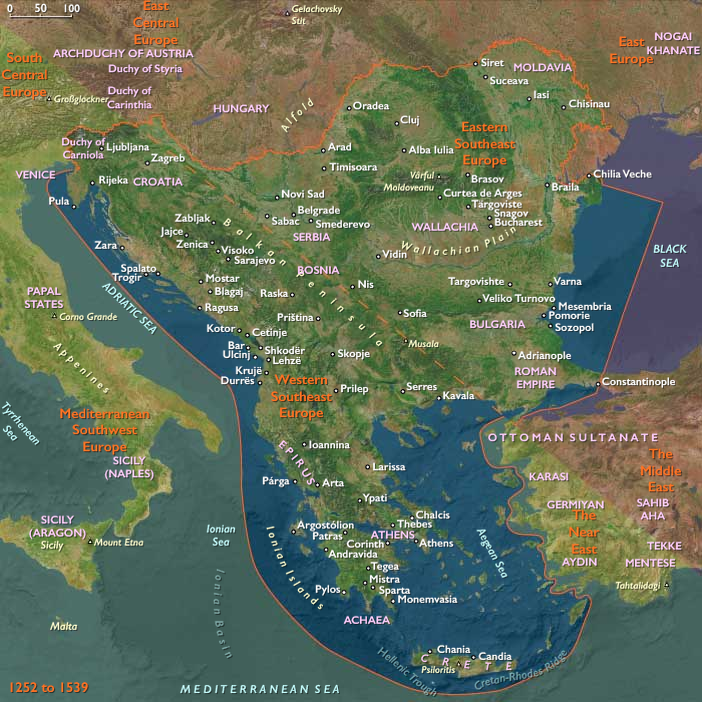
William, accompanied by an armed retinue, visits the region of Laconia in late 1262.
Despite his concessions to the Greeks, he still retains control of most of Laconia, in particular the city of Lacedaemon (Sparta) and the baronies of Passavant (Passavas) and Geraki.
This display of armed strength worries the imperial garrisons, and the local governor, Michael Kantakouzenos, sends to Emperor Michael to ask for aid.
The emperor in response quickly organizes an expedition headed by his half-brother, the sebastokrator Constantine Palaiologos with the parakoimomenos John Makrenos and the megas domestikos Alexios Philes as subordinate commanders.
This army, composed chiefly of Turkish mercenaries and Greek troops from Asia Minor, is transported to Monemvasia on Genoese vessels, while the small imperial fleet is sent to harass the Latin island holdings in Euboea and the Cyclades.
After arriving at Monemvasia, the sebastokrator Constantine proceeds to cement and expand imperial authority in Laconia: he subdues the Slavic inhabitants (the Melingoi) of Mount Taygetos and erects a number of forts to keep them in check, and then lays siege to Sparta, while the imperial fleet seizes the southern coasts of Laconia In the meantime, William travels to Corinth to request the assistance of the other Latin princes of Greece.
They, however, prove unwilling to come to his aid, all the while many of William's Greek subjects openly side with the restored Empire.
Constantine Palaiologos sees this as an opportunity to conquer William's principality outright.
Abandoning the fruitless siege of Sparta, he marches his army up the rivers Eurotas and Alfeios towards the Achaean capital, Andravida.
Locations
People
Groups
Topics
Commodities
Subjects
Regions
Southeast Europe
View →Subregions
