
The Revolt of Ralph de Gael and…
1076 CE
The Revolt of Ralph de Gael and William’s Defeat at Dol (1075–1076)
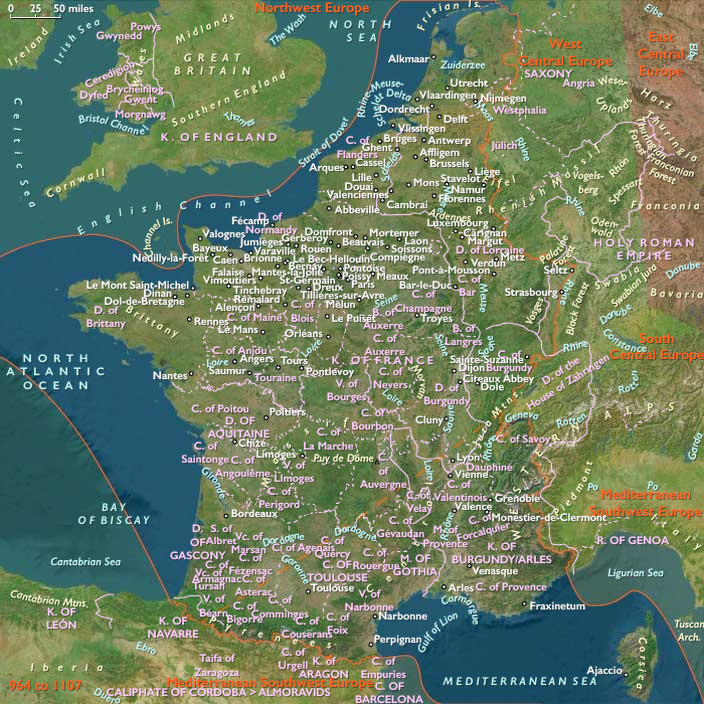
Following the failed Revolt of the Earls (1075) in England, Ralph de Gael, Earl of East Anglia, fled to Brittany, where he seized control of Dol and sought to challenge both William I of England and Duke Hoel II of Brittany. In 1076, William led a military expedition into Brittany, laying siege to Dol, but was ultimately defeated and forced to retreat by King Philip I of France.
The Aftermath of the Revolt of the Earls (1075–1076)
- Ralph de Gael had been one of the leaders of the failed rebellion against William I in England, alongside Roger de Breteuil and Waltheof of Northumbria.
- After his defeat, Ralph fled to Brittany, while his wife defended Norwich Castle until she negotiated safe passage for herself and her followers.
- Ralph lost all his English lands and his earldom, becoming a permanent exile in Brittany, where he remained a powerful noble but no longer a player in English politics.
Ralph’s Rebellion in Brittany and the Siege of Dol (1076)
- In 1076, Ralph, rather than remaining passive, plotted against Duke Hoel II of Brittany, seizing Dol Castle and challenging the ducal authority.
- In response, Hoel laid siege to Dol, attempting to reassert control over his rebellious vassal.
- William, still interested in maintaining influence in Brittany, saw this as an opportunity to intervene militarily.
- In September 1076, William marched into Brittany and joined the siege of Dol, seeking to subdue Ralph and weaken Hoel II’s rule.
Philip I’s Intervention and William’s Defeat at Dol
- King Philip I of France, eager to check William’s expansion and maintain Capetian influence over Brittany, came to the aid of Dol.
- The French army relieved the siege, forcing William to retreat back to Normandy, marking his first significant battlefield defeat.
- Although Philip’s victory at Dol was a rare setback for William, it had little lasting impact, as William retained his control over Normandy and England.
Consequences of the Battle of Dol (1076)
- Ralph de Gael remained a Breton noble, no longer involved in English affairs.
- The battle cemented Capetian resistance to Norman expansion, as Philip I proved willing to challenge William militarily.
- William, though forced to retreat, continued to exert influence in Brittany, ensuring that his continental position remained strong.
- This was William’s first battlefield defeat, but it did not significantly weaken his power, as he remained dominant in England and Normandy.
Despite the temporary setback at Dol, William’s position in northern France remained unchallenged, and the Capetian-Norman rivalry continued, shaping the power dynamics of medieval France and England for decades to come.
Locations
People
Groups
Commodities
Subjects
Regions
West Europe
View →Subregions
